
Repiping for Water Hammer: Orange County Guide
- Primewest Plumbing
- Jul 27
- 4 min read

Water hammer can turn a quiet night into a noisy nightmare. The quickest way to end those bangs is a full repipe that eliminates the surge‑prone old pipes. Below we break down how repiping works, what to choose, and how to keep the peace for good.
Understanding How Repiping Stops Water Hammer
When a valve shuts fast, the moving water creates a pressure wave that slams against the pipe walls. If the pipe is old, loosely mounted, or made of rigid metal, the wave reverberates and you hear a bang. Replacing the whole network with modern, flexible tubing removes the weak points that let the wave bounce.
Modern PEX or copper runs are secured with sturdy straps, and the system is designed to allow water to flow smoothly. The new pipes also have fewer joints, so there are fewer places for the wave to reflect.
In addition, a professional repipe often adds pressure‑reducing devices that lower the overall water pressure, cutting the energy behind the wave. The result is a quieter, more reliable system that no longer rattles when you turn off a faucet.
Pressure spikes are a common cause of pipe stress, and modern plumbing designs aim to dampen those spikes. Securing pipes to sturdy structures further reduces vibration.
Our team at Repipe OC follows this science step by step, ensuring every joint, strap, and valve is installed for maximum damping.
Key Takeaway:A full repipe replaces weak, resonant pipe sections with secured, flexible lines that stop the pressure wave at its source.
Selecting Pipe Materials to Prevent Water Hammer
The material you choose shapes how the system handles sudden stops. PEX is flexible, resists scale, and won’t corrode in Orange County’s hard water. Copper is sturdy, recyclable, and has a long track record, but it can develop pinhole leaks over time.
Most homeowners find PEX gives the quietest operation because its flexibility lets the pipe absorb shock rather than reflect it. The material also bends around corners, cutting the number of fittings where pressure can spike.
When a home has an older galvanized skeleton, switching to a hybrid approach, PEX for interior runs and copper stub‑outs for visible fixtures, offers the best of both worlds. This method keeps the aesthetic of copper where you see it while gaining PEX’s vibration‑damping benefits.
Read the full comparison on Best PEX vs Copper Pipe Options for Orange County Homes for a side‑by‑side look at cost, lifespan, and performance.
Studies have shown that PEX resists corrosion and scale buildup.
Pro Tip:For homes with slab foundations, choose PEX. Its flexibility lets crews run pipe under concrete without massive demolition.
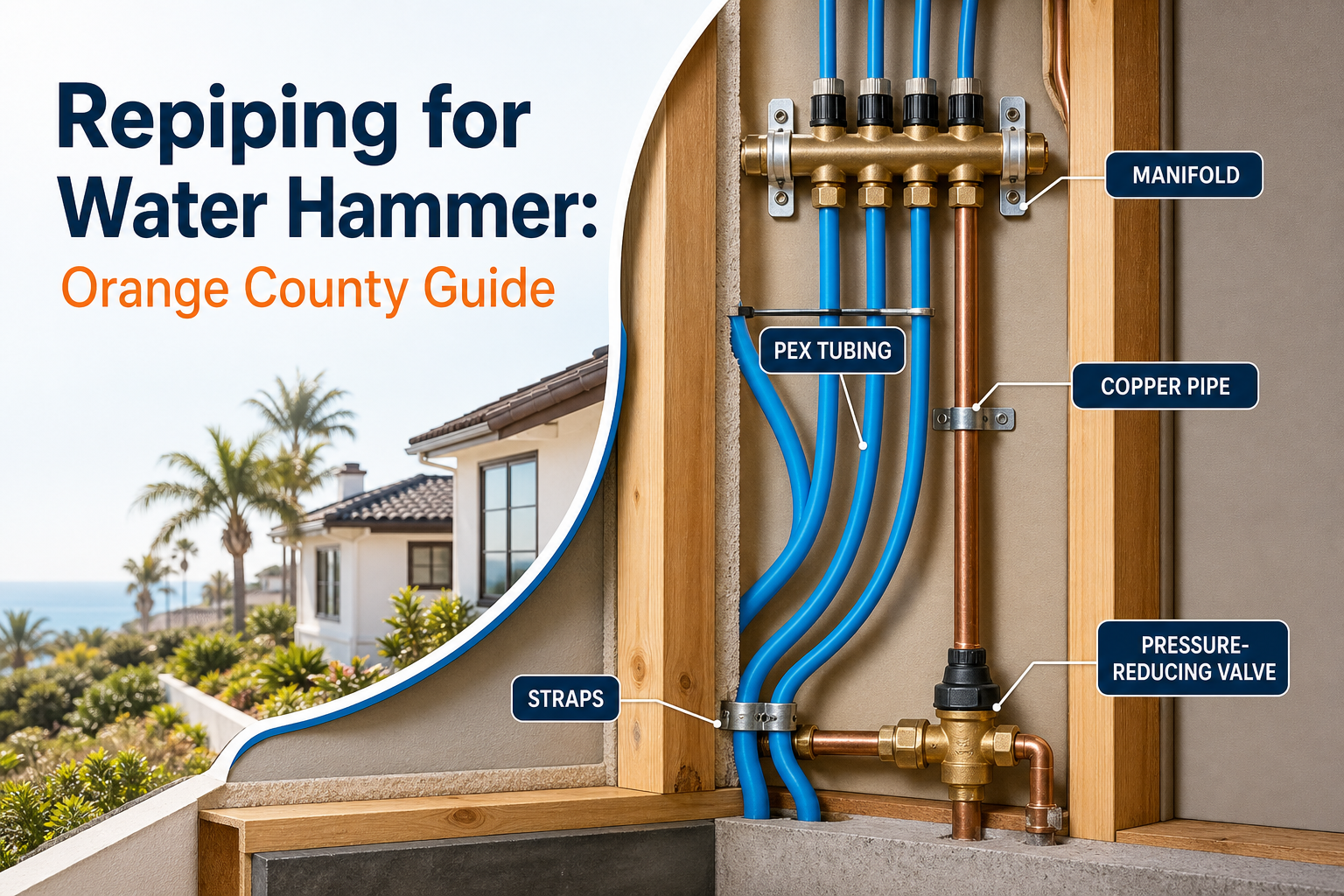
Integrating Pressure‑Reducing Valves and Arrestors
A pressure‑reducing valve (PRV) sits near the main water entry and trims the incoming pressure to a safe range, often 45‑60 psi. Lower pressure means less energy behind any sudden stop, which directly curbs water hammer .
Water‑hammer arrestors work like tiny airbags. They sit on shut‑off valves for appliances such as washing machines or dishwashers. When the valve snaps shut, the arrestor’s air bladder compresses and soaks up the shock wave.
Both devices are quick upgrades, but a full repipe gives you the chance to place them at strategic points, near the water heater, at the main line, and at high‑flow appliances.
Professional plumbers can fine‑tune the PRV to match your home’s layout. An improperly set valve can cause low flow, so correct adjustment is key.
For a plain‑language overview of PRVs, , which outlines typical settings and savings.
When you pair a PRV with arrestors on high‑speed fixtures, you create a double‑layer shield: the PRV lowers overall pressure, while arrestors catch any residual spikes.
What Repiping Costs in Orange County and What’s Included
Pricing depends on home size, number of bathrooms, and foundation type. Material costs vary by pipe type and market rates, while labor typically represents the larger portion of the total bill.
Slab foundations add extra labor because crews must route pipe through concrete. Hidden fees, permits, drywall repair, and main‑line replacement can increase the overall estimate depending on the scope of work.
Our own cost guide breaks down the variables in detail. Check the full table on PEX Repiping Cost: Factors & Price Estimates (2026 Guide) to see how each factor shapes your quote.
Factor | Impact on Cost |
Home size (sq ft) | Varies based on size and material choices |
Number of bathrooms | Additional cost per bathroom |
Foundation type | Increased labor for slab foundations |
Permits & drywall | Additional fees may apply |
All of our quotes include permits, drywall repair, and a 25‑year transferable warranty that follows the home if you sell.
Key Takeaway:Expect material costs to vary, with labor for slab work often being the biggest driver.

Post‑Repiping Maintenance to Keep Water Hammer Away
Even after a flawless repipe, regular upkeep keeps the system quiet. Start with an annual visual check of pipe straps; loose straps let pipe movement re‑introduce noise.
Test water pressure with a gauge on an exterior faucet. If it creeps above 80 psi, have a plumber adjust the PRV. Keeping pressure stable prevents new shock waves.
Air chambers and arrestors need occasional draining. Turn off the main valve, open all fixtures, then close them and reopen the main. This releases water that may have filled the chambers.
Replace worn‑out valves promptly. A faulty shut‑off can snap shut too fast, recreating the hammer effect.
Our Repipe OC team offers a yearly inspection service that catches loose straps, checks PRV settings, and flushes arrestors, so you never hear a bang again.
Pro Tip:Schedule a maintenance visit before the summer peak, when water usage spikes and pressure can rise.
FAQ
What causes water hammer?
Water hammer occurs when a valve closes quickly, causing a pressure wave that slams against pipe walls.
Can I fix water hammer myself?
You can add arrestors or tighten straps yourself, but a full repipe guarantees a long‑term solution.
How much does a repipe cost in Orange County?
Repipe costs depend on home size, materials, and labor; Repipe OC provides a detailed, location‑specific estimate after an on‑site assessment.
Do I need a pressure‑reducing valve?
Installing a PRV is recommended because it lowers overall pressure, which reduces the energy behind any sudden shut‑off.
How often should I inspect my plumbing after a repipe?
We suggest an annual check of straps, pressure settings, and arrestors to keep the system quiet.
Conclusion
For a permanent fix to water hammer, choose a full repipe from Repipe OC and enjoy the peace of a quiet home. Ready to see a quote? Get your free on‑site estimate today and take the first step toward silence.


Comments