
How to Increase Water Pressure in House: Simple Steps
- Primewest Plumbing
- 1 day ago
- 4 min read

Low water pressure makes every shower feel like a drizzle and every dish‑washing cycle a marathon. Here’s a quick, usable plan that takes you from checking the current PSI to installing a boost pump or even a full repipe.
Step 1: Check Current Pressure and Identify Issues
First, obtain a pressure‑testing device and attach it to an outdoor hose bib. Turn the tap on fully , the dial should read between 40 and 45 psi for a typical home. Anything lower means something is restricting flow.
Next, locate the main shut‑off valve where the municipal line enters your house . It often looks like a large lever; the handle should be parallel to the pipe. If it’s partially closed, the pressure drops dramatically. Open it all the way and re‑measure.
While you’re at it, check the pressure‑reducing valve (PRV) if your home has one. A simple flat‑head screwdriver can turn the adjustment screw a notch clockwise to raise pressure, but don’t exceed the 70 psi safety limit recommended by most municipal codes.
Finally, talk to a neighbor. If they report the same dip, the issue likely lies with the water supplier or a shared main. You can call your local utility for a status check.
For a deeper dive on how water pressure works, consult reputable resources on the topic. Understanding the physics can help you spot unrealistic DIY claims.
Step 2: Clean or Replace Faucet Aerators and Showerheads
Mineral buildup inside aerators and showerheads throttles flow. Unscrew the aerator from the faucet tip , you’ll often see a tiny screen. Soak it in white vinegar for an hour, then rinse and reinstall.
Showerheads work the same way. Remove the head, soak in vinegar, and use an old toothbrush to scrub away debris. If the screen is cracked or corroded, replace the whole unit. Upgrading to newer, water‑efficient models can help improve pressure while conserving water.
Don’t forget the dishwasher and washing‑machine inlet screens. A quick glance inside the filter housing can reveal clogs that affect multiple fixtures.
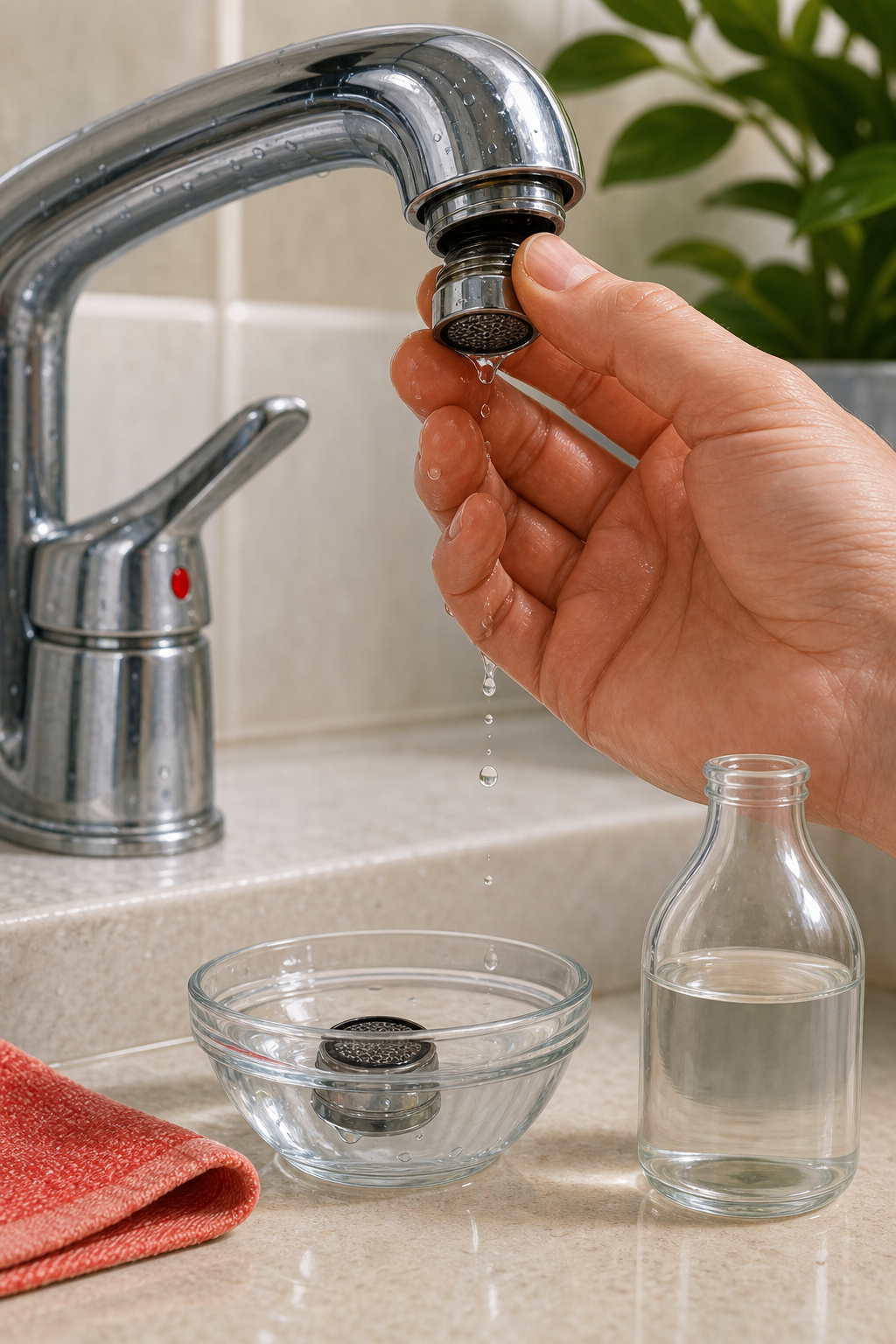
We often see homeowners assume a clogged aerator is a minor nuisance, but cleaning it can noticeably improve water flow.
Step 3: Install a Water‑Pressure‑Boosting Device
If your gauge still reads under 50 psi after the above checks, a pressure‑enhancing device is the next logical step. A typical residential unit adds 20‑30 psi and includes a pressure tank to smooth out spikes.
Choose a device rated for your home’s peak demand , most three‑bathrooms houses need a 0.75 hp unit. Follow the manufacturer’s wiring diagram, connect the unit to the main line, and set the cut‑in pressure around 30 psi and cut‑out near 70 psi.
After installation, run water at several fixtures to let the tank fill. Then re‑measure at the hose bib; you should see a noticeable jump.
Our team at Repipe OC often recommends a pressure‑enhancing device when the home’s pipe network is sound but the supply line is weak. It’s a quick win that avoids the cost of a full repipe.
Key Takeaway:A correctly sized pressure‑enhancing device can lift house‑wide pressure by 20‑30 psi without major renovations.
Step 4: Adjust the Home’s Pressure Regulating Valve (PRV)
The PRV sits near the main shut‑off and keeps pressure from exceeding safe levels. Over‑tightening it can actually lower pressure, so a gentle tweak is best.
Locate the adjustment screw on the top of the valve. Turn it clockwise a quarter turn, then check the gauge. If pressure climbs, stop. If it’s still low, repeat in small increments until you hit the sweet spot , typically 55, 60 psi for most homes.
Watch for leaks around the valve after each adjustment. A leaking PRV may need a full replacement, which is a job for a licensed plumber.
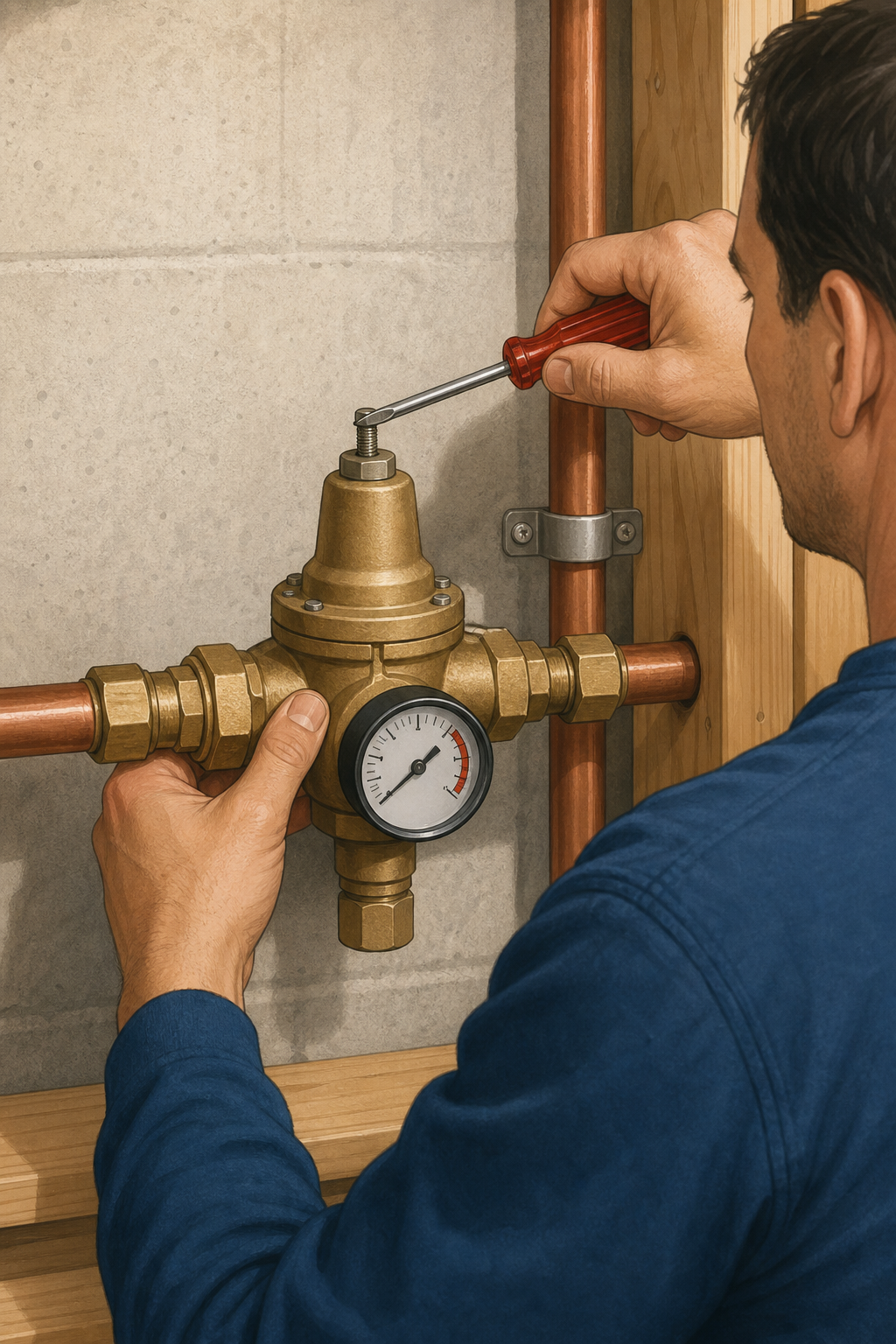
Keeping residential pressure below 80 psi helps prevent pipe bursts while ensuring adequate flow.
Our crew at Repipe OC can inspect the PRV for you and replace it with a modern, easy‑adjust model if needed.
Step 5: Consider Pipe Replacement or Professional Repipe
When low pressure persists despite the above fixes, the culprit is often old, corroded piping. Galvanized steel or aging copper can shrink the effective diameter, choking flow.
Full repiping replaces the entire network with PEX or copper, eliminating hidden restrictions. Repipe OC’s service page outlines how new pipes raise pressure system‑wide, improve water quality, and add resale value.
Getting an accurate on‑site estimate is the first step. Our free estimate includes a full inspection, material options (PEX vs. copper), and a 25‑year transferable warranty that protects your investment even if you sell the house.
During a repipe, we also install a manifold that balances flow to every fixture, ensuring each shower or faucet gets the same pressure.
Pro Tip:Combine repiping with a pump system upgrade ( see our guide ) to get instant hot water and steady pressure everywhere.
FAQ
What PSI is considered normal for a home?
Typical residential water pressure sits between 40 and 45 psi. Anything below 40 psi usually indicates a restriction or valve issue.
Can I boost pressure with just a bigger pipe?
Upsizing pipe alone rarely adds noticeable pressure; studies show the gain is minimal unless the existing pipe is severely clogged.
Do faucet aerators really affect overall house pressure?
Cleaning or replacing aerators removes a localized bottleneck and can improve flow at that fixture, but it won’t raise house‑wide pressure.
Is a pump safe for older homes?
Yes, installing a pump system can be safe for older homes when it is properly selected and set within the pressure ranges recommended by most building codes.
How long does a full repipe take?
Most whole‑house repipes finish in one day for a typical two‑bathroom home; larger homes may need two days. Our crew coordinates with you to minimize disruption.
Ready to stop the weak‑flow frustration? Get a free on‑site estimate from Repipe OC and see how a modern pipe network can finally give you strong, steady water pressure.
Ready to put this into practice? Repipe OC was built for exactly this.


Comments