
Best Water Filtration System for Home: Top 10 Picks
- Primewest Plumbing
- 1 day ago
- 6 min read

Choosing clean water shouldn’t feel like a gamble. You need a system that actually removes the contaminants that matter to you, and you want it to fit your home without a headache. Below are the ten water filtration solutions we trust most, plus a quick guide to pick the right one for your situation.
1. Repipe OC (Our Top Pick) , Premium Residential Repiping & Water Filtration
Repipe OC isn’t just a repiping service; it bundles high‑quality pipe replacement with a whole‑house filtration package that protects new copper or PEX runs from sediment and chlorine. The company backs its work with a 25‑year transferable warranty, which means the next homeowner inherits the protection.
We recommend it for anyone planning a full‑home repipe in Orange County because the fresh pipes and the filtration media work together to keep water clean and pressure steady. The filtration unit can be customized for chlorine, lead, or iron, depending on your local water report.
One caveat: the system is sized for average household demand, so a mansion with eight bathrooms may need a larger flow model.
Repipe OC also offers a free on‑site estimate, so you can see the exact layout before any work begins.
2. Multi‑Stage Reverse Osmosis System
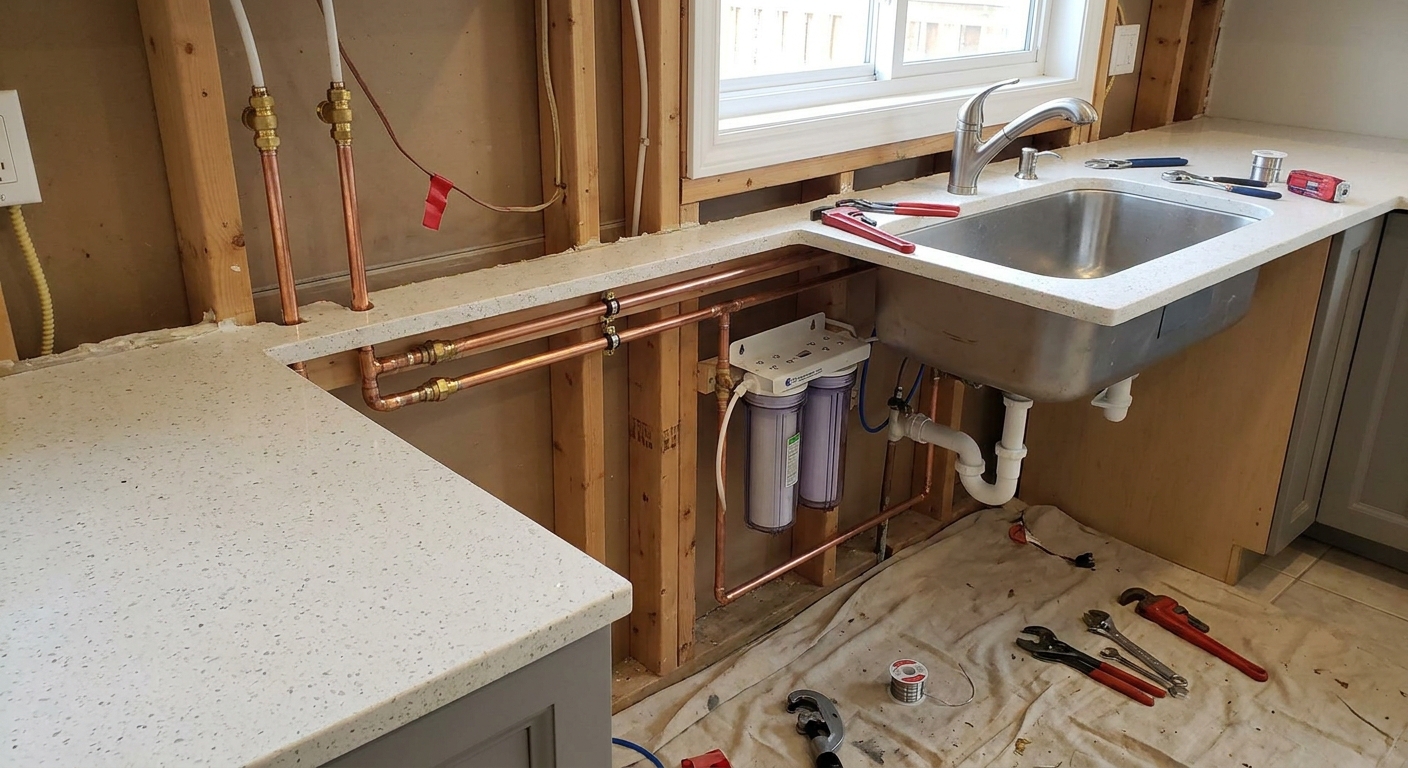
A typical multi‑stage reverse osmosis system uses a sediment pre‑filter, carbon block filters, and a thin‑film composite membrane to reduce contaminants such as lead, arsenic, fluoride, and other heavy metals.
Many models meet NSF/ANSI standards for contaminant reduction and include a storage tank of a few gallons to provide ready‑to‑drink water for cooking and drinking.
Maintenance is straightforward: pre‑filters are replaced every several months, and the membrane every one to two years. The unit is designed to fit under standard kitchen sinks with minimal plumbing modifications.
Because the membrane produces a modest flow rate, it’s best for households that do not require simultaneous high‑volume use, such as multiple showers at once.
Most manufacturers offer extended warranties on the membrane for added peace of mind.
3. Multi‑Stage Under‑Sink Reverse Osmosis System
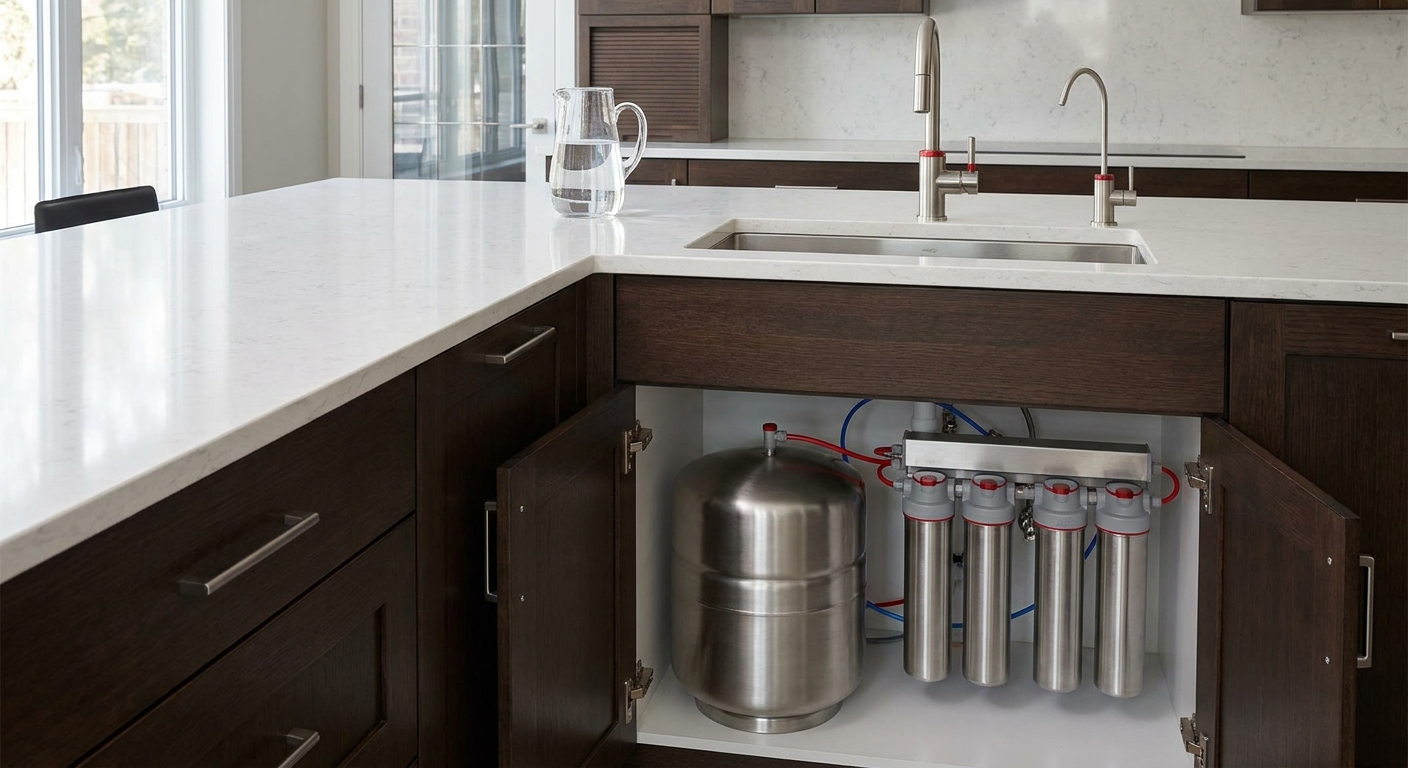
A multi‑stage under‑sink reverse osmosis system can include an alkaline remineralization stage. After the membrane removes contaminants, the alkaline filter restores calcium, magnesium, and potassium for improved taste.
Many systems carry WQA Gold Seal certification, confirming that components meet performance and safety standards. Such systems can remove up to 99% of a wide range of contaminants, including chlorine, lead, and PFAS.
Filter life typically ranges from several months for carbon stages to up to two years for the alkaline filter, reducing the frequency of cartridge replacements.
Flow rates for these units are generally sufficient for a family of four, though they may feel slower when filling large pitchers.
Installation fits most under‑sink spaces, and manufacturers often provide detailed video guides.
4. Whole‑house high‑flow filtration system
This system pushes 15 GPM, so it won’t dent water pressure even when several fixtures run together. It uses a multi‑gradient sediment filter, a catalytic carbon block, and a KDF media stage to remove chlorine, iron, and heavy metals.
Whole‑house systems typically require 10‑14 GPM for typical homes, and a system delivering 15 GPM is well suited for larger households.
It also features a patented “Turbo Flow” design that reduces the pressure drop often seen with whole‑house filters.
One limitation: the filter cartridges are larger, so you’ll need a little extra space near the main water line.
The unit comes with a two‑year limited warranty and offers a filter‑change reminder service.
Keeping your copper pipes free from corrosion is essential, and maintaining the integrity of your copper plumbing can extend their life.
5. Under‑Sink 3‑Stage Filtration System
A typical under‑sink model layers a sediment filter, a carbon block, and a copper‑zinc KDF stage to capture chlorine, lead, and other heavy metals. Many manufacturers claim multiple NSF/ANSI certifications, often exceeding industry averages.
Because it’s installed under the sink, it leaves countertops clear and delivers filtered water through a dedicated faucet.
Filter cartridges generally need replacement on a regular schedule, often within a year, and the system includes a quick‑change cartridge that you twist and pull without tools.
It’s a solid pick for renters who can install it without major plumbing alterations, as long as the landlord permits the faucet addition.
Keep an eye on the filter‑change schedule; missing a swap can let contaminants build up again.
Pro Tip:Ready to protect your new pipes and improve taste? Try Repipe OC free →
6. Portable Countertop Water Filter, Rental‑Friendly
This countertop filter slips onto any standard kitchen faucet and uses a multi‑stage carbon block to strip chlorine, lead, and PFAS. The unit is NSF/ANSI 42 and 53 certified, giving you confidence in its performance.
Because it sits on the counter, you can move it between homes, making it perfect for renters or short‑term leases.
Filter life is about 3 months for high‑use households; the cartridge swaps with a simple twist.
The system includes an optional digital monitor that flashes when it’s time for a change, which helps avoid missed maintenance.
One drawback: the flow rate drops a bit when the faucet is fully open, so you may notice a slower fill for large pots.
Portable countertop water filtration overview
7. Berkey Water Filter , Gravity‑Fed Off‑Grid
Berkey’s gravity‑fed system uses stainless‑steel chambers and proprietary Black Berkey elements to remove bacteria, viruses, heavy metals, and PFAS without electricity.
It’s a favorite among emergency‑prep circles because it works even when the power’s out. A 2‑gallon model can treat up to 6 gallons per minute, enough for a family of four’s daily needs.
The filter elements have a long lifespan, providing several years of use for typical households.
Because it’s a standalone unit, you’ll need space on a countertop or a sturdy table.
It’s not NSF‑certified, but independent lab tests confirm its contaminant‑removal claims.
8. Whole‑house filtration system with Wi‑Fi monitoring
This whole‑house system connects to your home’s Wi‑Fi and sends filter‑life alerts to a mobile app. It uses a multi‑stage carbon‑KDF blend to target chlorine, chloramines, and sediment. Installation fits at the point where water enters the house, so every tap benefits.
The flow rating is 12 GPM, which covers most medium‑sized homes without a pressure hit.
The app also provides a water‑usage report, helping you spot leaks or unusually high consumption.
While the system isn’t certified for fluoride removal, it excels at improving taste and odor.
The manufacturer offers a three‑year warranty on the housing and a one‑year warranty on the filter cartridges.
9. Portable Point‑of‑Use Filter, Ideal for Renters
A compact, 0.1‑micron hollow‑fiber point‑of‑use filter that attaches directly to a faucet via a quick‑connect. It removes bacteria, protozoa, and most chemicals, making it a solid choice for temporary housing.
The unit holds about 100 gallons before the cartridge needs replacing, which works out to roughly three months for a single‑person household.
Because it requires no tools, you can install it in minutes and take it with you when you move.
It doesn’t address hard‑water minerals, so you may still notice scale on fixtures.
The low cost and ease of use make it a go‑to for short‑term rentals or vacation homes.
10. Mineral Remineralization Filter – Adds Healthy Minerals
A typical under‑sink unit adds calcium, magnesium, and potassium back into RO‑treated water, raising the pH to a more alkaline range. The system pairs a standard 5‑stage RO stack with a post‑filter mineral cartridge.
It’s NSF/ANSI 42 and 53 certified for the RO stages, and the mineral cartridge is made from food‑grade calcium carbonate.
The added minerals improve taste and can be gentler on the stomach for people who drink a lot of purified water.
Filter changes are every 12 months for the RO membrane and every 6 months for the mineral cartridge.
Because the mineral stage reduces the total dissolved solids to a moderate level, you still get clean water without the completely flat taste of pure RO.
Comparison Table: Key Specs of the Top 10 Systems
System | Type | Flow Rate (GPM) | Filter Lifespan (months) | Certifications |
Repipe OC + Filtration | Whole‑house (repiped) | 12‑15 | 12‑24 | WQA Gold Seal |
APEC ROES‑50 | Under‑sink RO | 0.5 | 12‑24 | NSF 372, 58 |
Under‑sink reverse osmosis system with alkaline filter | Under‑sink RO + Alkaline | 0.75 | 12‑24 | WQA Gold Seal |
Whole‑house filtration system | Whole‑house | 15 | 12‑36 | — |
Three‑stage under‑sink filtration system | Under‑sink | 0.5 | 6‑12 | NSF 42, 53, 78 certifications |
Countertop filtration system | Countertop | — | 3‑4 | NSF 42, 53 |
Gravity‑fed water filtration system | Gravity‑fed | 6 | 12‑36 | Independent lab tested |
Smart whole‑house filtration system | Whole‑house | 12 | 12‑18 | — |
Portable point‑of‑use filter | Point‑of‑use | — | 3 | — |
Under‑sink reverse osmosis system with mineral addition | Under‑sink RO + minerals | 0.5 | 12 (RO) / 6 (mineral) | NSF 42, 53 |
FAQ
What type of filtration is best for hard water?
Whole‑house systems that combine carbon filtration with a water softener handle hardness best because they treat every faucet and keep scale off appliances.
How often should I change my filter?
Filter‑change intervals vary by technology; carbon pre‑filters typically need replacement every 6‑12 months, while RO membranes last 12‑24 months.
Will a countertop filter affect my water pressure?
Yes, most countertop units cause a slight pressure drop, but the effect is usually only noticeable when you open the faucet fully.
Do I need a professional to install an under‑sink RO system?
You can install most under‑sink RO units yourself if you’re comfortable with basic plumbing, but a professional ensures there are no leaks and that the faucet is mounted correctly.
Can I use a filter system with a tankless water heater ?
Absolutely; pairing a filtration system with a tankless heater protects the heater’s heat‑exchange coils from sediment and improves efficiency.
Key Takeaway:Pairing a high‑flow whole‑house filter like Home Master with Repipe OC’s premium repiping gives you clean water and long‑lasting pipe health.
Conclusion
If you’re ready for a fresh start, choose Repipe OC for the repipe and pair it with a whole‑house filter that matches your flow needs. Visit our site to schedule a free estimate and lock in today’s competitive pricing.


Comments