
Best Repiping for Multi-Family Apartments

Updated: Aug 30
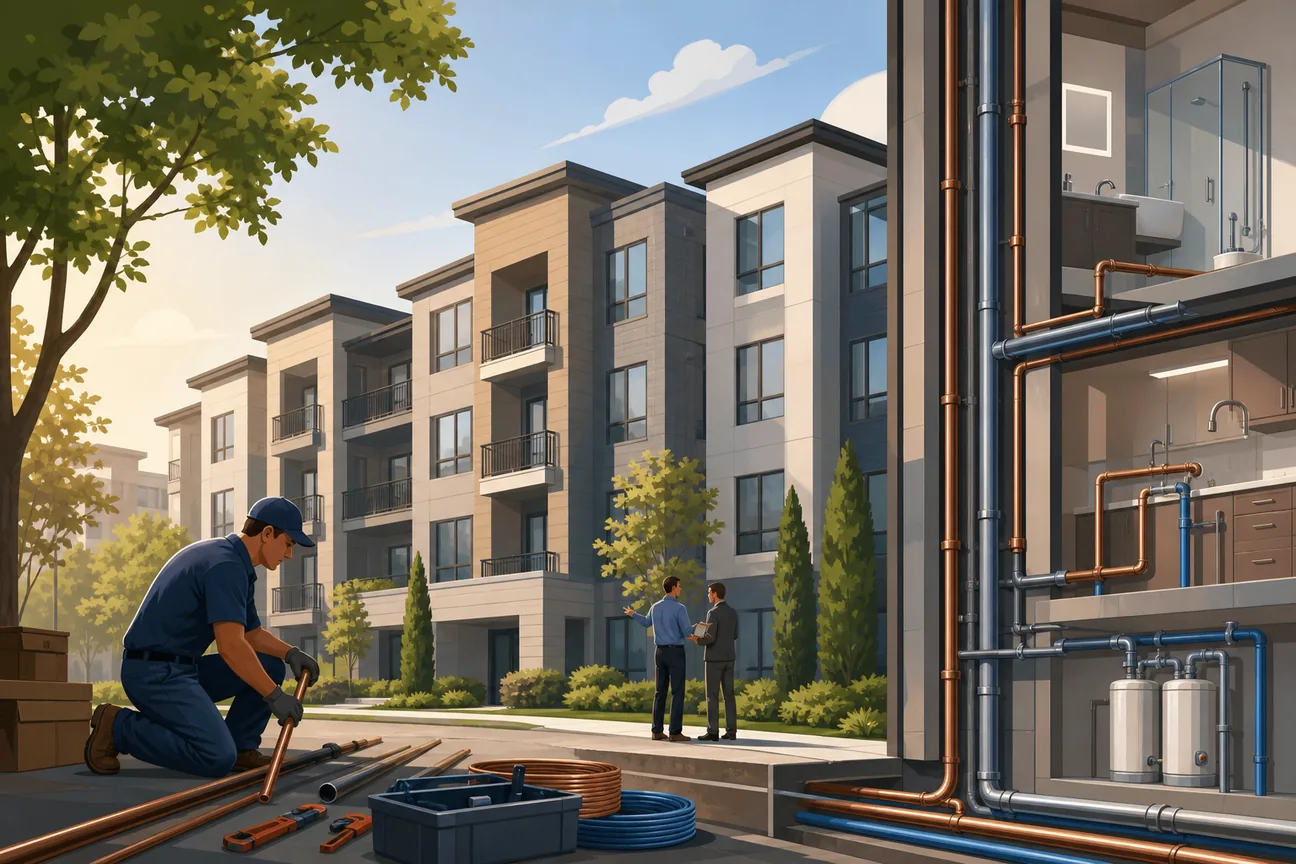
Leaky pipes, low pressure, and rust‑stained water are signs that a multi‑family building needs a fresh plumbing start. Below are the nine best repiping options for occupied apartment complexes, and who each works best for.
Table of Contents
1. Repipe OC (Our Top Pick) — Full‑service turnkey repiping for occupied buildings
2. PEX Pipe Repiping — Flexible, cost‑effective solution with minimal disruption
3. Copper Pipe Repiping — Durable, high‑temperature performance for legacy systems
4. CPVC Pipe Repiping — Easy installation for hot and cold water lines
6. Brass Pipe Repiping — Premium option for historic or luxury apartments
7. PPR Pipe Repiping — Strong, heat‑resistant piping for hot‑water distribution
8. Galvanized Steel Replacement — Eliminating rust and corrosion in older complexes
9. Lead Pipe Removal — Critical health upgrade for legacy buildings
1. Repipe OC (Our Top Pick) — Full‑service turnkey repiping for occupied buildings
Repipe OC handles every step from leak detection to final testing. They back the job with a 25‑year transferable warranty that moves with the property, a rarity in the market. Financing starts at an affordable monthly rate , making a full‑home upgrade accessible for most budgets. Their work during published hours (Monday–Friday 6:00 AM–6:00 PM, Saturday 8:00 AM–5:00 PM, Sunday 10:00 AM–2:00 PM), so an emergency burst never leaves tenants stranded.
Repipe OC official video placeholder
Because they manage permits, demolition, pipe installation, and drywall repair, property managers get one point of contact and a clear schedule. The only downside is a higher upfront price, but the long warranty often offsets that cost over the life of the system.
Ready to stop leaks? Try Repipe OC free →
Learn more about their financing options in the Best Repiping Cost Per Foot Options guide.
When a pipe bursts in the middle of the night, Repipe OC’s published hours emergency team can arrive within an hour and begin a full repipe the same day, reducing water damage and repair bills.
2. PEX Pipe Repiping — Flexible, cost‑effective solution with minimal disruption
PEX (cross‑linked polyethylene) is lightweight, bends around corners, and needs fewer fittings. That cuts labor time and keeps wall openings to a minimum, which is a big win for occupied apartments.
In California, about 60 % of repipe projects in older complexes now use PEX because it resists corrosion, scales, and freeze‑burst issues. A typical ½‑inch PEX fitting creates a tight seal without solder or glue, so crews can move from unit to unit in a single day.
The material lasts 40‑50 years and costs $0.40‑$2 per linear foot, making it a solid middle ground between cheap PVC and pricey copper.
Industry experts note that zone‑specific shut‑offs let managers isolate a single apartment’s water without draining the whole building, keeping tenant complaints low.
For a deeper dive on PEX lifespan, see Wikipedia’s PEX article .
3. Copper Pipe Repiping — Durable, high‑temperature performance for legacy systems
Copper has been the go‑to material for decades. It handles hot‑water lines, outdoor runs, and high‑pressure applications with ease.
When installed properly, copper can last 50‑70 years. It resists UV exposure, so it’s ideal for exposed exterior supply lines.
The trade‑off is cost: copper runs $2‑$5 per linear foot and requires soldered joints, which adds labor time. In colder climates, copper is vulnerable to freeze‑burst if not insulated.
Because copper is a metal, it’s fully recyclable, which can be a selling point for green‑focused owners.
For more on copper’s longevity, read the How Long Does Copper Pipe Last explainer on Repipe OC’s site.
4. CPVC Pipe Repiping — Easy installation for hot and cold water lines
CPVC (chlorinated polyvinyl chloride) can handle both hot and cold water up to about 200 °F. It uses solvent‑capped joints, which are quick to install and don’t need solder.
The material is competitively priced, generally cheaper than copper but more expensive than PVC. Its lifespan sits around 25‑40 years, and it’s not approved for outdoor use where UV can degrade it.
CPVC is a good choice when a building needs a quick, budget‑friendly upgrade for interior supply lines.
Repipe OC lists CPVC as an option in their Best Repiping Company in Orange County: Top 10 Picks overview.
5. PVC Drain Repiping — Reliable drainage solution for multi‑unit buildings
PVC is the workhorse for drain, waste, and vent (DWV) lines and resists corrosion.
While PVC can last up to 100 years in drainage applications, it’s not approved for hot‑water supply lines. Using it where water is hot can cause warping.
Because it’s lightweight, crews can install it fast, keeping disruption low for tenants.
For a quick cost comparison, see the Top 10 Ways to Get a Repiping Cost Estimate guide.
6. Brass Pipe Repiping — Premium option for historic or luxury apartments
Brass offers corrosion resistance and a long lifespan of 40‑70 years. It’s easier to work with than some metals, which can help when retrofitting historic buildings that need a classic look.
The material is more expensive than PVC or PEX, and older brass may contain lead, so a lead‑free certification is required for modern codes.
When a property aims for a high‑end finish, brass can add a touch of elegance while still delivering reliable water flow.
Read more about brass lifespan in a reputable pipe lifespan guide.
7. PPR Pipe Repiping — Strong, heat‑resistant piping for hot‑water distribution
Polypropylene Random (PPR) handles hot‑water lines up to 180 °F and is resistant to chemical attack. It’s a good fit for buildings that need a durable, low‑maintenance solution.
Installation requires heat‑welding, which adds a step but creates a smooth joint that won’t leak.
The material lasts about 40‑50 years and costs roughly $1‑$2 per linear foot, placing it between PEX and CPVC in price.
Repipe OC lists PPR as a specialty option for clients who need extra heat resistance.
8. Galvanized Steel Replacement — Eliminating rust and corrosion in older complexes
Many mid‑20th‑century apartments still have galvanized steel supply lines. Those pipes rust from the inside, reducing flow and turning water brown.
Replacing them with a modern material (PEX, copper, or CPVC) restores water clarity and improves pressure.
The swap typically costs $1‑$3 per linear foot for the new material plus labor, but the long‑term savings on water damage and tenant turnover are significant.
Repipe OC’s project managers map out the existing routes to minimize wall openings during the replacement.
9. Lead Pipe Removal — Critical health upgrade for legacy buildings
Lead pipes were common before the 1940s and pose a serious health risk. The CDC warns that lead exposure can cause developmental issues in children and cardiovascular problems in adults.
Full‑line removal is the only safe solution. Modern PEX or copper replaces the old pipes, and a pressure test confirms the system is leak‑free.
Because the work often requires wall demolition, costs run higher, about $2‑$5 per linear foot for the new material plus labor.
Repipe OC offers a 25‑year transferable warranty on lead‑pipe removal projects, giving owners peace of mind for decades.
Read the CDC’s lead‑pipe guidance at CDC , Lead Pipes .
Comparison Table — Key Factors Across Repiping Options
Material | Lifespan | Cost per ft | Best for | Limitation |
PEX | 40‑50 yr | $0.40‑$2 | Whole‑building supply, flexibility | UV‑sensitive, rodents |
Copper | 50‑70 yr | $2‑$5 | Hot‑water lines, exterior runs | Freeze‑burst, higher cost |
CPVC | 25‑40 yr | Varies | Indoor hot/cold lines | Not for UV, limited temp |
PVC | 20‑100 yr | Varies | Affordable drainage | Superpower is drains—not supply lines |
Brass | 40‑70 yr | Higher (varies) | Historic or luxury | May contain lead, cost |
PPR | 40‑50 yr | $1‑$2 | Hot‑water distribution | Heat‑weld needed |
Galvanized Steel | 20‑30 yr (if untreated) | $1‑$3 | Legacy upgrades | Rust, pressure loss |
Lead | 100+ yr (if left) | — | Historic only | Health hazard, must replace |
Key Takeaway:For most multi‑family projects, PEX balances cost, durability, and low disruption, while Repipe OC’s warranty gives extra peace of mind.
FAQ
What is the most common material used for repiping multi‑family apartments?
PEX is the most common choice because it’s flexible, affordable, and can be installed with minimal wall damage.
How long does a repipe project usually take in an occupied building?
Experienced crews can finish a single unit in one day, so a 10‑unit building often wraps up in under two weeks.
Does the 25‑year warranty transfer to a new owner?
Yes, Repipe OC’s warranty is fully transferable, protecting the investment when the property changes hands.
Can I keep my existing copper pipes and just replace the bad sections?
You can do a partial repipe, but mixing copper with PEX or CPVC may create corrosion issues, so many owners prefer a full‑system upgrade.
Is lead‑pipe removal required by law in California?
California law requires lead‑pipe removal in rental properties built before 1940, and many municipalities enforce strict testing and replacement standards.
Choosing the right repiping path protects your tenants, cuts long‑term repair bills, and preserves property value. Start with a free on‑site estimate from Repipe OC and lock in a 25‑year transferable warranty today.


Comments