
Slab Leak: Signs, Causes, Detection, Repair & Cost Guide

Water under your floor can feel like a mystery, but a slab leak isn’t magic, it’s a real pipe problem hiding beneath the concrete. If you notice warm spots, a rising water bill, or damp floors, you’re probably looking at a leak. Below we break down what a slab leak is, how it shows up, how pros locate it, and what fixing it costs.
Table of Contents
What Is a Slab Leak and What Causes It?
A slab leak is water escaping from a pipe that runs under the concrete slab supporting your home. The pipe can be copper, PEX or older steel, and once it cracks, water seeps into the soil and then up through the slab.
Ground shift is a top cause. Over years the weight of the house and natural settling press on the pipe, eventually cracking it. Earthquakes can cause the same damage in minutes. Faulty wrapping also matters; without proper insulation, pipes rub against concrete, wear down and leak. A nicked line from construction damage may stay hidden for months before a small cut widens into a full‑blown leak. Finally, electrolysis, an electrical reaction between copper and mineral‑rich soil, corrodes the pipe from the inside. For more detail on corrosion-related issues, see Repipe OC’s copper leak causes, repairs, and prevention guide .
These forces combine to turn a quiet pipe into a hidden water source that can erode soil, lift foundations, and invite mold. Wikipedia explains that the damage often spreads beyond the leak site, making early detection vital.
Homeowners in Orange County often think a slab leak means tearing up the foundation, but a quick visual check, a simple acoustic test, or a $150‑$400 detection service can pinpoint the problem before costly excavation begins.
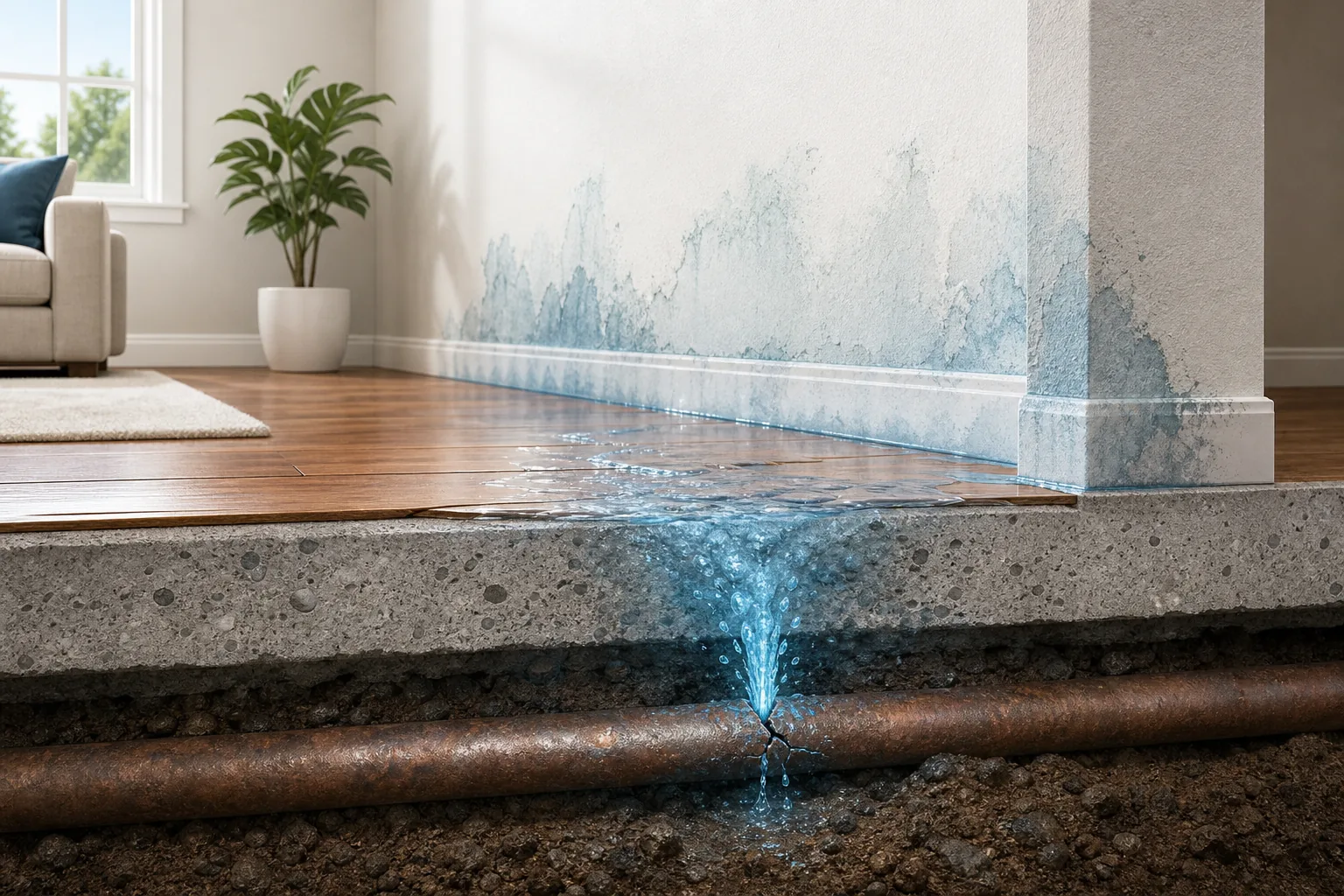
How to Recognize the Warning Signs
Spotting a slab leak early saves money and avoids structural damage. The most obvious clue is an unexpected rise in your water bill. If usage spikes without extra guests or a new appliance, water is likely escaping somewhere unseen.
Listen for a faint hiss or whoosh when every faucet is shut off. The sound comes from water under pressure moving through a crack. It’s quieter than a faucet but steady enough that a trained ear can pick it up.
Warm spots on the floor often mean a hot‑water line is leaking. Walk barefoot over tile or laminate; a localized heat feels different from room temperature. Temperature-sensing equipment can help detect the difference.
Visible moisture, wet patches on the floor, soggy drywall, or water pooling near the foundation, signals that water is surfacing. Moldy odors or actual mold growth point to long‑term moisture. For a practical homeowner checklist, review Repipe OC’s step-by-step guide to detecting a slab leak .
When you notice any of these signs, call a local expert who can run an electronic leak detection test. Leak Detection & Slab Leak Repair | Repipe OC offers a rapid, non‑invasive assessment to confirm the leak before any walls or floors are opened.
How Slab Leak Detection Works
Modern leak detection blends several sensor types to pinpoint the exact spot. Acoustic sensors capture the sound of water escaping a pipe. Pressure sensors watch for tiny drops in line pressure that indicate a leak. Infrared thermography spots temperature differences on surfaces above a leak.
Advanced methods fuse data from multiple sensors. A research team showed that combining vibration and pressure signals using a bi‑sensor Gramian Angular Field reduces false alarms and improves accuracy (ScienceDirect). Ground‑penetrating radar (GPR) can scan the subsurface without breaking the slab, while fiber‑optic sensing with deep learning offers a cutting‑edge, high‑resolution view of pipe integrity.
Technicians usually start with a quick acoustic sweep. If the sound is ambiguous, they add pressure testing, turning the water on and off while a sensor records pressure changes. When needed, they bring a GPR unit to map the pipe’s path and locate the leak zone.
These layered steps let the crew limit excavation to a small area, saving time and money.
Key Takeaway:Multi‑sensor detection (acoustic + pressure + GPR) gives the most accurate location while keeping disruption to a minimum.
Slab Leak Repair Options, Costs, and the Repipe OC Approach
Once the leak is located, you have three main repair paths. Direct slab repair means breaking the concrete, cutting out the damaged pipe, and installing a new section. It’s invasive and usually runs $7,000‑$9,000 in many markets.
Rerouting abandons the broken pipe and installs a fresh line through accessible spaces like the attic, interior walls, or along exterior surfaces. The average cost per water‑line drop is $1,600‑$1,800, making it the most cost‑effective solution for most Orange County homes.
Pipe lining, sometimes called cured‑in‑place repair, injects a resin that hardens inside the existing pipe, sealing the leak for $80‑$250 per foot. It avoids slab removal but works best when the pipe’s condition is otherwise sound.
Repipe OC bundles detection, repair, and a 25‑year transferable warranty into one service. Our crew uses the same multi‑sensor approach described above, then recommends the least invasive fix that meets your budget. Because we handle the entire job, you avoid surprise invoices and enjoy 24/7 emergency support.
We also help you handle insurance. While many policies cover sudden pipe bursts, they often treat gradual slab leaks as a separate endorsement. Our documentation, photos, video, detailed reports, boosts the chance of a successful claim.
For homeowners in San Clemente, our complete guide to slab leak repair walks through the local permitting process and typical material choices. And if you’re in Irvine, our Irvine repipe location page shows how we handle whole‑house upgrades that include slab‑leak remediation.
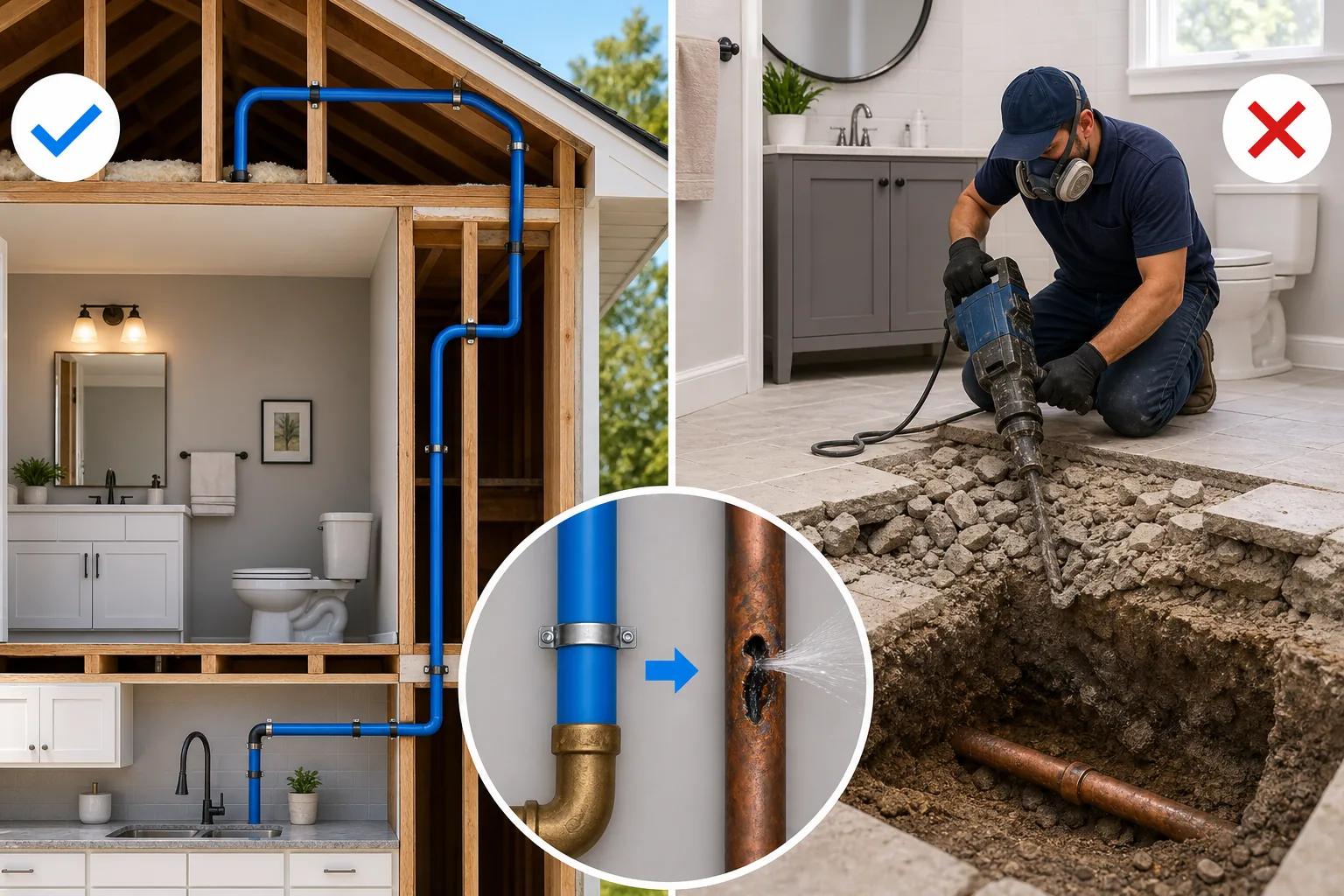
Pro Tip:Ask for a detailed leak‑location map before any demolition. It lets you compare repair options side‑by‑side and keeps costs transparent.
FAQ
What is the difference between a slab leak and a regular pipe leak?
A slab leak occurs in a pipe beneath the concrete foundation, while a regular leak is usually in exposed piping above the slab. The hidden location makes a slab leak harder to see and often more costly to repair.
How much does professional slab leak detection cost in Orange County?
Most reputable services charge between $150 and $400 for a full detection scan. This fee includes the use of acoustic, pressure and infrared tools to locate the leak without breaking walls.
Can I fix a slab leak myself?
DIY fixes are risky because you can’t see the pipe. Improper attempts often lead to larger damage, higher repair bills, and may void insurance coverage.
Will my homeowner’s insurance cover a slab leak repair?
Insurance typically covers sudden pipe bursts but treats gradual slab leaks as a separate endorsement. Providing detailed detection reports improves claim approval odds.
How long does a reroute repair usually take?
Rerouting a single water line drop usually finishes in 1.5‑2 days. A full‑home repipe that includes rerouting can be completed in 2‑3 days, depending on the number of fixtures.
Is there a way to monitor my home for hidden leaks after a repair?
Yes. Acoustic sensors capture sound generated by pipe leaks, enabling detection of leakage events.
Conclusion
If you suspect a slab leak, start with a professional detection scan and let Repipe OC design the most cost‑effective repair. Contact us for a free on‑site estimate and get peace of mind backed by a 25‑year transferable warranty.


Comments