
Leak Detection: Methods, Signs, and Next Steps

Water can disappear behind walls, under slabs, or into the soil without anyone noticing. If you catch a leak early, you save money, prevent mold, and protect your home’s value. Below we break down what leak detection is, the most common methods, what to expect from a professional visit, and when it signals a full repipe.
Table of Contents
What Leak Detection Is and When You Need It
Leak detection means finding hidden water loss before it spreads. Technicians listen for sounds, measure pressure changes, or use cameras to locate the exact spot without tearing down walls. Early signs include unexplained water sounds, damp spots, and a sudden rise in the water bill. Those clues tell you a problem exists, but only a professional can pinpoint where.
Homeowners who wait often face higher repair costs, mold growth, and weakened structural members. The longer water sits, the more it erodes wood, drywall, and concrete.

When you notice any of these signs, schedule a leak detection visit. Repipe OC offers a 25‑year transferable warranty on all repiping work, so catching a leak early can help protect your home and support long-term plumbing planning.
Our team also recommends regular inspections, especially after seasonal temperature shifts that stress pipe joints.
For a deeper dive on slab-leak troubleshooting, see our How to Detect a Slab Leak: Step‑by‑Step Guide . It walks you through the signs specific to underground pipes.
Common Leak Detection Methods Explained
There are many ways to locate a leak. Each method answers a different question, and most professionals combine several to narrow down the source.
Method | Detection Technique | Best For | Limitations |
Acoustic detection | Acoustic | Appliance lines, slab leaks | Noise can mask subtle leaks |
Water‑submersion bubble test | Visual | Basic residential pipes | Operator dependent, not precise |
Soap solution bubble test | Visual | Finding pinhole leaks | Only works on exposed pipe sections |
Gas sensor detection | Sensor | Detecting gas‑line leaks | Requires specialized equipment |
Dye testing | Visual | Pool or slab leaks | May miss low‑rate leaks |
Hydrostatic test | Pressure | Drain and sewer lines | Doesn’t locate exact spot |
Helium tracer testing | Tracer gas | Very small leaks in pressurized lines | Expensive, needs lab equipment |
Flood sensors (pucks/spot leak sensors) | Probe-based water detection | Near hot water tanks and appliances like dishwashers or washing machines | Detect water only when it reaches probes; may miss leaks until water reaches sensor; not ideal for tight or angled spaces |
Pressure‑decay testing provides accurate leak‑rate numbers, but it can’t tell you exactly where the crack lives. This method is valued for speed and volumetric measurement. On the other hand, flood sensors (pucks/spot leak sensors) detect water when it reaches their probes and may miss leaks until water reaches the sensor.
Pro Tip:Pair a pressure‑decay test with a visual inspection. The pressure test tells you “leak exists,” and the visual step narrows the zone.
For a quick look at how acoustic devices work, the Wikipedia entry on leaks offers a clear overview of sound‑based detection.
How a Professional Leak Detection Visit Works
When you call Repipe OC, a technician arrives with a toolbox that reads like a science lab. First, they do a visual walk-around, checking fixtures, valves, and any visible moisture.
Next, they use pressure-testing equipment to isolate the suspect line. If the water level drops, the system isn’t holding, which is a red flag.
After the pressure check, they may use acoustic detection equipment. The sensor picks up the faint hiss of water escaping a pipe, even through concrete.
For drains and sewers, they perform a hydrostatic test . Water is poured into the line and observed for any decline over time. This method is especially useful for investigating slab-level leaks and confirming whether a drain or sewer section is losing water.
Once the source is confirmed, the technician writes a report that includes the exact location, recommended repair, and an estimate. Repipe OC’s report also flags any nearby components that could fail soon, giving you a roadmap for future maintenance.
Because we work across Orange County, you’ll often see us in neighborhoods like Laguna Niguel, Irvine, and Newport Beach. Our local knowledge speeds up diagnosis and reduces unnecessary demolition.
Read more about our full suite of services at Leak Detection Services, Pipe, Copper & Slab Leaks .
DIY Leak Checks vs. Professional Detection
Many homeowners start with a DIY approach: turning off all fixtures, watching the water meter, or using a smart sensor.
A smart water sensor can alert you the moment water moves where it shouldn’t. These plug-and-play devices connect to your Wi-Fi and send notifications to your phone.
Smart sensors are convenient, but they only report that water moved; they don’t tell you which pipe is leaking or how far the water traveled. In a multi-story home, that vague alert can lead to unnecessary wall openings.
Professional detection, on the other hand, pinpoints the exact location. That precision means you only cut where you have to, saving labor and material costs.
For an overview of smart-device options, review guidance from your insurance provider about early leak alerts and water-damage prevention.
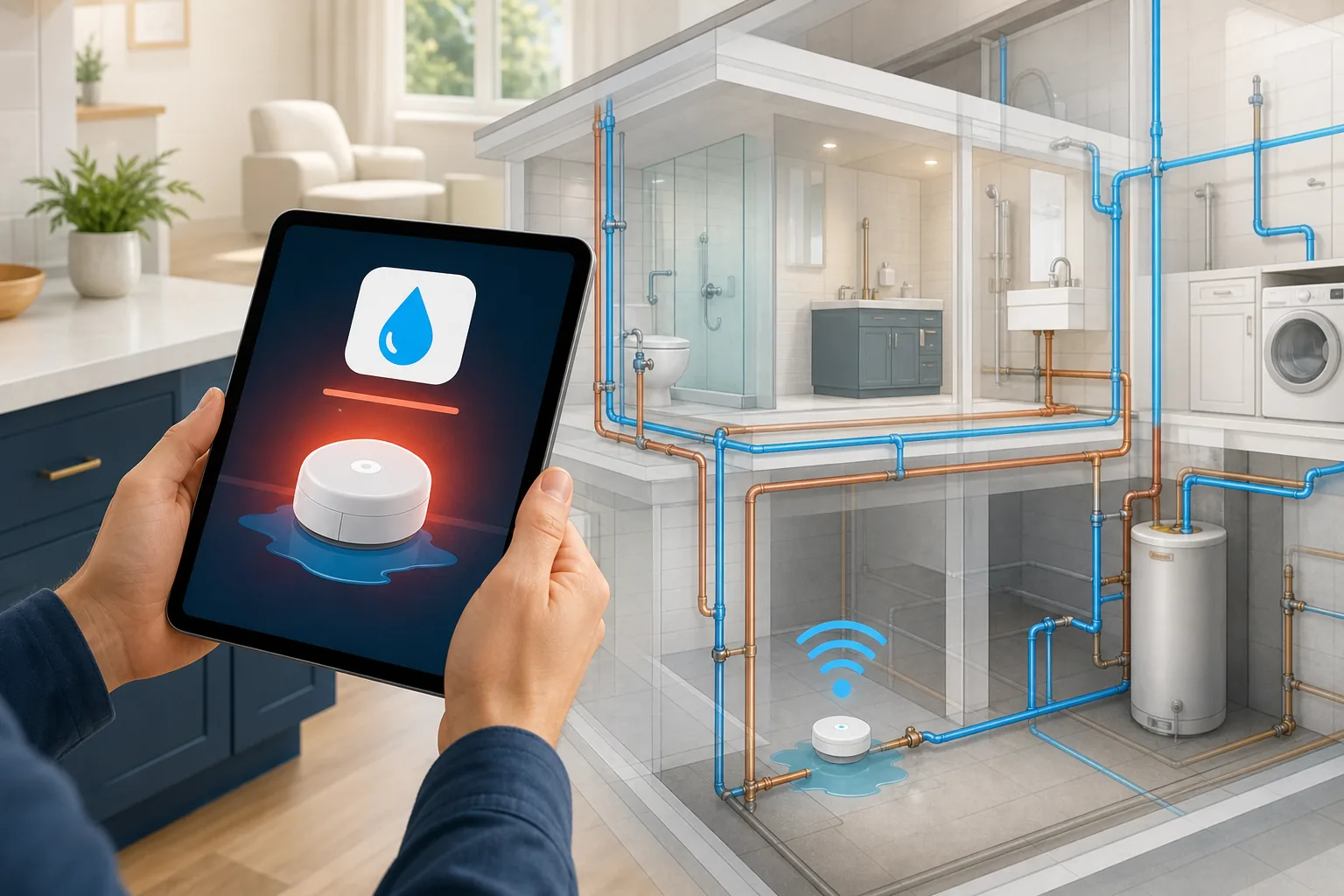
When you weigh cost versus certainty, remember that a professional inspection can support insurance claims and future contractor quotes while reducing guesswork.
Our own Leak Detection & Slab Leak Repair page outlines what to expect, from arrival time to post-visit recommendations.
When Leak Detection Leads to Repiping
Sometimes the leak is just the tip of the iceberg. If the pipe material is old copper or corroded steel, fixing a single leak may not solve the underlying issue.
In Orange County, many homes built before the 1990s still have original copper that can pit and crack over time. When our technicians find multiple pinhole leaks or widespread corrosion, we recommend a full repipe.
Repiping replaces the entire supply line with modern pipe materials.
Our 25‑year transferable warranty gives homeowners confidence that the new system will last decades. You’ll also see lower water bills because the new pipe network eliminates hidden losses.
Read our Need a Repipe? Here’s What You Should Know guide for a step-by-step look at the repiping process, financing options, and how we schedule the work.
Key Takeaway:A single leak often signals broader pipe health issues; a professional assessment can tell you whether a repair or a full repipe makes more sense.
FAQ
What are the most common signs of a hidden leak?
The most common signs are a steady hiss when fixtures are off, unexplained damp spots on walls or floors, and a sudden rise in your water bill despite unchanged usage.
Can I detect a leak myself with a water meter test?
Yes, you can turn off all water-using devices and watch the meter; if it still moves, water is escaping somewhere in the system.
How accurate is acoustic leak detection?
Acoustic detection can hear water moving through a pipe even behind concrete, but background noise may mask very small leaks, so it’s often paired with pressure testing for confirmation.
Do smart leak sensors replace professional inspections?
No. Sensors alert you to water activity, but they don’t locate the exact pipe or assess pipe condition, so a professional visit is still needed for a precise fix.
When should I consider a full repipe instead of a spot repair?
Consider repiping when you see multiple leaks, widespread corrosion, or if your home’s plumbing is older than 30 years; a new system prevents future surprises.
How long does a leak detection visit take?
A typical residential visit lasts one to two hours, depending on house size and the complexity of the plumbing layout.
Ready to stop water loss before it damages your home? Get a free on-site estimate from Repipe OC today .


Comments