
Copper Leak: Causes, Repairs, and Prevention

A tiny copper leak can turn into soaked cabinets, damaged drywall, or a much bigger repair. The good news is that one pinhole doesn't always mean your whole home needs new pipes.
We’ll show you how to spot the cause, prepare for a safe repair, compare solder, push-fit, press, and PEX methods, then decide when repiping makes more sense.
Table of Contents
How to Identify a Copper Leak and Find Its Cause
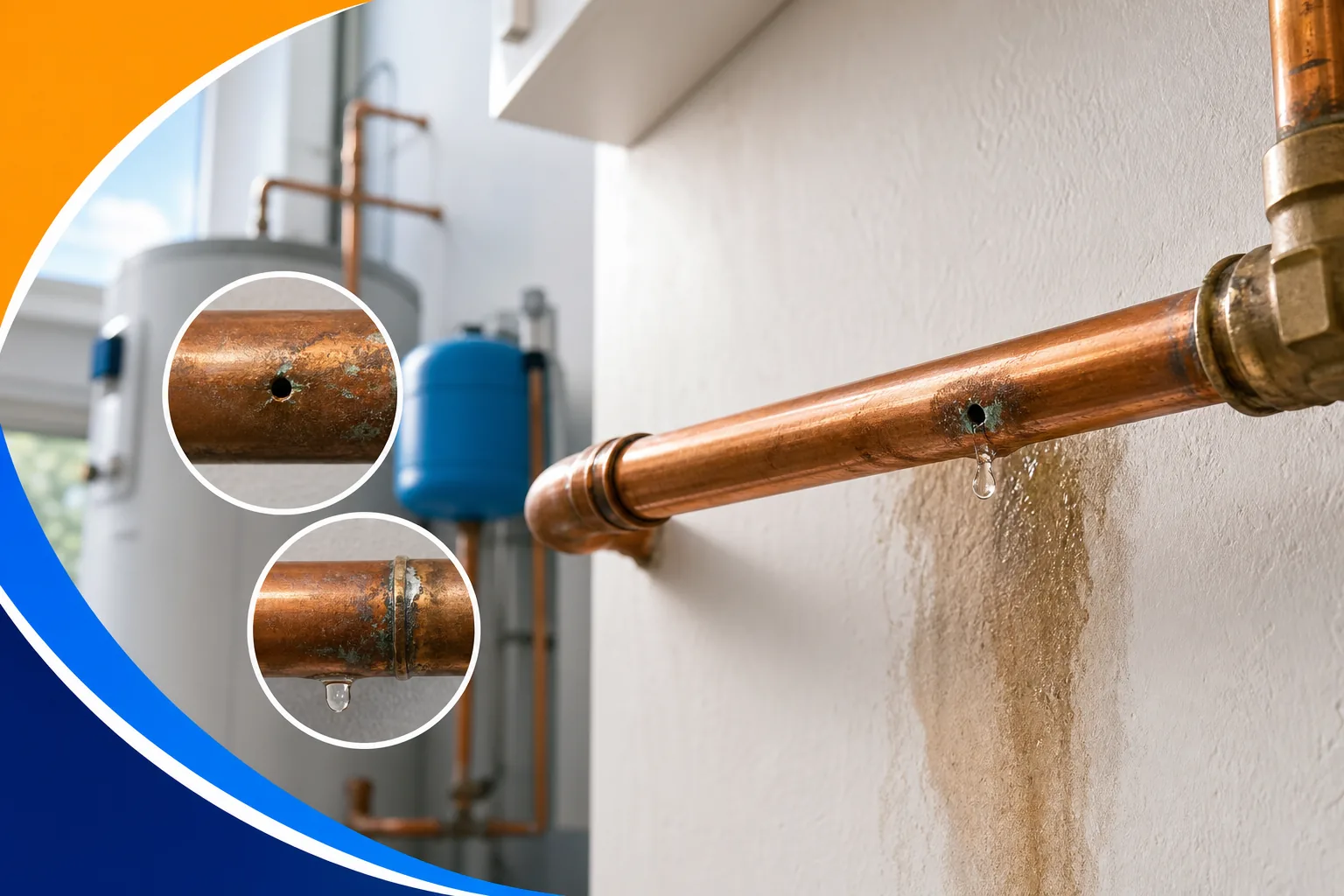
A copper leak often starts as a pinhole caused by localized corrosion . Look for green or blue-green marks, damp insulation, staining below a pipe, or a faint hiss near a wall or ceiling. A water meter that moves when every fixture is off can also point to a hidden leak.
Start by checking exposed pipe runs near water heaters, cabinets, crawl spaces, and slab edges. Dry the pipe with a cloth, then watch for a fresh bead of water. If the pipe is hidden, avoid opening walls at random. Repipe OC’s leak detection service can help locate pipe, copper, or slab leaks before access work begins.
Age matters, but it isn't the only cause. Copper pipe lifespan depends on water chemistry, installation quality, and operating conditions . Water chemistry can attack copper through acidity, mineral content, or high flow speed . Moisture trapped near concrete or brick can also speed up oxidation.
Pay close attention to the pattern. One isolated hole may need one local repair. Leaks in different rooms suggest the pipe system may be deteriorating in more than one place. Repeated failures deserve a repipe assessment, even if each leak looks small on its own.
Before touching the pipe, shut off the home’s main water valve. Open a low faucet to drain pressure. Check both hot and cold lines because trapped water can remain in either side.
Warning:If water is near electrical wiring, a furnace, or a ceiling light, stop and bring in a licensed professional. Water damage is only one part of the risk.
Prepare Safely: Tools, Pipe Cutting, and Code Checks
A clean cut is the foundation of a sound copper leak repair. Gather a compact tubing cutter, deburring tool, emery cloth, marker, tape measure, replacement pipe, and the fitting made for that pipe size.
Mark the damaged area first. Cut on both sides of the bad section with the cutter held square to the pipe. Remove the section only after the line has drained. If the pipe still drips, soldering becomes unreliable because water steals heat from the joint.
Deburr the outside edge, then clean the inside edge. Copper shards can harm an O-ring inside a push-fit fitting. Wipe away debris and run a finger lightly over the edge to check for a sharp burr. For solder work, clean both the pipe and fitting until the copper looks bright. Paint, glue, grease, and dark oxidation can keep solder from bonding.
Dry-fit every piece before applying flux or heat. Measure the replacement section twice. A normal coupling has an internal stop, while a slip repair coupling can slide farther along the pipe when space is tight.
Code rules vary by location and by the fitting used. A push-fit connection may be approved when installed to its instructions, but the pipe still needs support. PEX may need sleeves, clamps, or other support so it does not sag or rub. A licensed plumber can confirm permit needs and local requirements, especially in a commercial building, condominium, or shared-wall property.
Keep a torch away from wood framing, insulation, drywall, and stored items. In a ceiling or wall cavity, soldering can create a fire hazard even when the flame looks controlled. If the work area is cramped, a no-flame fitting may be the safer choice.
Pro Tip:Take a photo before cutting. It gives you a record of pipe direction and nearby supports if the repair becomes more involved.
Copper Leak Repair Methods: Solder, Press, and PEX
The best copper leak method depends on access, pipe condition, your skill level, and local code. A small repair in sound pipe is a different job from a long corroded section hidden above a finished ceiling.
Soldered copper repair
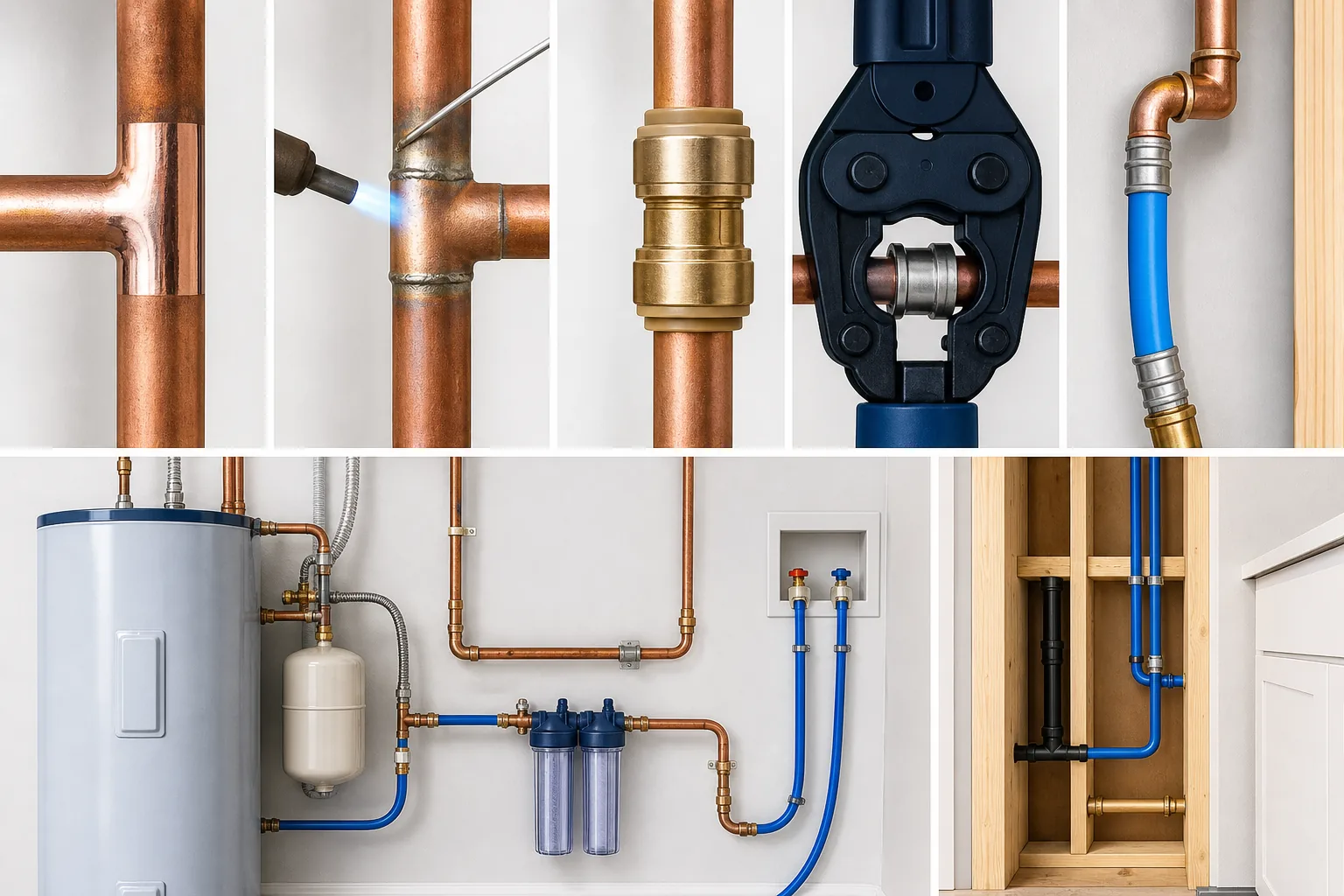
For a standard permanent copper repair, cut out the damaged section and fit two couplings with a new piece of copper pipe. Clean the mating surfaces, brush on flux, assemble the joint, and heat it evenly. Touch lead-free solder to the joint only when the copper is hot enough to draw it in.
Do not simply smear solder over a leaking joint. That can cover the visible hole while leaving a weak path behind it. If an old joint leaks, the proper fix may require heating it apart, wiping away soft solder, cleaning the pipe and fitting, then rebuilding the joint.
Isolated copper leak
One isolated copper leak does not necessarily mean the entire house needs to be repiped; repairing the affected pipe may be sufficient.
Press fittings
Press fittings use a dedicated tool to crimp a fitting around prepared copper pipe. They avoid solder and can save time on larger jobs, but the tool and jaws must match the fitting system. Once a fitting is pressed, correcting a poor position can mean cutting it out and starting again.
PEX as a repair section
PEX can bridge a damaged copper section when approved transition fittings are used. Its flexibility helps when the replacement path is hard to align. The PEX still needs support, protection from abrasion, and correct insertion depth at each connection.
Method | Best fit | Main benefit | Main caution |
Solder | Accessible copper with a dry line | Traditional copper-to-copper repair | Heat and fire risk |
Isolated copper leak | Single leak situations | Repairing the affected pipe may be sufficient | One leak does not necessarily mean the entire house needs to be repiped |
Press | Prepared copper with tool access | Fast, no-flame connection | Requires the right press tool and fitting |
PEX transition | Damaged copper with a flexible route | Easy alignment around obstacles | Needs approved transitions and support |
Temporary clamps, epoxy putty, tape, or wire wraps may slow a leak until help arrives. They should not be treated as a finished repair unless the product and local rules clearly allow that use. If the line supplies drinking water, be especially careful about materials that were not made for potable plumbing.
Repair or Replace? Assessing Damage, Cost, and Repipe Options
A single copper leak does not automatically call for a whole-house repipe. If the surrounding pipe is clean, firm, and free from other warning signs, a local repair may solve the problem.
Replacement deserves more attention when you see several pinholes, green corrosion across long runs, weak pipe walls, or leaks in separate areas. The pattern matters more than the age label alone. A home with one failed fitting is different from a home that has needed several leak repairs in a short period.
For Orange County homeowners, whole-house copper repiping commonly falls around $8,000 to $30,000 or more, based on the scope, access, materials, and labor. Comparing repiping cost per foot can help clarify how pipe material, layout, and installation affect the final price. Copper usually costs more than PEX because both the material and installation tend to cost more. A written estimate should explain the pipe material, access work, patch plan, permits, warranty, and what happens if hidden damage appears.
Repipe OC provides free on-site estimates for residential and commercial properties. Our team can compare a local repair with a full repiping plan, rather than pushing every homeowner toward the largest job. When a repipe is the sound choice, the work includes a 25-year transferable warranty and 24/7 emergency support.
That warranty can matter when you sell the home or transfer responsibility for a rental property. Property managers and HOA boards also need clear records because one failed line can affect several units or shared areas.
Water damage may reach flooring before the leak is found. If a repair or repipe leaves damaged flooring behind, a flooring supplier such as a local flooring supplier may help property owners review vinyl, LVT, parquet, or carpet tile options for the affected space.
Our decision rule is simple: repair sound pipe around one isolated failure, but get a repipe assessment when failures keep appearing in different locations.
Preventing Future Copper Leaks Through Water Treatment and Maintenance
Preventing another copper leak starts with finding what is attacking the pipe. Water pH, hardness, mineral content, flow speed, damp surroundings, and contact with other metals can all affect pipe life.
Test the water before buying treatment equipment. A useful test may include pH, hardness, total dissolved solids, and copper levels. The result helps separate a water chemistry issue from a pipe installation or age issue.
A water softener may help with hard water, but it is not a cure for every kind of corrosion. Acidic water may need a different treatment plan. Additional water treatment may also be considered, but the right choice depends on the water analysis and local plumbing practice.
Keep an eye on green stains, metallic taste, damp cabinets, and changes in water pressure. Schedule a plumbing inspection when you see a new mark or hear water running with all fixtures closed. Repipe OC can help Orange County homeowners assess whether maintenance, a local repair, or repiping best fits the system.
During an inspection, ask the technician to check pipe supports, mixed-metal connections, grounding or bonding concerns, and areas where copper touches damp materials. Small corrections can protect a repair. They cannot restore a pipe wall that has already become thin.
Key Takeaway:Treat the water problem and the damaged pipe separately. A new fitting may stop today’s leak, while water testing helps reduce the chance of another one.
Copper Leak FAQ
What causes a copper leak?
A copper leak is often caused by localized corrosion , age, poor water conditions, or a failed joint. Acidic water, mineral content, high flow, damp surroundings, and contact with other metals can speed up damage. One pinhole may be isolated, while leaks in several areas can point to wider pipe deterioration.
Can I fix a copper leak myself?
You can fix a small copper leak yourself if you can safely shut off and drain the line, cut the pipe square, clean it, and install the fitting correctly. Soldering needs special care around framing and insulation. If water is near wiring or the pipe is hidden, use a licensed plumber instead.
Is a push-fit fitting a permanent copper leak repair?
A push-fit fitting can be a lasting repair when it is approved for the pipe, installed at the correct depth, and kept free of burrs and debris. It still needs proper pipe support and inspection after pressure returns. Follow the fitting instructions and local code rather than treating every push-fit part as interchangeable.
When should I replace copper pipes instead of repairing them?
Replace or repipe copper plumbing when leaks keep appearing in different areas, corrosion covers long sections, or the pipe wall looks weak. One isolated leak may need only a local repair. Repipe OC can provide an on-site estimate so you can compare a targeted fix with whole-house replacement.
How much does copper repiping cost in Orange County?
Whole-house copper repiping in Orange County often runs about $8,000 to $30,000 or more, depending on access, layout, materials, labor, and repair work. PEX is often less costly because its material and installation costs tend to be lower. Request a written scope instead of relying on a broad number alone.
We recommend stopping the water first, then matching the repair to the damage. For an isolated failure, a careful local repair may be enough. For repeated leaks, ask Repipe OC for a free on-site estimate and compare the long-term value of a warranty-backed repiping plan.
Related reading: South OC help for South OC leak detection and South OC burst pipe repair.


Comments