
Top 6 Repiping Pipe Materials Compared

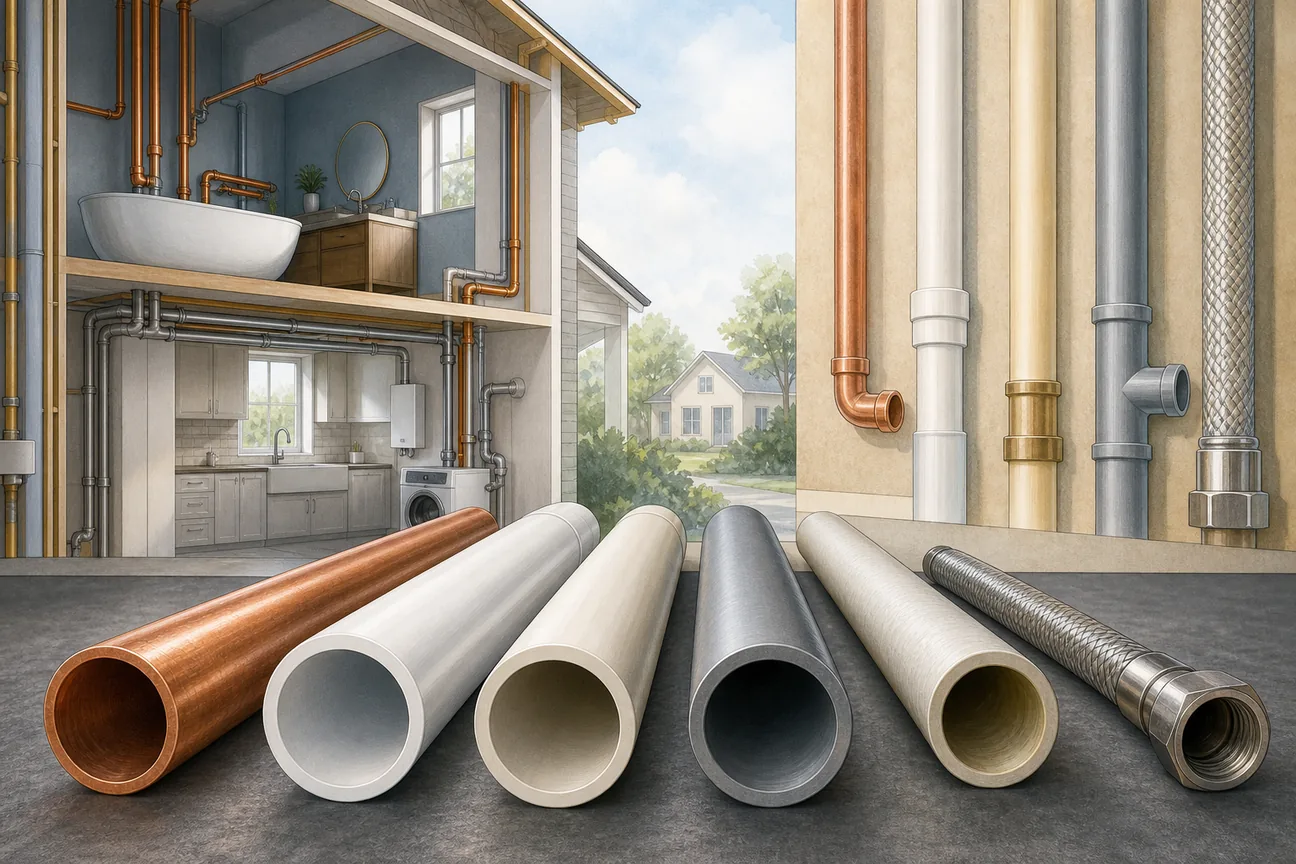
Old pipes make your water weak and your bills high. You need a clear picture of the options before you pull the trigger on a repipe. Below are the six most common materials, plus a quick decision guide.
Table of Contents
1. Repipe OC (Our Top Pick)
Repipe OC is a full‑service repiping firm that handles everything from inspection to a 25‑year transferable warranty. The crew cuts into walls, swaps out old tubing, and pressure‑tests the new network before sealing everything back up. Homeowners appreciate the single‑point contact and the peace of mind that comes with a warranty that moves with the house.
We work across Orange County, from Laguna Niguel to Irvine, so we know the local codes and water chemistry inside out. Our team follows a strict timeline: a walk‑through inspection, a clear schedule, and a final walkthrough to hand back a leak‑free home.
Because we let you choose the pipe material, we often match copper for hot‑water runs and PEX for the rest of the house. That flexibility lets us balance cost and durability for each project.
Read more about PEX vs copper options in Orange County to see why many homeowners pick a hybrid approach.
Our crews use industry‑grade fittings and follow the latest ASTM standards, so the work meets the highest safety and performance criteria.
When you choose Repipe OC, you get a free on‑site estimate, transparent pricing, and a warranty that can boost your home’s resale value.
Key Takeaway:Repipe OC bundles material choice, expert installation, and a 25‑year transferable warranty into one simple package.
2. Copper (Type L) — Best for Long-Term Ownership and High-End Builds
Copper Type L is a medium‑wall pipe that resists corrosion and handles temperatures up to 1,981 °F. It typically lasts 50‑70 years, making it the go‑to for homeowners who plan to stay put.
Its rigid nature gives a solid feel under the sink and it works well for exposed runs where UV exposure or rodent damage could be a concern.
Because copper is a metal, it has natural antimicrobial properties that help keep water clean.
Installation takes longer than PEX because each joint needs soldering, which also adds to labor cost.
on How Long Does Copper Pipe Last for a deeper dive.
According to Wikipedia , copper's thermal conductivity helps hot water reach fixtures quickly, but it also means you may want to add insulation to prevent heat loss.
If you value a material that can survive a century with proper care, copper fits the bill.
3. CPVC — Best for Hot‑Water Lines Where Code Requires Rigid Plastic
CPVC handles water up to 200 °F, so it's often required by local codes for hot‑water distribution. Its pressure rating sits around 150 psi, enough for typical residential systems.
The pipe is joined with solvent cement, which creates a chemical bond that's strong once cured. That method is quick, but you need to mind the temperature during installation.
CPVC's lifespan averages 25‑40 years, shorter than copper but longer than standard PVC.
Because it's rigid, you'll see more fittings than with PEX, which can add to labor time.
For a quick look at CPVC's performance, check the comparison chart in the next section.
4. PVC — Best for Drain, Waste, and Vent Lines
PVC is the workhorse for drain, waste, and vent (DWV) systems. It’s lightweight, cheap, and easy to cut, which keeps labor costs low.
It can’t handle hot water, so it’s never used for supply lines. Its typical lifespan is 25‑40 years, and it resists corrosion well.
The material is fire‑resistant and quiet, making it a solid choice for underground or concealed runs.
We recommend PVC for any non‑pressurized line that moves water away from the home.
Need a step‑by‑step cost breakdown? Our Cost to Repipe a Home guide walks you through material and labor estimates.
When paired with proper fittings, PVC can last decades without leaking.
5. Galvanized Steel — Understand Why It Needs to Be Replaced
Galvanized steel was common in homes built before the 1980s. It has a zinc coating that protects the steel for about 40‑50 years, but once that layer erodes, the pipe rusts from the inside out.
Hard water in Orange County speeds up the corrosion, causing reduced pressure and brown water.
Because the rust builds up inside the pipe, you can’t see the damage until a leak appears.
Replacing galvanized steel eliminates the risk of pinhole leaks and restores water pressure.
Our guide on repiping cost estimates explains how a full‑house swap compares to patch‑up fixes.
Most homeowners find that a full repipe with PEX or copper is more cost‑effective than trying to line the old steel.
6. Polybutylene — Why It Should Always Be Replaced
Polybutylene was marketed in the 1980s as a cheap alternative, but it fails when exposed to chlorine or high temperatures. The material can become brittle and split, leading to sudden leaks.
Because the failures are unpredictable, insurance companies often label polybutylene lines as a high‑risk factor.
We always recommend pulling out polybutylene and installing either PEX‑A or copper, depending on the homeowner’s budget and performance needs.
Our Polybutylene replacement guide shows the steps and why the switch is worth the investment.
Choosing a reliable material now saves you from emergency repairs later.
Head-to-Head: Pipe Material Comparison Table
Material | Typical Lifespan | Pressure Rating | Max Temp (°F) | Best Use |
PEX‑A | 40‑50 years | 100 psi | 180 | Whole‑home supply lines |
Copper (Type L) | 50‑70 years | 250 psi | 1,981 | Exposed runs, high‑temp applications |
CPVC | 25‑40 years | 150 psi | 200 | Hot‑water supply where code mandates rigid plastic |
PVC | 25‑40 years | — | — | Drain, waste, and vent lines |
Galvanized Steel | 40‑60 years (degrades faster in coastal areas) | 200 psi | — | Legacy supply lines – recommend replacement |
Polybutylene | 10‑20 years (high failure risk) | 150 psi | 180 | Older homes – must be replaced |
The table makes it easy to match your home’s needs with a material’s strengths.
How to Choose the Right Pipe Material for Your Home
Picking the right pipe starts with three questions: what’s your budget, how long do you plan to stay, and what does local water quality look like?
If you want the longest life and don’t mind a higher price, copper is the premium pick.
If you need a balance of cost, durability, and easy installation, go with PEX‑A.
If your code forces a rigid plastic for hot water, CPVC fits the bill.
Reserve PVC for drain and vent lines only.
Never keep galvanized steel or polybutylene in place; replace them.
We also suggest asking any contractor for a detailed quote that breaks out material, labor, permits, and drywall repair. That way you can compare apples‑to‑apples.
Pro Tip:Pair a repipe with a new water‑heater. The upgraded heater can handle higher flow rates and improve overall efficiency.
Signs Your Home Needs Repiping (Regardless of Material)
Low water pressure that doesn’t improve after cleaning aerators often means the pipe interior is clogged or corroded.
Brown, rusty water from a hot tap signals internal rust from metal pipes, especially galvanized steel.
Frequent leaks in different rooms point to a system‑wide weakness rather than an isolated joint.
Visible pipe age, homes built before the mid‑1990s often have outdated materials that are nearing the end of their service life.
When you notice any of these clues, get a professional leak‑detection inspection. Repipe OC offers a free on‑site assessment to confirm whether a full repipe is the smarter move.
FAQ
What is the average lifespan of PEX compared to copper?
PEX usually lasts 40‑50 years, while copper can survive 50‑70 years when installed correctly.
Can I mix different pipe materials in one repipe project?
Yes, many homeowners use copper for exposed hot‑water lines and PEX for hidden supply runs; mixing is common and code‑compliant.
How much does a whole‑house repipe cost in Orange County?
Pricing varies depending on home size, fixture count, and chosen material; contact Repipe OC for a project-specific estimate.
Is a 25‑year warranty worth it?
A transferable 25‑year warranty protects your investment and can add resale value, making it a solid safety net.
Do I need a permit for a repipe?
Yes, most cities require a plumbing permit, and a licensed contractor like Repipe OC will pull it for you as part of the service.
Conclusion
For most Orange County homes, PEX‑A gives the best mix of cost, ease of install, and durability, while copper remains the premium choice for exposed, high‑temperature runs. Ready to lock in a leak‑free system? Get your free, no‑obligation estimate from Repipe OC today and start planning your upgrade.


Comments