
Repiping Insurance Coverage: What Homeowners Need to Know
- Repipe OC
- Aug 8
- 8 min read

Many homeowners assume a full repipe will never be covered by insurance. In some cases, however, specific policy endorsements may help pay for eligible water damage or related repairs, depending on the cause of the loss and the terms of the policy.
Below, Repipe OC explains what repiping insurance coverage may mean, what a typical policy may or may not pay, the add-ons that can expand protection, why insurers often classify a full repipe as maintenance, and how coverage may relate to repiping projects for Orange County homes.
Table of Contents
What Repiping Insurance Coverage Usually Means
When a pipe bursts unexpectedly, most homeowners policies treat the resulting water damage as a covered loss. The policy will pay for cleaning, drywall repair, and replacement of ruined belongings. It does not pay for the pipe itself if the break was due to age or wear. In other words, insurance covers the fallout, not the cause.
That distinction matters because a claim only triggers when the event is sudden and accidental . If you ignore a slow leak for months, the insurer can deny the payout. The same rule applies to corrosion, tree‑root damage, or any issue that stems from lack of maintenance.
Insurance companies use that line in the policy wording to keep premiums affordable. They expect homeowners to handle routine upkeep, so they draw a line between an accident and a preventable problem.
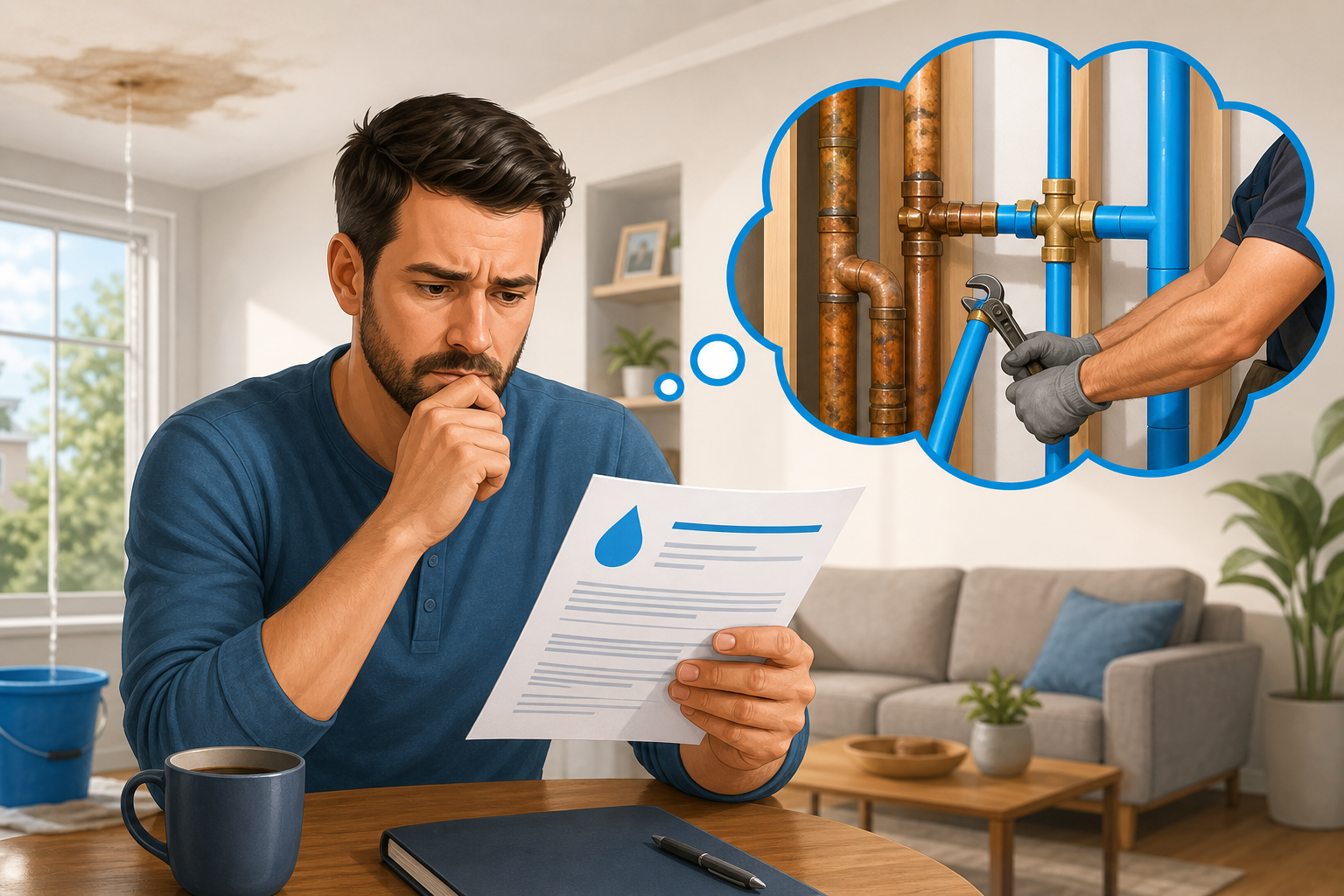
Understanding this split helps you talk the right language to your adjuster. Mention the burst as a sudden event, describe the damage, and let the insurer handle the water‑damage portion. If the burst forces you to open walls, you can sometimes negotiate a partial repipe cost as part of the repair work.
Many homeowners policies cover accidental water damage from a burst pipe, but long‑standing leaks are not covered. That policy language shows why the “sudden and accidental” clause is the key trigger.
Our team at Repipe OC often sees homeowners confused about what’s covered. We recommend pulling the exact wording from your dwelling and personal‑property sections before you call a plumber. Knowing the language lets you frame the issue correctly and avoid a surprise denial.
What a Standard Homeowners Policy May Cover
A typical homeowners policy bundles three main coverages: dwelling, personal‑property, and loss‑of‑use. The dwelling part pays to rebuild walls, floors, and ceilings damaged by water. Personal‑property replaces ruined furniture, electronics, and clothing. Loss‑of‑use helps with temporary housing if you can’t stay home during repairs.
What most policies exclude is the cost of replacing the pipe system itself. Repiping is seen as a preventive upgrade, like a new roof or HVAC unit, and therefore falls under the homeowner’s maintenance responsibility.
Coverage Element | What’s Paid | What’s Excluded |
Dwelling | Repair to walls, floors, and structural elements | Cost of new pipe material unless tied to a covered loss |
Personal Property | Replacement of damaged belongings | Replacement of plumbing fixtures themselves |
Loss of Use | Hotel or rental costs while home is uninhabitable | Any expense for the repipe work itself |
When a pipe bursts and floods a room, the insurer will often cover the cleanup and the wall repairs. If the burst forces you to replace a section of pipe to stop the leak, that portion may be reimbursed as part of the repair, but the rest of a whole‑house repipe stays out of the claim.
For a concrete example, consumer insurance guidance commonly notes that standard policies label repiping as a maintenance expense. These guidelines explain that a claim will pay for “opening up a wall and replacing one bad pipe,” but not for the entire system.
One useful trick is to document every step of the damage, including photos, timestamps, and a detailed note from the plumber. Those records can turn a partial repair into a reimbursable line item, especially if the pipe failure was sudden.
We often see homeowners in Orange County who combine a water‑damage claim with a full repipe quote from Repipe OC. The claim covers the immediate damage; the repipe quote handles the long‑term fix. That split keeps the insurance payout within policy limits while giving you a fresh plumbing system.
Repipe OC’s free on‑site estimate helps you see exactly where the covered damage ends and the maintenance work begins.
Endorsements That Can Expand Protection
Endorsements are optional add‑ons you attach to a base homeowners policy. They let you tailor coverage to the risks that matter most in your home.
The most common plumbing‑related endorsement is water‑backup coverage. It steps in when a sewer line backs up or a sump pump fails, flooding your basement or bathroom. Without it, that damage is usually excluded.
Another useful rider is the service‑line protection endorsement. It covers the underground pipe that runs from the street meter to your house. If that line breaks from a sudden external event, the endorsement can pay for repair or replacement.

Both endorsements typically start at a few thousand dollars in limits and add a modest deductible. They’re a fraction of the cost of a whole‑house repipe, yet they can save you thousands if a backup occurs.
Typical water‑backup coverage guidance explains that while standard policies exclude sewer backups, the optional endorsement covers damaged personal items, water removal, and wall repairs. It does not cover the repair of the sewer line itself, which is why a service‑line endorsement is often paired with it.
General guidance on underground‑service‑line endorsements adds that these riders usually exclude damage caused by neglect, such as tree roots. That mirrors the broader industry stance that insurers pay for sudden events, not gradual wear.
When you talk to your agent, ask for a written quote on both the water‑backup and service‑line endorsements. Compare the added premium to the potential out‑of‑pocket cost of a backup repair. In many Orange County neighborhoods with older clay pipes, the math favors adding both riders.
Repipe OC can help you identify which endorsements make sense for your home’s age, soil conditions, and plumbing layout.
Why Full Repiping Is Often Treated as Maintenance
Insurance providers view a whole‑house repipe as a proactive upgrade, much like replacing a roof before it leaks. Because the work prevents future damage, they classify it as a maintenance expense that the homeowner should bear.
Industry guidance explains that repiping replaces the entire pressurized water network, fixing corrosion, low pressure, and recurring leaks. The process restores water quality, but the cause, old or deteriorated pipes, is seen as a normal wear‑and‑tear issue.
Typical homeowners policy guidance reinforces that point. Policies generally cover “sudden and accidental” plumbing failures, but not “wear and tear” or “poor maintenance.” The distinction hinges on the event’s immediacy.
Because of that split, a claim for a burst pipe can reimburse the water‑damage repair, but the cost of swapping out all the galvanized steel or polybutylene lines stays out of the claim.
One usable implication is that homeowners who wait until multiple leaks appear end up paying for each repair separately. The cumulative cost often exceeds a full repipe, especially when labor and demolition fees add up.
Another factor is the deductible. If your policy has a $1,000 deductible for water damage (the only deductible we saw listed in the sample data), you’ll pay that amount before the insurer chips in. That can make a single‑pipe fix look cheaper, even though the long‑term risk remains.
We advise Orange County owners to weigh the total number of leaks, the age of the existing material, and the projected lifespan of the new system. A full repipe, though an upfront expense, eliminates future claim‑related deductibles and may lower your premium over time.
Repipe OC financing options let you spread the cost, turning a maintenance‑type expense into a manageable payment plan.
For a deeper look at how pipe material choices affect longevity, see our 10 Factors Affecting Repiping Cost per Square Foot guide.
How Coverage Relates to a Repiping Project in Orange County
Orange County homes face unique risks: hard water, seismic activity, and older construction in neighborhoods like Laguna Beach and Irvine. Those factors shape both the likelihood of pipe failures and the way insurers view claims.
If a pipe bursts and floods your living room, your dwelling coverage will pay for the wall repairs. If the burst forces you to replace the main water line, you can sometimes claim the portion of the work that stopped the leak. The rest of a whole‑house repipe stays outside the claim.
Our team at Repipe OC often helps homeowners map out which parts of a repipe can be linked to a claim. For example, when a slab leak is discovered, the immediate repair to stop the water may be covered, while the decision to replace all the pipes for future protection is a separate project.
In a recent case, a homeowner in San Juan Capistrano filed a claim for water damage after a pipe burst. The insurer paid for drywall and carpet replacement, but the homeowner chose to add a service‑line endorsement after the fact. The endorsement covered the cost of replacing the underground supply line that had corroded over decades.
That scenario highlights why it’s smart to review your policy before a repipe begins. Adding the right endorsements can turn a future claim into a reimbursable line item, reducing out‑of‑pocket expense.
We also handle the permits and city inspections required in Orange County. A proper permit ensures the work meets local codes, which can affect insurance eligibility for future claims.
Need a clear picture of the total project cost? Our Cost to Repipe a Home: Step‑by‑Step Guide breaks down labor, material, and permit fees so you can see where insurance might offset the bill.
For homeowners who wonder whether a full repipe will boost resale value, see our Is Repiping Worth It? Guide for Orange County Homeowners . The 25‑year transferable warranty we provide often becomes a selling point.
Finally, if you’re dealing with a slab leak, our Slab Leak Repair in San Clemente: A Complete Guide explains how to document the damage for your insurer and when a full repipe makes financial sense.
FAQ: Repiping Insurance Coverage
Does homeowners insurance ever pay for a full repipe?
No, standard policies often treat a full repipe as maintenance, so they usually won’t cover the entire job. They may reimburse the portion needed to stop a sudden, covered leak, though.
What is the water‑backup endorsement?
The water‑backup endorsement adds coverage for damage caused by backed‑up sewers or sump-pump failures, with limits set by the policy.
Can I add an endorsement after a claim?
Yes, you can ask your insurance provider about purchasing a water‑backup or service‑line endorsement. Adding it before the next incident may provide protection for future claims, subject to the policy terms.
How does a deductible affect a repipe claim?
Many policies have a deductible for water‑damage claims. You pay that amount first, then the insurer covers approved repair costs beyond the deductible and within the policy limits.
Will repiping lower my insurance premium?
It may. Insurers can view new, corrosion‑free pipes as lower risk, so they may adjust your premium after you complete a full repipe. Ask your provider about available discounts.
What should I do if my pipe bursts at night?
Shut off the main water supply, document the damage with photos, and contact your insurance adjuster right away. Then call Repipe OC for prompt leak assessment, repiping guidance, and licensed plumbing support.
Ready to protect your home with the right coverage and a fresh plumbing system? Start by reading our Need a Repipe? Here’s What You Should Know guide, then schedule a free on‑site estimate with Repipe OC to explore your repiping options and secure that 25‑year transferable warranty.


Comments