
Repipe Plumber in Orange County: What to Expect

A small leak can turn into a soaked cabinet before breakfast. When old supply lines keep failing, a whole-home repipe may be the cleaner answer than one more patch. We’ll explain when you need one, how PEX compares with copper and PVC, what the work looks like, and what shapes the final cost.
Table of Contents
When You Need a Whole-Home Repipe
A repipe plumber looks at the full water system, not only the spot where water appears. That matters when several fixtures show the same trouble.
Old copper can develop pinhole leaks as it wears down. Older pipe materials may restrict flow as their inside surfaces corrode. Other aging systems can also need replacement after years of leaks or brittle connections. If repairs keep moving from one room to the next, the pipes may be the problem.
Common signs include low pressure at more than one fixture, rusty or discolored water, damp drywall, and repeated leaks. You may also hear water move inside a wall after every faucet is shut off. A plumber should test the system before recommending a full repipe. One isolated failure does not always mean every pipe needs replacement.
Foundation type changes the plan. A crawl space can give the crew access below the floor. A slab home may need overhead routes, wall access, or carefully planned rerouting. The best route depends on the floor plan, fixture count, attic access, and existing pipe layout.
Repipe OC provides whole-house repiping in Orange County for homes, rental properties, HOAs, and commercial buildings. We start with an on-site review so the estimate reflects the actual structure instead of a guess based only on square footage.
It also helps to separate a supply-line problem from a drain or sewer problem. A leak under a slab, for example, may need a different plan than failing hot and cold water lines. Our Orange County repiping specialists can assess the valves, regulator, fixture connections, and pipe condition together.
A useful rule is simple: if leaks are widespread or repairs keep repeating, ask for a whole-system assessment. Waiting for the next failure can add water damage to an already expensive plumbing decision.
PEX, Copper, or PVC: Which Repipe Material Fits the Property?
A repipe plumber should recommend materials based on the building, route, local code, and your goals. There is no single pipe that fits every Orange County property.
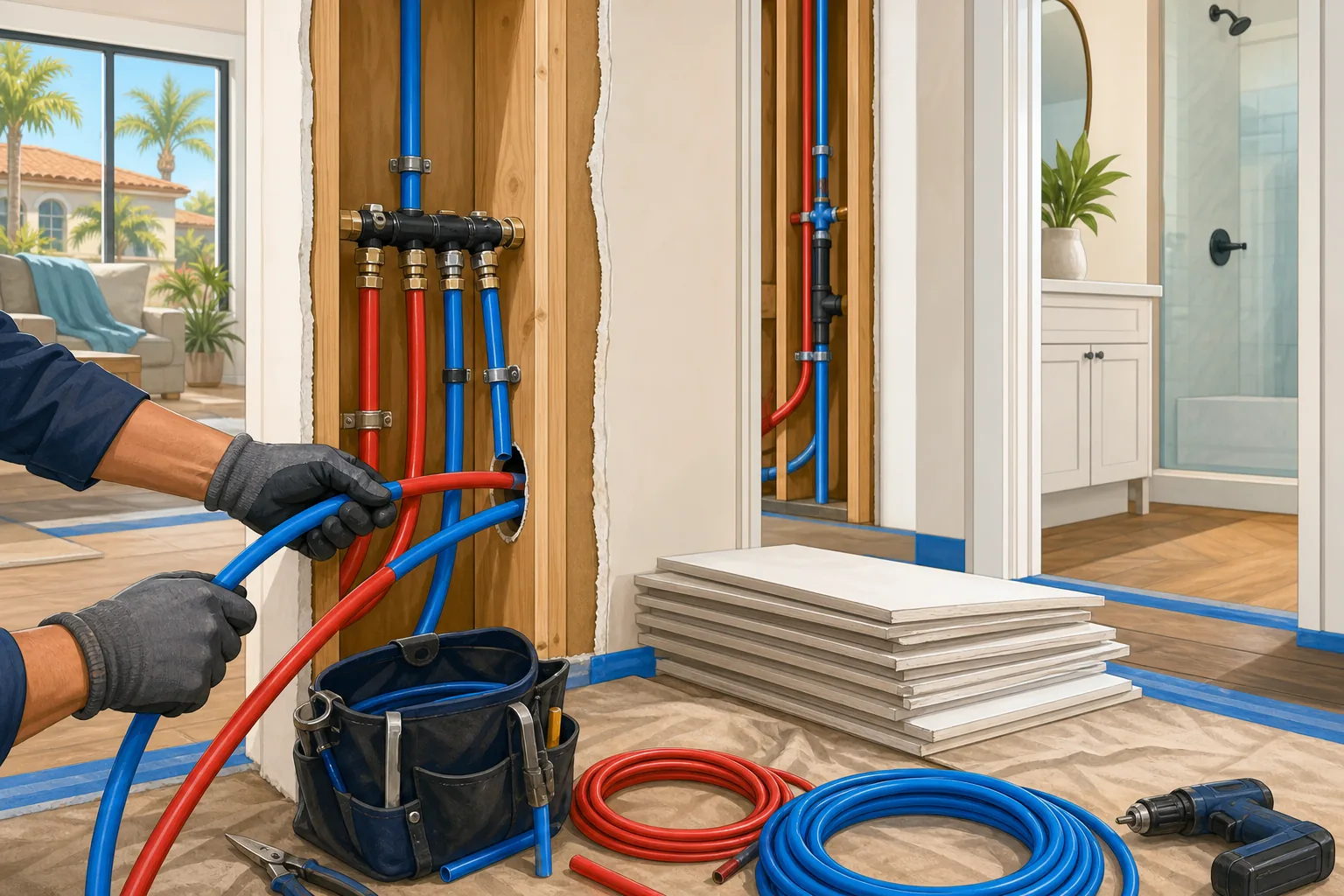
PEX is flexible plastic tubing. Its flexibility can reduce the number of joints needed along a route. It also works well when the crew must run new lines through walls, ceilings, or attic spaces. PEX is commonly color-coded, with red for hot water and blue for cold water. That makes future service easier to follow.
Copper is a rigid metal pipe with a long history in residential plumbing. It can be a good fit when exposed runs, heat, or the owner’s material preference points that way. It takes more time to cut and join than flexible tubing, so access and labor can affect the estimate.
PVC may cost less in some repiping discussions, but its use depends on where the pipe will run and what local rules allow. It is more common in drain systems than in indoor hot and cold supply lines. A plumber should confirm the intended use before you compare a low material price with a complete installation plan.
Material | Where it may fit | Main advantage | Watch for |
PEX | Rerouted supply lines and tight access areas | Flexible runs with clear hot and cold color coding | Must be installed with correct supports and fittings |
Copper | Exposed areas or owners who prefer metal pipe | Rigid construction and familiar service methods | More joints and labor may affect the project plan |
PVC | Uses allowed by the local code and project design | Lower material cost in some cases | May not fit every indoor supply-line application |

The material choice should follow the route, not lead it. A good estimate explains why a certain pipe fits your home and lists any included valves, stub-outs, pressure-regulating valve work, permits, and finish repairs.
For general background, a plastic pipe material may be used in some plumbing applications, while copper has different physical properties and installation needs. That is why a material comparison alone cannot replace an on-site inspection.
How a Professional Repipe Plumber Completes the Project
A professional repipe plumber follows a set order so the home stays protected and the new lines can be tested before the walls close.
Before the pipes come out
First, the crew walks through the home with you. We identify each fixture and choose the least disruptive route. The prep work may include covering furniture with plastic, protecting floors, and setting aside clear paths for workers and materials.
Next, the main water supply is shut off. Faucets open throughout the home so the old lines can drain. The crew then marks access points near sinks, toilets, showers, laundry hookups, refrigerators, hose bibs, and water heaters.
Access, removal, and installation
Small wall or ceiling openings provide access to the old pipe. Where possible, the old copper is cut out. If removal would require major demolition, the old line may stay in place while the new line runs beside it.
The crew removes or replaces old stub-outs and checks the pressure-regulating valve. New PEX lines are routed through the planned path, then secured with supports. The lines connect to each fixture through new fittings or copper stub-outs where the design calls for them.
With PEX, the red and blue lines give the system a clear visual map. That can help a future plumber trace a hot or cold line without opening more drywall than needed. The work still depends on correct fitting methods, support spacing, and code requirements.
Repipe OC treats cleanup and the final handoff as part of the job plan. Our repipe assessment process helps homeowners understand the scope before work begins, including access points and what finish work is included.
Testing and handoff
After the connections are complete, the system is pressurized and checked for leaks. The crew may also check for pipe vibration and confirm that each fixture receives water. Do not skip this stage. A pressure test catches problems before the drywall repair begins.
Access holes are then ready for patching, painting, or a separate drywall finish. Ask who handles that work before signing the proposal. Plumbing and finish repair are related, but they are different trades.
Repipe Cost, Timeline, and What Happens After Installation
Repipe cost depends on the property more than a simple price per foot. A repipe plumber will usually look at the material, number of fixtures, stories, access, foundation type, labor, permits, and finish work. For a practical breakdown of these variables, review the cost to repipe a home step by step before comparing proposals.
Crawl-space access can make routing easier. A slab foundation may require overhead rerouting or carefully planned access through walls. If concrete must be opened and restored, the work can take more time and add restoration cost. The estimate should state how the crew plans to handle those areas.
Material also affects the proposal. PEX may reduce labor in some layouts because it bends around obstacles. Copper may need more cutting and joining. PVC may show a lower material cost in some uses, but the allowed application and total installation plan still control the decision.
For a typical home with several bathrooms, the active plumbing work may take a few days, but the exact schedule depends on access and the scope. A source video describing a home up to about 3,000 square feet and three bathrooms gives an example of two to three days. That is a project example, not a promise for every Orange County home.
Plan for noise, temporary water shutoff, open access holes, and workers moving through the house. Remove fragile items from work areas. Keep pets away from open walls and tools. If you manage a rental or multi-family property, agree on tenant notices and water-shutoff windows before the first day.
After installation, the crew should walk through the property with you. Confirm that each fixture works, ask for the pressure-test results, and review which drywall or paint repairs remain. Keep the final scope, permit records, material details, and warranty terms in one place.
Repipe OC includes a 25-year transferable warranty, free on-site estimates, and 24/7 emergency support. The warranty can matter later if you sell the property, while an on-site estimate gives you a clearer view of access and labor. Read the written terms so you know what the warranty covers.
For another material reference, this material has distinct properties that affect how it is shaped and joined. The right choice still comes down to the route, code, and condition of the property.
If you are comparing proposals, use the same questions for each one. Repipe OC’s guide to getting an accurate repiping price estimate can help you confirm that the scope, materials, access, and labor assumptions are clearly documented:
Which rooms and fixtures are included?
Will the pressure-regulating valve be replaced?
Who pulls permits and schedules inspections?
Who repairs drywall and paint?
What testing happens before handoff?
What warranty applies, and can it transfer?
A low quote that leaves out access repair or permits may not be the lower total cost. Compare the complete scope instead.
Repipe Plumber FAQ
How do I know if my house needs a repipe?
Your house may need a repipe when leaks happen in several areas, pressure stays low, or the existing pipe shows broad corrosion. One failed fitting does not prove the whole system needs replacement. A repipe plumber should inspect the lines, test pressure, review the pipe material, and check access before recommending a full project.
Is it cheaper to repipe with PEX or copper?
PEX is often less costly to install than copper in layouts where flexible routing reduces labor, but the final price depends on the property. Copper may require more cutting and joining. Access, fixture count, permits, slab conditions, and finish repairs can outweigh the material difference, so compare full written scopes instead of pipe prices alone.
How long does a whole-house repipe take?
A whole-house repipe can take a few days for some homes, but no fixed timeline fits every property. The number of bathrooms, stories, access points, foundation type, and drywall work all affect the schedule. Your repipe plumber should give you a written plan that covers water shutoffs, testing, inspections, and finish work.
Will a repipe damage my walls?
A repipe usually requires planned access holes in walls or ceilings, but the amount of opening depends on the route. Crews should protect floors and belongings before work begins. Ask whether drywall repair and paint are included. Some companies leave that finish work to a separate trade, so confirm the handoff before the project starts.
Can I repipe my house myself?
DIY repiping is risky because the work involves fixture connections, pressure testing, supports, valves, permits, and local code. A hidden fitting leak can damage walls or flooring after the project appears finished. A licensed professional can plan the route, test the new lines, and document the work for future repairs or property records.
Conclusion: Request a Repipe Estimate from Repipe OC
If repeated leaks point to aging supply lines, choose a repipe plumber who explains the route, material, testing, finish work, and warranty in writing. Repipe OC provides free on-site estimates across Orange County, backed by a 25-year transferable warranty and 24/7 emergency support. Your next step is to schedule an inspection and compare the complete scope, not just the pipe material.


Comments