
Best Options for Repiping for Lead Pipe Removal in Orange County
- Primewest Plumbing
- Jul 26
- 6 min read

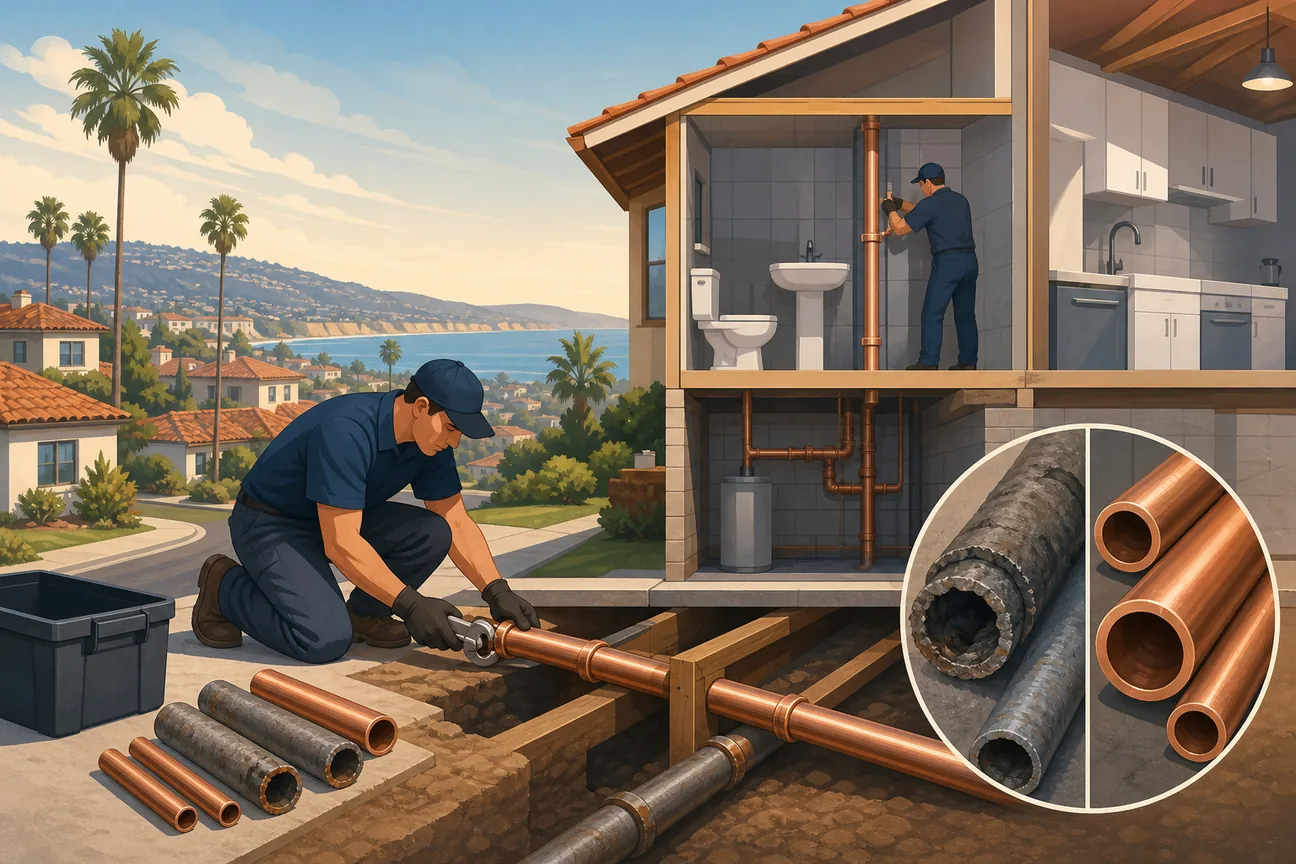
Lead pipes put your family’s health at risk and can wreck your water pressure. Below are the nine best options for repiping for lead pipe removal in Orange County, and a quick guide to pick the right one for your situation.
1. Repipe OC (Our Top Pick) — Full‑service lead pipe repiping with a 25‑year warranty
Repipe OC handles every step of a whole‑home repipe, from a free on‑site inspection to a 25‑year transferable warranty that moves with the house. The crew cuts into walls, floors and ceilings, pulls out the old tubing and installs fresh PEX or copper that meets current codes. After the new network is in place they pressure‑test the system and patch walls back to their original look. For homeowners wondering if the investment pays off, see our comprehensive Is Repiping Worth It? guide .
Our team works during normal waking hours and seals off dust with plastic sheeting, so most homeowners can stay in the house or stay with a friend while work is done. Labor makes up roughly 70 % of a typical job, and the warranty protects both material and labor for decades.
According to Wikipedia , PEX resists corrosion and can handle hot and cold water without cracking, which explains why many homeowners choose it for a full repipe.
One caveat: full repiping can feel like a brief construction site, but the result is a system that should last for decades without leaks.
Pro Tip:Ready to remove lead pipes? Try Repipe OC free →
2. Copper Pipe Repiping — Premium durability and natural antimicrobial protection
Copper pipe offers a long lifespan, often 70 years or more, and naturally resists bacterial growth, making it a solid choice for potable water lines. It handles high heat well and meets most building codes without special approvals.
Homeowners who value longevity and want a material that can be repaired easily often pick copper. The metal’s reddish hue makes it easy to spot in basements or crawl spaces.
However, copper is more expensive than plastic alternatives, and acidic water can corrode the interior over time. To understand the price differences, consult our step‑by‑step repiping cost guide .
When you need a reliable, code‑approved solution for lead pipe removal, copper fits the bill, just be ready for a higher material cost.
3. PEX Pipe Repiping — Flexible, cost‑effective solution for residential homes
PEX (cross‑linked polyethylene) is flexible, easy to install in tight spaces, and costs less per foot than copper. It resists corrosion, so it won’t leach metals into drinking water.
Typical lifespan is about 70 years, and the material works well for both hot and cold lines. Because it bends, installers can run it through walls with fewer fittings, which reduces labor time.
The main downside is that PEX can be damaged by prolonged sunlight exposure, so it’s best used inside walls or insulated outdoors.
Our recommended PEX parts come with a lifetime warranty; see the Best PEX Repipe Parts & Labor Warranty for details.
According to Policy Innovation , utilities often choose between copper and plastic pipes, and many lean toward PEX for its lower cost and ease of installation.
4. CPVC Pipe Repiping — Ideal for hot‑water lines with code‑approved durability
CPVC (chlorinated polyvinyl chloride) handles high temperatures better than standard PVC, making it a good fit for hot‑water supply lines. It’s lighter than copper and easier to cut, which can speed up installation.
The material is approved by most local codes for residential water distribution, and it resists corrosion and chemical damage.
CPVC can become brittle in very cold climates, so it’s less suitable for exterior runs in freeze‑prone areas. For detailed pricing specific to Orange County, review the Cost of a Repipe in Orange County guide.
5. Epoxy Lining (Trenchless Coating) — Non‑invasive internal pipe protection
Epoxy lining coats the interior of existing pipes with a resin barrier, sealing out lead without digging up walls. The process involves cleaning the pipe, injecting a two‑part epoxy and curing it with heated compressed air.
This method can be completed in one to two days and costs roughly half of a full pipe replacement. The cured lining can last more than 100 years, according to the manufacturer’s data.
The limitation is that the original pipe must be structurally sound; severe corrosion or collapse still requires full removal.
6. Directional Boring Installation — Minimal disruption underground method
Directional boring drills a horizontal tunnel beneath a home’s foundation, allowing new copper or PEX lines to be placed without large trenches. The machine uses a rotating bit and a locator to stay on course.
Because it avoids digging up landscaping and driveways, homeowners experience little to no property damage and a quick turnaround.
If soil conditions are rocky or the site has many underground utilities, the boring may require extra planning and could increase cost.
Accurate repiping price estimates often factor in the additional equipment fees for directional boring.
7. Financing & Rebates Programs — Make lead pipe removal affordable
Many Orange County municipalities offer rebates or low‑interest loans for lead service line replacement. These programs can cover up to 50 % of material costs, and some utilities provide a credit on the next water bill.
Financing options typically have no hard credit check and allow monthly payments that fit a homeowner’s budget.
Check with your city’s public works department to see which programs apply to your property.
8. Lead Pipe Testing Services — Verify water safety after replacement
After a repipe, certified labs can test tap water for lead content. A simple sampling kit collects water from the kitchen faucet, and results are returned within a few days.
Testing confirms that the new system meets EPA’s lead‑free standard of ≤0.25 % lead on wetted surfaces.
Some providers bundle testing with the repipe service, saving you the hassle of scheduling a separate appointment.
Top 10 ways to get a repiping cost estimate often include a recommendation to add post‑repiping testing.
9. Full‑Line Replacement Service — Complete removal of every lead segment
This approach swaps out every lead pipe in a home, from the water main to the farthest fixture. It guarantees that no hidden lead remains in the plumbing network.
The service usually involves a coordinated effort: permit pull, wall opening, pipe removal, new material installation, pressure test, and final inspection.
Full‑line replacement is the most expensive option, but it provides the highest peace of mind and the longest lifespan for the system.
How to Choose Your Repiping Solution
- Budget: Full‑line replacement > directional boring > epoxy lining > copper > PEX > CPVC.
- Disruption tolerance: Trenchless methods (directional boring, epoxy) keep walls intact; full repipe requires wall opening.
- Longevity: Copper (70‑85 years) > PEX (50‑70 years) > CPVC (40‑70 years) > epoxy lining (100 years if pipe remains sound).
- Code requirements: CPVC needs local approval for hot‑water lines; copper meets most codes without extra steps.
Comparison of Lead Pipe Removal Options
Option | Typical Lifespan | Installation Disruption | Cost (per foot) | Warranty |
Full‑Line Repiping (Copper) | 70‑85 years | Medium – wall openings | $2‑$8 | 25 years (transferable) |
Full‑Line Repiping (PEX) | 50‑70 years | Low – minimal wall cuts | $0.50‑$3 | 25 years (transferable) |
Epoxy Lining | 100 years (if pipe sound) | Low – few access points | ≈$1‑$2 | 30 years (manufacturer) |
Directional Boring | Depends on pipe material | Very low – trenchless | Varies by project | — |
FAQ
What is the best material for removing lead pipes?
The best material depends on budget and how much disruption you can tolerate; copper gives the longest life, while PEX offers lower cost and easier installation.
How long does a full repipe take?
A typical whole‑house repipe finishes in one to two days for a standard home, though larger properties may need an extra day.
Do I need a permit for lead pipe removal?
Yes, most Orange County cities require a plumbing permit, and reputable contractors will pull it as part of the service.
Can I finance a repipe?
Financing options are available through many local lenders, and many utilities offer rebates that lower the out‑of‑pocket cost.
How do I know the new pipes are lead‑free?
After the job, a certified lab can test the water; EPA standards define lead‑free as ≤0.25 % lead on all wetted surfaces.
Is epoxy lining as reliable as replacing the pipe?
Epoxy works well when the existing pipe is still structurally sound; it provides a durable barrier but won’t fix severe corrosion.
Ready to start? Visit Repipe OC’s site for a free, no‑obligation estimate and lock in your 25‑year warranty today.


Comments