
Understanding Pinhole Leaks in Copper Pipes

Even brand‑new copper pipes can develop tiny pinhole leaks, and most homeowners never see the first drip coming.
Here’s what you need to know about why they happen, how to catch them fast, what they cost you, and why a full repipe with Repipe OC often makes the most sense.
What Causes Pinhole Leaks in Copper Pipes
Corrosion is the engine behind most pinhole leaks. When water chemistry is aggressive, high acidity, high hardness, or chloramine levels, the copper wall slowly dissolves from the inside. Wikipedia explains that both acidic and overly basic water can strip the protective layer on copper, leaving it vulnerable.
High water velocity creates turbulence that scrubs the pipe interior. The scrubbing action is strongest at elbows, tees, and any bend where the flow changes direction. Over time, that abrasion wears the metal thin enough for a pinhole to appear.
Poor installation adds another risk. Too much solder or flux can drip inside the pipe, forming a rough spot that traps debris. Water builds pressure behind that spot and erodes the copper further, eventually punching a hole.
Formicary (pitting) corrosion can show up in pipes as young as two years, defying the myth that only old copper fails. This early‑life corrosion is documented in industry reports and shows up in many case studies.
For homeowners in Orange County, hard water and occasional high pressure make these factors line up quickly.
Homeowners with pre‑1985 constructions should also be aware that galvanized pipes can corrode internally, leading to similar pinhole issues — see The Hidden Danger in Pre‑1985 Orange County Homes: Galvanized Pipes for more details.
Bottom line: aggressive water chemistry, fast flow, and sloppy solder are the three main culprits behind pinhole leaks.
How to Detect Pinhole Leaks Early
Early detection relies on spotting subtle signs before water damages walls or floors. Look for green or blue stains on exposed pipe surfaces, those are oxidation by‑products that often precede a hole.
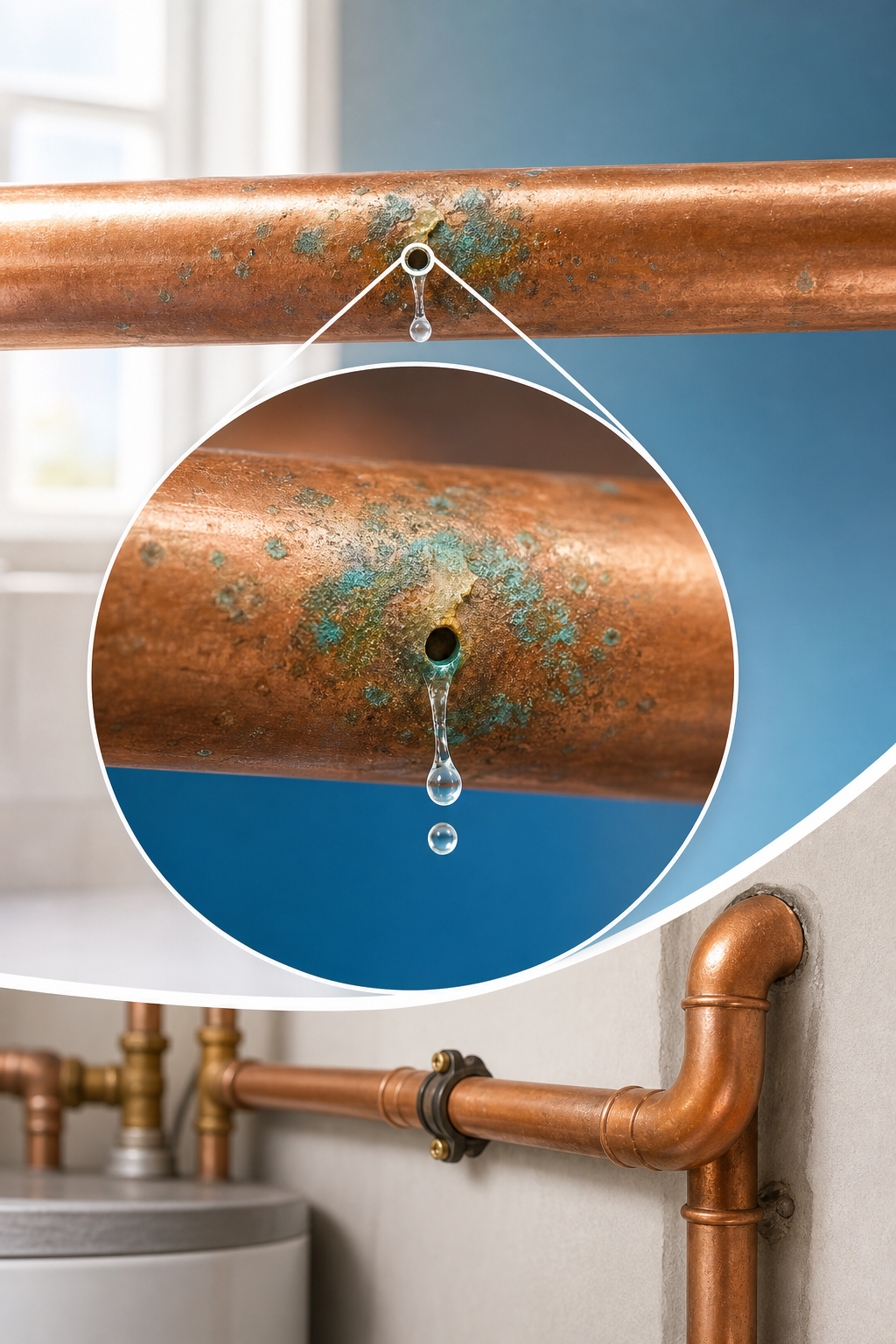
Listen for the sound of water running when every faucet is off. A trained technician can use specialized tools to pick up the faint hiss of water escaping through a pinhole.
Another easy test is to turn off all water fixtures and watch the water meter. If the dial moves, water is still flowing somewhere in the house, likely through a hidden leak.
Professional inspection can locate leaks hidden behind drywall. Identifying pipe types before you start testing is important.
Remember: a pinhole can be less than a millimeter wide, so visual clues are often the only warning you get.
Impact of Pinhole Leaks on Your Home and Bills
Even a tiny hole can waste a significant amount of water each day. Homeowners can lose thousands of gallons annually to leaks, and a single pinhole can contribute noticeably to that loss.
Beyond water waste, hidden leaks raise humidity inside walls. That moisture invites mold, which can damage structural wood and trigger health issues.
Water‑bill spikes often appear before any visible stain. A sudden 20‑30 % jump in usage, without a change in habits, is a red flag for a hidden leak.
Repair costs climb quickly when water damage spreads to drywall, flooring, or insulation. Spot‑repairing one pinhole may seem cheap, but if the underlying conditions persist, more leaks will appear.
Our leak detection services describe how a thorough scan can map every active leak, saving you from surprise repairs later.
Bottom line: a pinhole leak hurts both your wallet and your home’s health.
Prevention Strategies: Water Treatment & Proper Installation
Stopping pinhole leaks starts with the water itself. Hard water deposits, caused by calcium and magnesium, can accelerate corrosion. Installing a water softening system helps reduce these deposits.
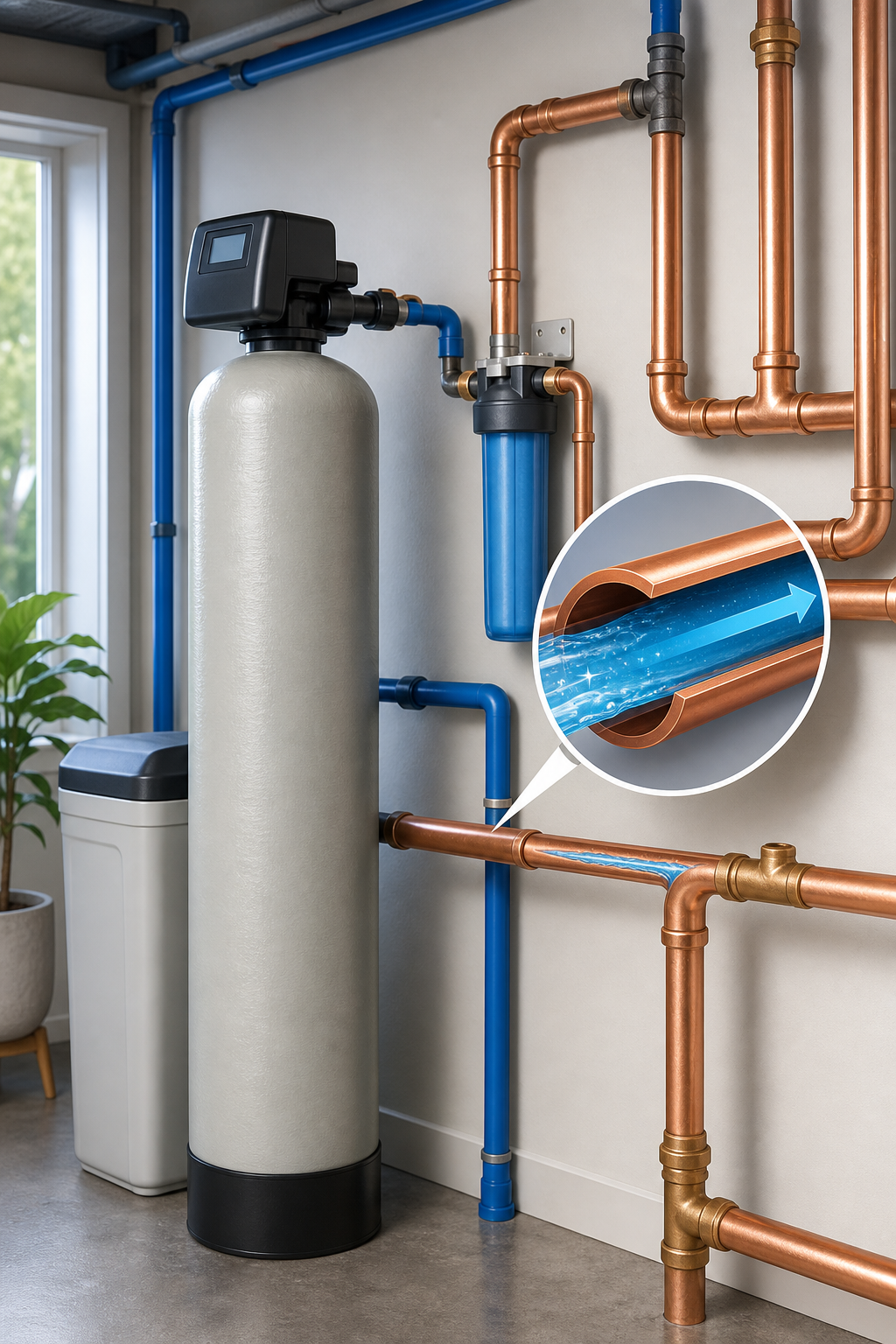
For homes with low pH water, a neutralizer that adds calcite raises the pH to a safer range. Both solutions reduce the chemical attack on copper walls.
Pressure regulation is another easy win. Maintaining proper water pressure keeps water velocity in the safe zone, reducing erosion at bends.
Installation quality matters, too. Using the right amount of solder and flux, keeping joints tight, and avoiding dents during handling all protect the pipe interior from turbulence‑induced wear.
Choosing PEX for repiping can avoid corrosion issues; compare the benefits of PEX versus copper in our detailed PEX vs Copper Repiping guide .
Pro Tip: Schedule a water‑quality test every two years. Knowing your pH and hardness lets you fine‑tune treatment before damage starts.
For a comprehensive maintenance plan, see 10 ways of Maintaining the Integrity of Your Copper Plumbing .
Repair vs. Replace: Why Repipe OC Is Your Best Option
If a pinhole appears, you have two paths: replace the affected segment or repipe the whole house. Segment repair is quick, but it doesn’t address the underlying water chemistry or pressure issues that caused the leak.
A full repipe with PEX or high‑quality copper removes the vulnerable material entirely. Repipe OC backs that work with a 25‑year transferable warranty, so you won’t face the same problem again.
The company also offers a free on‑site leak‑detection visit. That means they can pinpoint every hidden leak before any demolition begins, keeping disruption to a minimum.
Cost transparency helps homeowners plan. Our cost guide, Whole House Repipe Cost: Top 8 Options & Pricing , breaks down material and labor ranges so you know what to expect.
Our team works across Laguna Niguel, San Juan Capistrano, and the rest of Orange County, bringing local water‑condition expertise to every job.
Key Takeaway: Choosing a full repipe from Repipe OC gives you a long‑term fix, a solid warranty, and peace of mind.
FAQ
What does a pinhole leak look?…
A pinhole leak is a tiny opening, often invisible to the naked eye, that can be spotted by a small green or blue stain on copper, a damp spot on a wall, or a steady drip when all fixtures are off.
Can I fix a pinhole leak myself?
DIY fixes are risky because the underlying corrosion often spreads. A professional can assess whether a segment replacement or a full repipe is the safer, more cost‑effective route.
How much water can a pinhole leak waste?
Even a sub‑millimeter hole can waste 5‑10 gallons per day, adding up to hundreds of gallons each month and inflating your water bill.
Will a water softener stop pinhole leaks?
Softening removes minerals that accelerate corrosion, so it greatly reduces the chance of new pinhole leaks, especially in hard‑water areas like Orange County.
How quickly should I act if I suspect a leak?
Call a professional as soon as you notice stains, odors, or a meter movement with fixtures off. Early detection prevents structural damage and mold growth.
Ready to protect your home? Get a free on‑site estimate from Repipe OC today and stop pinhole leaks before they cause costly damage.

Comments