
Repiped: What It Means for Orange County Homes

If your home’s water pressure drops or you see rust in the faucet, the plumbing underneath might be on its last legs. Repiped means swapping out the old supply lines for brand‑new ones so the house gets clean, steady water again. Below we break down the definition, warning signs, the step‑by‑step process, material choices, costs, and when to call a pro.
Table of Contents
What Does “Repiped” Mean?
Repiped is the act of removing the existing water‑supply pipes in a home and installing new ones. The old pipes are usually copper or other aging materials that have corroded, leached chemicals, or simply worn out over decades. By replacing them, you restore water quality, pressure, and long‑term reliability.
Homeowners in Orange County often face aging infrastructure built in the 1960s and 1970s. Those pipes were never designed for today’s high‑flow fixtures and water‑saving devices.
Modern repiping projects typically use copper, PEX, or CPVC, each with its own code requirements and lifespan. General plumbing information is available online.
Key Takeaway:Repiping replaces the whole water‑supply network, not just a single leak.

Signs Your Orange County Property May Need Repiping
We see a handful of tell‑tale clues that point to a full repipe being needed.
First, low water pressure at multiple fixtures signals that the supply lines have narrowed or are clogged with mineral build‑up.
Second, discolored or rusty water that appears after you turn on a tap often means the pipe interior is corroding.
Third, recurring leaks in different rooms, like a drip in the kitchen and another in the bathroom, suggest a systemic pipe failure rather than an isolated joint.
Fourth, visible corrosion on exposed pipe sections in basements or crawl spaces is a red flag.
Finally, if you’ve had several plumbing repairs over the past few years and the problems keep returning, it may be cheaper in the long run to replace the whole network.
Pro Tip:Schedule a professional inspection before the rainy season; hidden leaks can cause costly water damage during heavy storms.
How the Repiping Process Works
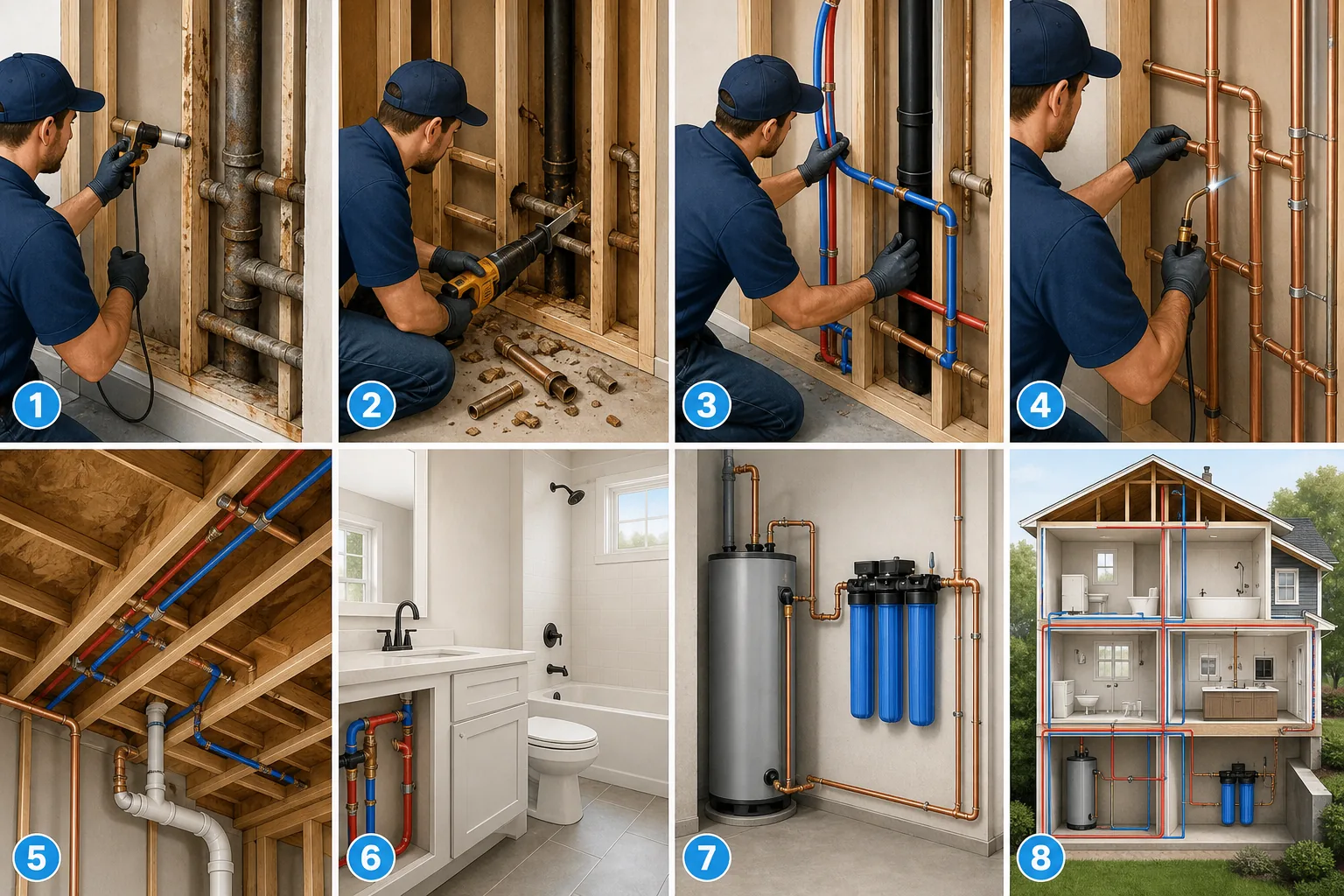
Our team at Repipe OC follows a clear, four‑stage workflow to get your home repiped with minimal disruption.
Stage one is the on‑site assessment. We walk through every room, locate the main shut‑off valve, and map out the existing pipe routes.
Stage two is the demolition. We carefully cut into walls, floors, or slabs where the old pipes run, taking photos of the layout for future reference.
Stage three is the installation. New copper or PEX lines are run through the same pathways, secured with clamps, and pressure‑tested for leaks.
Stage four is the restoration. We patch walls, replace flooring, and clean up the job site, leaving the home ready for use.
By the end of the project, you should have a fully functional, leak‑free water system that meets local building codes.
Repiping Materials, Costs, and Warranty Considerations
Choosing the right pipe material affects price, durability, and code compliance.
Copper is prized for its strength and longevity, but it costs more and requires skilled soldering.
PEX is flexible, easier to install, and cheaper, though it must be protected from direct sunlight.
CPVC is another option for hot‑water lines but needs special solvent cement.
In Orange County, whole‑home repiping typically runs between $4,000 and $15,000+, depending on home size, material choice, and access difficulty. Permit fees add $50‑$500, and a water‑main swap can cost $600‑$2,500.
Repipe OC offers a 25‑year transferable warranty on both materials and labor, which protects you if a pipe fails after the work is done. The warranty is backed by a written contract and includes 24/7 emergency support for unexpected leaks.
Key Takeaway:A higher‑quality material may raise the upfront cost but can lower long‑term maintenance and warranty claims.
When to Schedule a Repiping Evaluation
You should book an evaluation as soon as you notice any of the warning signs listed above. Early assessment helps avoid water‑damage emergencies during the dry summer months.
Homeowners planning major renovations, like a kitchen remodel or bathroom upgrade, should also schedule a repipe check. The extra plumbing work can be coordinated with the renovation, saving time and labor.
If you own a rental property or manage a multi‑family building, a proactive repipe evaluation can extend the life of the asset and keep tenants happy.
FAQ
What is the typical timeline for a whole‑house repipe?
Most whole‑house repipes in Orange County finish in one to two days, depending on the size of the home and how many walls or slabs need opening.
Do I need a permit for repiping?
Yes, the city requires a plumbing permit for any full‑house repipe, and the cost ranges from $50 to $500 based on the scope of work.
Can I choose between copper and PEX myself?
You can, but it’s best to let a licensed plumber advise you. Copper meets stricter code requirements, while PEX offers lower material costs and easier installation.
How does the 25‑year warranty work?
Repipe OC’s warranty covers both the pipe material and the labor. If a pipe fails within 25 years, we repair or replace it at no charge, and the warranty can be transferred to a new homeowner.
What if I discover hidden damage after the repipe?
Our team includes a thorough inspection before demolition. If we uncover unexpected issues, we discuss options and adjust the estimate before proceeding.
Is repiping worth the cost for older homes?
Yes, especially if the home shows multiple signs of pipe decay. Replacing the network prevents costly leaks, improves water quality, and can boost resale value.
Conclusion
We recommend contacting Repipe OC for a free on‑site estimate and to lock in the 25‑year transferable warranty. Schedule your evaluation today so you can enjoy reliable water flow and peace of mind.
Comments