
Burst Pipe: What to Do and How to Prevent Damage

A burst pipe can turn a quiet room into a flood zone fast. Shut off the water first, then protect people, limit damage, and decide if the repair needs a professional.
In Orange County, warning signs often include recurring leaks, rusty water, low pressure, and aging galvanized plumbing. We’ll walk you through the safest response and show when repiping makes more sense than another patch.
Table of Contents
Step 1: Shut Off the Water and Make the Area Safe
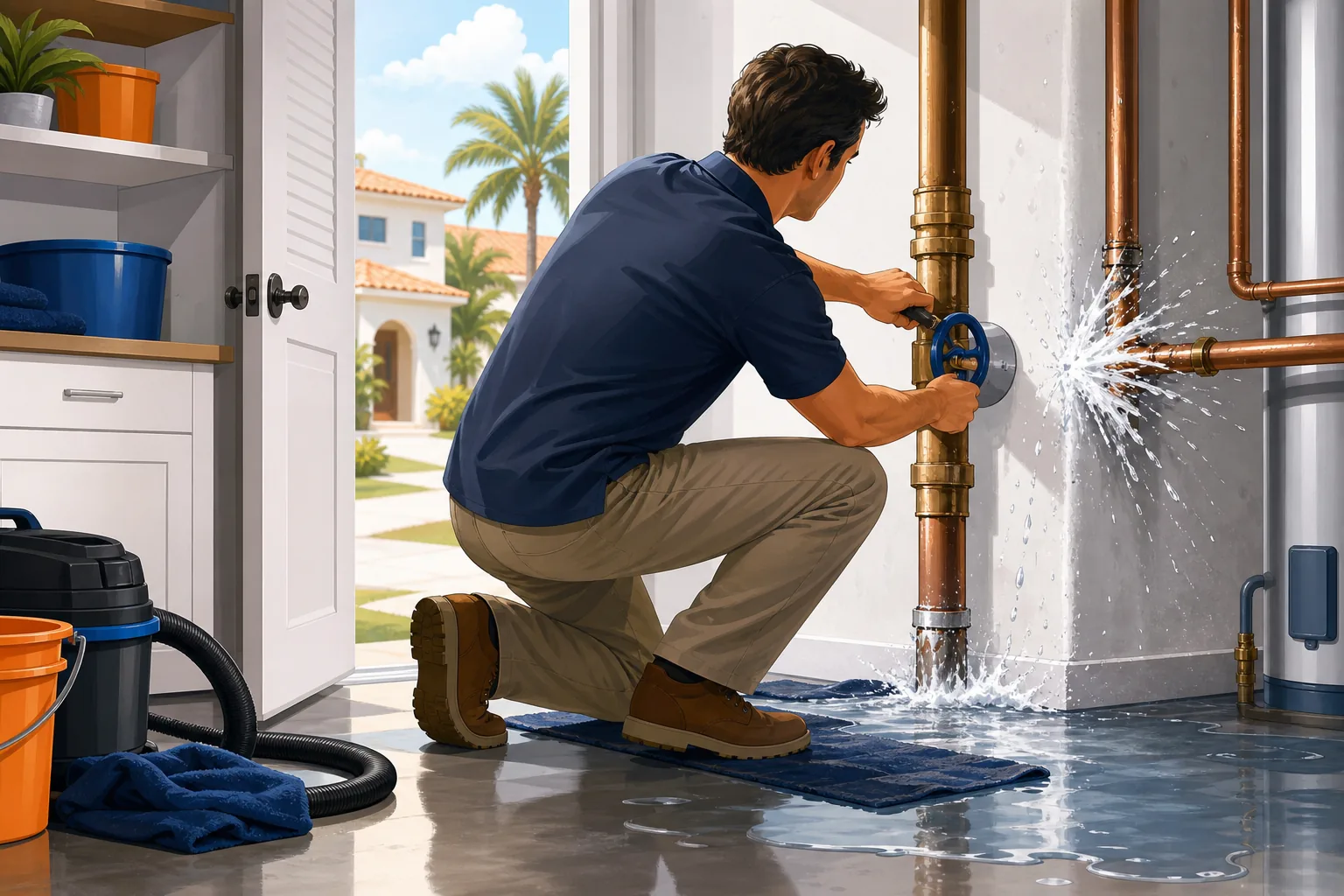
A burst pipe needs one action before all others: stop the water supply. Find the main shutoff near the water meter, where the main line enters the home, in the garage, or in a utility area.
Turn the valve clockwise until it stops. If it’s an old gate valve and water keeps flowing, don’t force it until it breaks. Open a cold faucet at a low point in the home. This helps drain pressure from the lines.
If the main valve fails, use the street-side shutoff only if you know how to access it safely. You can also ask the local water agency for help. Keep away from wet outlets, appliances, and electrical panels. If water has reached electrical equipment, leave the area and contact a qualified electrician.
Move rugs, furniture, boxes, and valuables away from the water. Take photos before cleanup if you can do so without risking your safety. Freezing water can put intense pressure on metal or plastic pipe.
Use towels or a wet vacuum only when the area is safe. Do not wait for a small stream to stop on its own. A slow leak can keep damaging drywall, flooring, and insulation while you sleep.
Repipe OC provides 24/7 emergency support in Orange County. Our team can help stop the immediate problem and assess whether the failure points to a larger plumbing issue.
Step 2: Locate the Burst and Decide Whether DIY Is Safe
Once the water is off, locate the damaged section without opening more walls than needed. Look for dripping ceilings, soft drywall, wet baseboards, warped flooring, stains, or the sound of water inside a wall.
Check exposed plumbing first. Look beneath sinks, near water heaters, in garages, under cabinets, and in crawl spaces. If the water meter still moves after every fixture is off, water may be escaping behind a wall or below the slab.
Repipe OC’s leak detection services can help locate hidden pipe, copper, or slab leaks before major demolition begins. Pinpointing the break matters because the visible wet spot may sit far from the failed pipe.
DIY repair is reasonable only when the problem is small, exposed, and isolated. A short section of accessible irrigation pipe is different from a pressurized line inside a ceiling. Never treat a main supply line, gas line, slab leak, or pipe near electrical wiring as a casual weekend fix.
Call a professional when:
The shutoff valve does not stop the flow.
The burst is inside a wall, ceiling, floor, or slab.
You see several leaks in different parts of the home.
The water is near electrical equipment.
The pipe is badly corroded, split, or difficult to identify.
You manage a multi-family or commercial property.
Recurring leaks often point to aging or deteriorating pipes. Low water pressure may come from corrosion or buildup inside older lines. Rusty, yellow, or brown water can also signal internal corrosion. A patch may stop one leak while leaving the weak section beside it in service.
If the damage is in a wall, use caution before cutting drywall. Shut off power when needed, check both sides of the wall, and keep the opening as small as possible. Our guide to fixing leaking pipes in a wall explains the access problem, but an active burst still calls for prompt professional help.
Step 3: Repair the Damaged Pipe or Arrange Professional Replacement
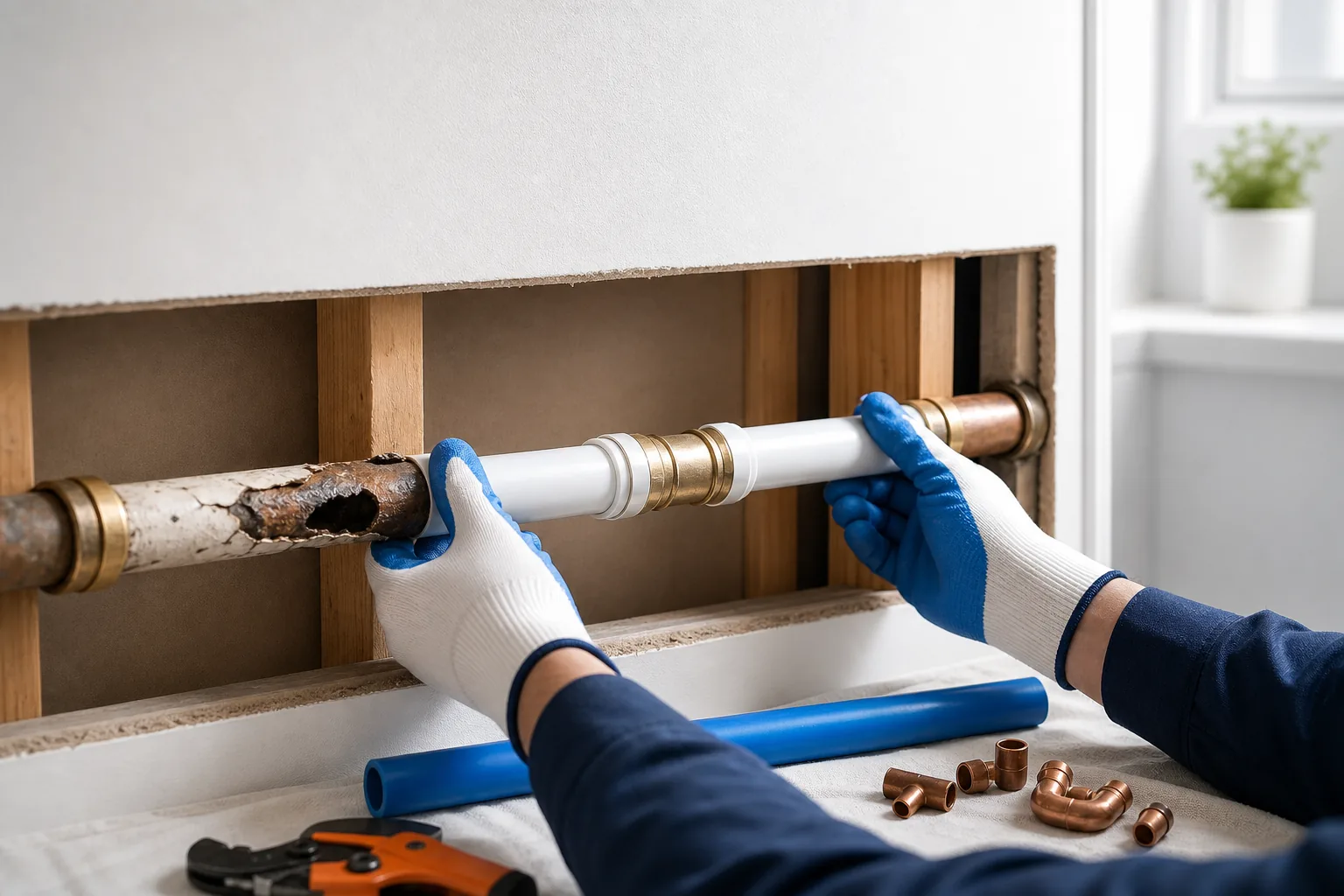
A burst pipe repair starts with removing the failed section and matching the new material to the existing system. The right method depends on pipe type, location, pressure, access, and the condition of nearby pipe.
For a small exposed copper or compatible plastic section, a trained installer may cut the pipe square, remove burrs, clean the ends, mark insertion depth, and fit a suitable coupling. Push-to-connect fittings can help in some repairs, but the fitting must match the pipe and be installed to its required depth.
Plastic pipe needs extra care. PVC and CPVC repairs may use primer and solvent cement. The pipe should be cut square and dry-fitted first. After primer and cement are applied, the joint must be assembled quickly and held in place so hydraulic pressure does not push it apart.
Solvent cement chemically softens and fuses compatible plastic surfaces. It is not ordinary glue. The joint also needs the correct cure time before the line is tested.
That detail matters. Testing too soon can weaken a joint, while the wrong cement can cause a later failure. Never test a solvent-welded connection with compressed air or gas.
Temporary clamps and repair wraps may limit water until help arrives. They are not a sound answer for a hidden or badly corroded supply line. A professional should inspect the surrounding pipe before closing a wall or restoring full pressure.
After the repair, restore water slowly. Check each connection under pressure. Look for drips, listen for water movement, and run fixtures one at a time. Do not cover the opening until the line passes a full check.
Repipe OC uses top-quality parts and careful workmanship for repair and repiping work. If one burst follows years of low pressure, discolored water, or repeated leaks, our team may recommend partial or whole-house repiping instead of another isolated fix.
Step 4: Document the Damage, Contact Insurance, and Assess Repipe Needs
Document the loss before cleanup changes the scene. Take wide photos of each affected room, then close photos of the failed pipe, water line, damaged materials, and personal items. Save videos if water is still moving and it is safe to record.
Write down when you found the leak, what you did to stop it, and who inspected the plumbing. Keep invoices for emergency work, drying, materials, temporary lodging, and damaged belongings. Do not throw away failed pipe parts until your insurer or adjuster says you can.
Insurance coverage depends on your policy and the cause of the loss. Sudden water damage may receive different treatment from gradual corrosion, poor maintenance, or long-term seepage. Contact your insurer promptly and ask what photos, estimates, and receipts it needs.
Ask the plumber to separate emergency work from permanent repair. A clear report should state where the failure occurred, what caused it if known, which materials were removed, and whether nearby pipe shows similar wear.
One isolated failure does not always mean the whole home needs a repipe. Repeated leaks in different rooms, galvanized plumbing, declining pressure, or a history of slab leaks justify a wider inspection. Repipe OC provides free on-site estimates and can explain repair, partial repiping, or full replacement options.
For a plain look at the decision, compare the factors in our guide to whether your Orange County home needs a repipe . The goal is to spend once on the right scope, not keep paying for the same weak system.
Step 5: Prevent Another Burst With Maintenance and Pipe Replacement Planning
Prevention starts with the cause. Frozen water expands inside a pipe and can split the material. Corrosion slowly thins pipe walls. Pressure spikes can finish a section that already has a weak spot.
Orange County homes still need routine checks, even when freezing weather is uncommon. Inspect exposed lines in garages, attics, crawl spaces, and exterior walls. Add insulation where needed. Keep vulnerable areas warm during cold snaps.
Before leaving town, shut off the main supply if appropriate for your home and drain exposed lines. Disconnect outdoor hoses. Know where the main valve is before an emergency begins.
Watch for early signs:
More than one leak in a short period.
Rusty, yellow, or brown water.
Water pressure that keeps dropping.
Visible corrosion around joints.
A past slab leak or repeated repair.
Keep a record of repairs by room and date. A pattern is easier to see when the failures are written down. If leaks move around the property, repeated spot repairs may cost more than a planned replacement.
Repiping replaces failing water supply lines across part or all of a home. The best material depends on the layout, water conditions, access, and your goals. A professional estimate should explain the route, materials, wall access, testing, restoration, and warranty.
Repipe OC backs its repiping work with a 25-year transferable warranty. We serve homeowners, property managers, HOA boards, investors, and commercial owners across Orange County with premium materials and free on-site estimates.
For homes with older copper plumbing, our guide to understanding pinhole leaks in copper pipes and copper pipe corrosion can help you spot trouble before a small pinhole becomes a flood.
Burst Pipe FAQ
What should I do first when a pipe bursts?
Turn off the main water supply first, then keep people away from wet electrical areas. Open a faucet to reduce pressure if it is safe. Move valuables away from the water and take photos. Contact a licensed plumbing professional when the valve fails or the pipe is hidden, badly damaged, or near wiring.
Can I repair a burst pipe myself?
You may handle a small exposed irrigation repair if you can isolate the line and identify the correct fitting. A household burst pipe needs more caution. Avoid DIY work on slab lines, gas lines, hidden pipes, electrical areas, or badly corroded plumbing. A poor fitting can leak again after the wall is closed.
Will homeowners insurance cover a burst pipe?
Homeowners insurance may cover sudden water damage, but coverage depends on your policy and the cause. Gradual corrosion or poor maintenance may receive different treatment. Notify your insurer quickly. Keep photos, repair reports, receipts, and records of the steps you took to limit further damage.
When does a burst pipe mean I need repiping?
A single failure does not always require repiping. Repeated leaks, rusty water, low pressure, aging galvanized lines, or several weak areas suggest a larger problem. Ask for an inspection that compares targeted repair with partial or whole-house replacement. Repipe OC can provide a free on-site estimate in Orange County.
How can I prevent another pipe burst?
Inspect exposed plumbing, add insulation in vulnerable areas, keep cold spaces warm, and shut off water before extended trips when appropriate. Fix small leaks early. If corrosion or age affects several sections, plan a repipe instead of waiting for another emergency.
Conclusion
When a pipe bursts, shut off the water and make the area safe before anything else. Then have the failed section inspected, documented, and tested. If your Orange County home shows repeated leaks or aging pipe damage, request a free on-site estimate from Repipe OC so you can choose a lasting repair plan.
Comments