
Best Repiping With PEX Options in Orange County
- Repipe OC
- 7 days ago
- 9 min read

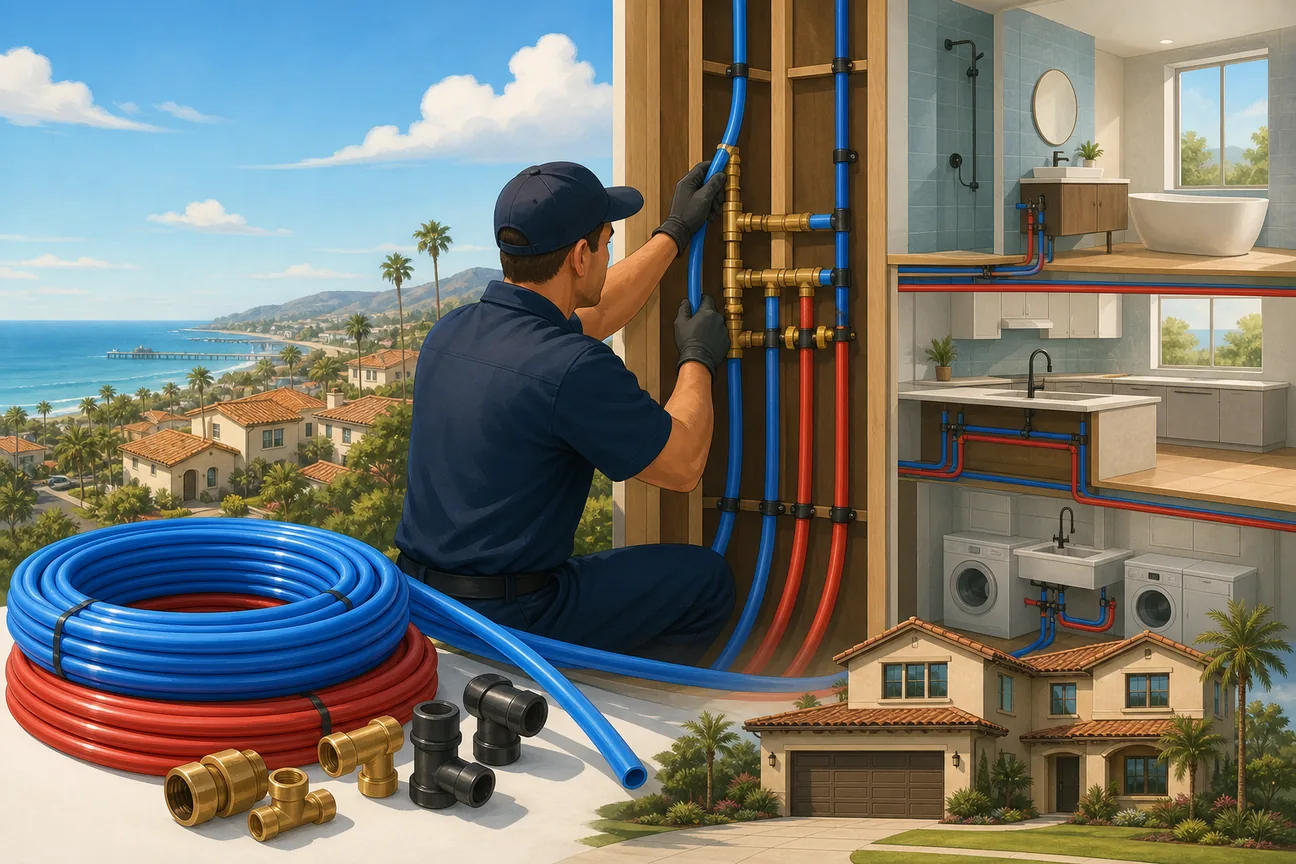
A leaky copper line can be a warning that more failures are close behind. But older galvanized steel can sometimes outlast its rated service life, so the right repipe depends on your home, not a sales script. Here are the best repiping with PEX options for Orange County, plus the material and layout choices that make sense for each property.
Table of Contents
1. Repipe OC
Repipe OC is a full-service Orange County repiping provider for homeowners, HOAs, property managers, and commercial building owners. We’re the best fit when you want one team to assess the system, plan access, install new supply lines, and stand behind the finished work.
Our team provides free on-site estimates for residential and commercial repiping. We can inspect the home’s layout, fixture count, existing pipe, and likely access points before we recommend PEX, copper, or a mix of materials.
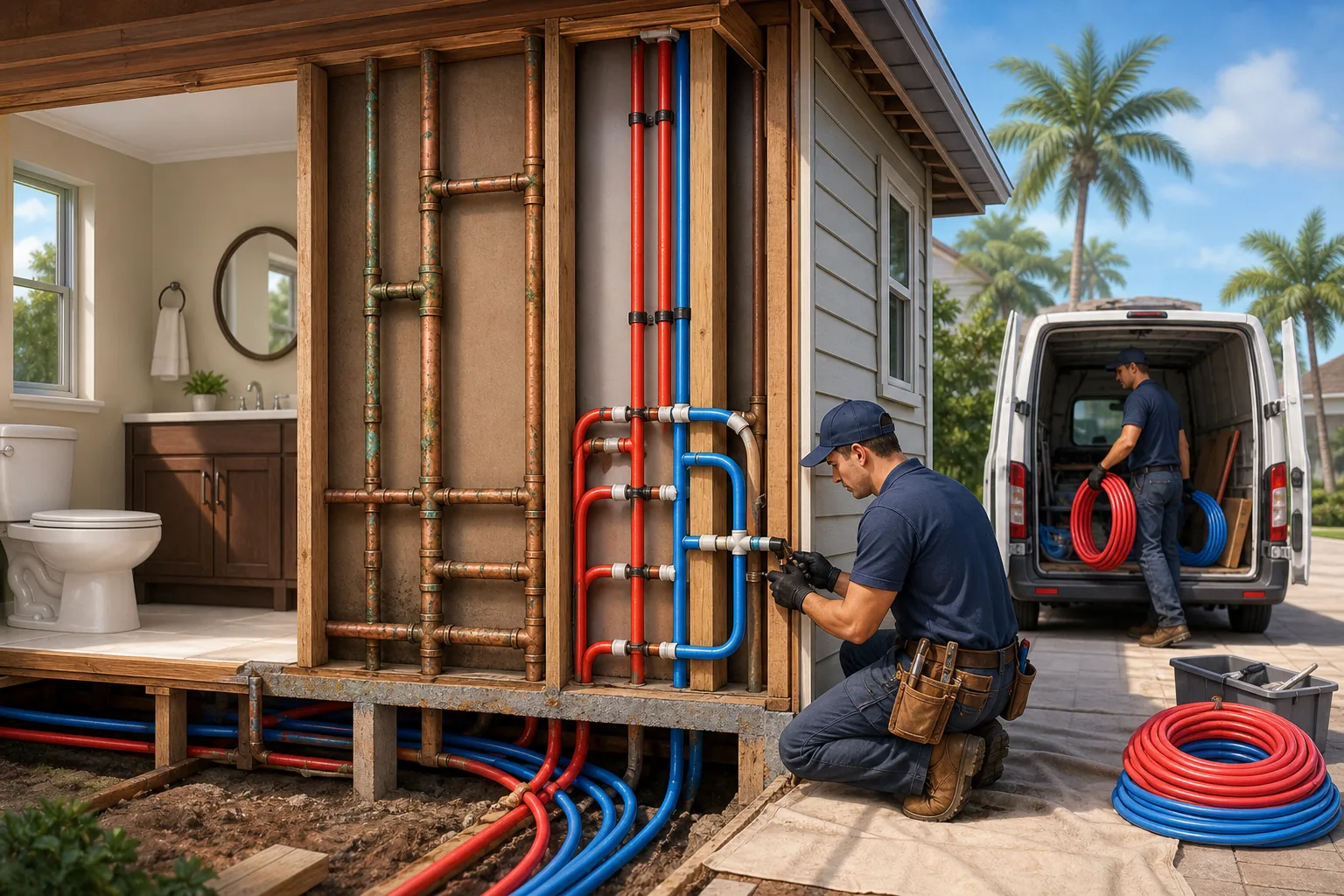
A full PEX repipe often starts by shutting off the main water supply. The crew drains the lines, opens selected wall or ceiling areas, removes old pipe where access allows, then runs new lines through the framing. If old copper sits under a slab and removal would cause major damage, the new PEX may bypass it through the walls or attic.
New lines connect to fixture stub-outs with approved crimp, clamp, or expansion fittings. Cold and hot lines are often marked with blue and red tubing, which makes later service easier. The system is pressure tested before the crew closes access points and completes cleanup.
Repipe OC also includes a 25-year transferable warranty, free estimates, and 24/7 emergency support. The warranty matters if you sell the home later because transfer terms can help document the work for a future owner. Ask for the exact coverage, exclusions, and transfer rules in writing.
For a closer look at warning signs, scope, and value, our guide to whether repiping is worth it for Orange County homeowners can help you frame the decision.
2. PEX, Flexible, Cost-Effective Whole-Home Repiping
PEX is the strongest general choice for whole-home repiping with PEX when the work is indoors and the layout has tight wall cavities or long attic runs. It bends around framing, needs fewer joints, and handles many remodel routes without the cutting needed for rigid pipe.
Material cost is one reason PEX is popular. Research used for this comparison places PEX at about $0.40 to $2.00 per linear foot, while copper ranges from $2.00 to $8.00 per foot. The final project price still depends on labor, access, fixtures, permits, drywall work, and the home’s layout.
PEX also resists corrosion and scale buildup. It can expand when water freezes, which makes it more burst-resistant than rigid copper. That does not make it freeze-proof. Pipes still need sound placement, support, and protection.
Decision point | PEX advantage | What to confirm |
Tight routing | Flexible tubing can bend around corners. | Check support spacing and protection at framing. |
Slab leak | New lines can often reroute above the slab. | Confirm the bypass path and access plan. |
Future service | Color coding can make hot and cold lines easier to trace. | Keep a map of the new runs and shutoffs. |
Budget control | Lower material cost than copper in the cited range. | Compare the complete written scope, not pipe cost alone. |
The technical description of PEX is less important to homeowners than the practical point: the tubing is bendable and suited to long interior runs.
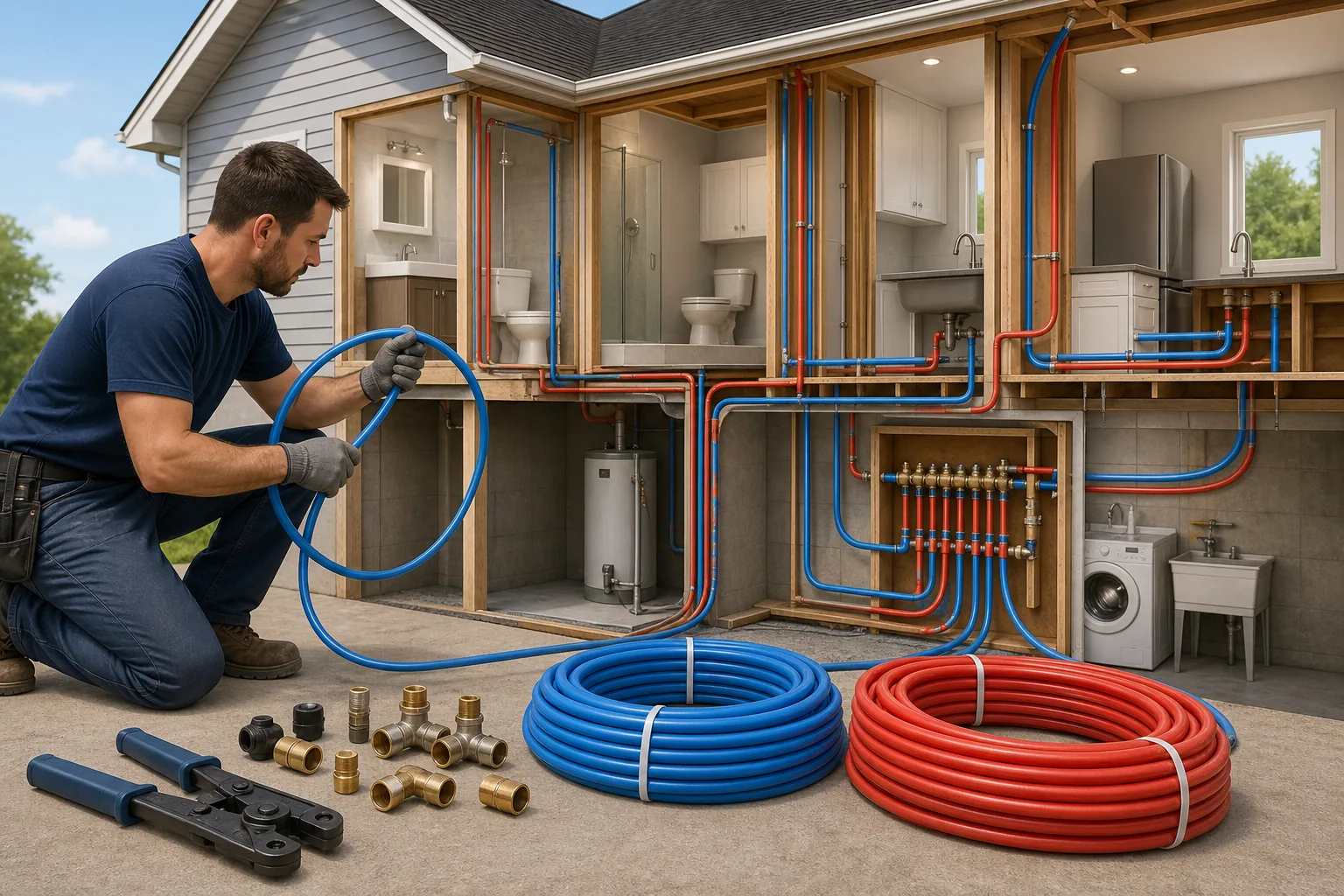
Manifold layouts give each fixture its own line from a central hub. A trunk-and-branch layout uses a main line with smaller branches. A manifold can make shutoff work easier, while a trunk layout may fit the home better. Neither layout is right for every Orange County property.
See our breakdown of PEX repiping cost factors before comparing estimates. A low pipe rate does not help if the quote leaves out access repair or fixture reconnection.
3. Copper, High-Temperature and Outdoor Applications
Copper is a strong option for outdoor exposure, high-temperature areas, and homeowners who prefer a rigid metal system. In a repiping with PEX comparison, copper costs more in material but has a cited lifespan of about 50 to 70 years.
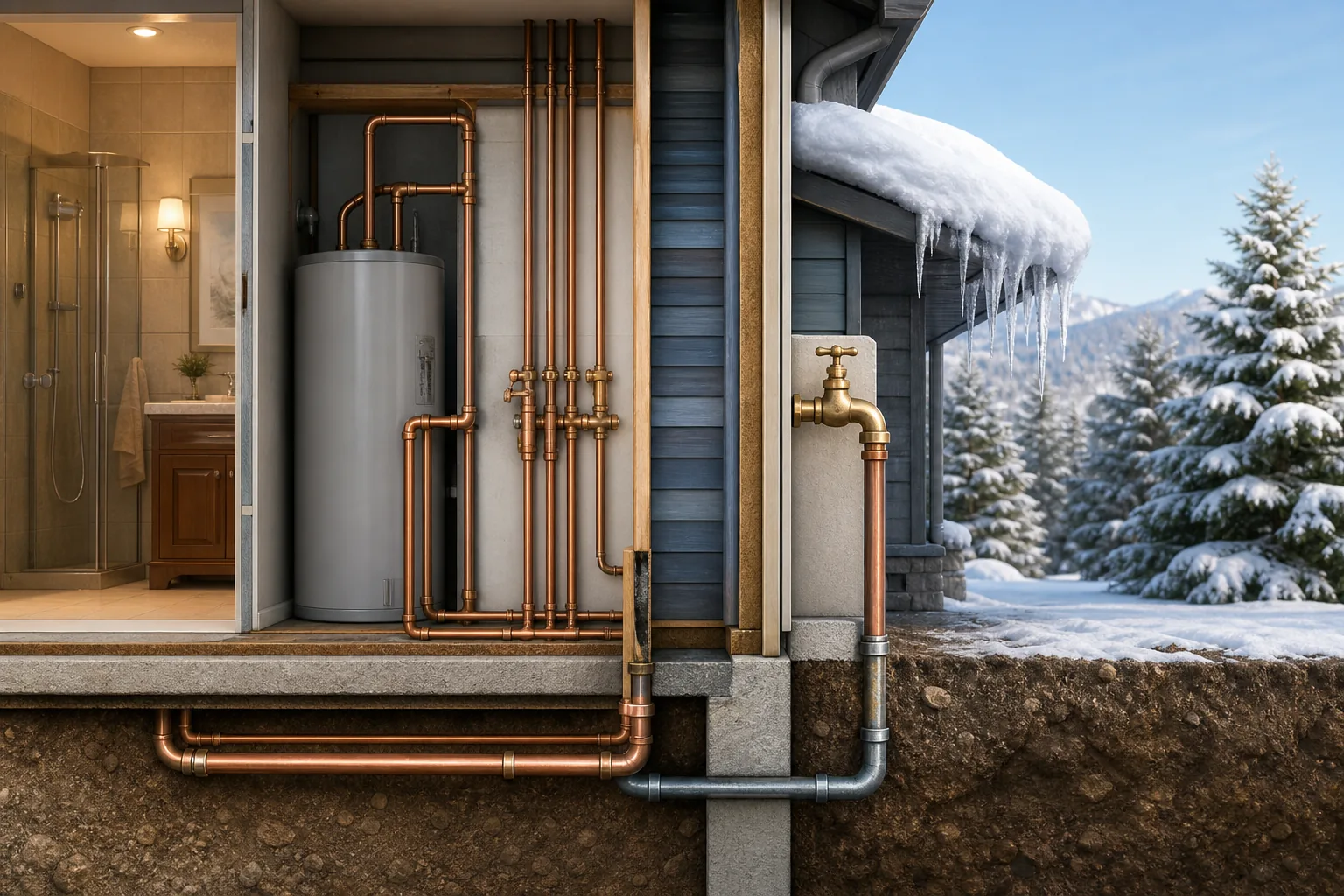
Copper is naturally antimicrobial and resists ultraviolet exposure. That makes it useful near outdoor hose bibs or other areas where direct sunlight could harm PEX. Copper also handles heat better than PEX, though the exact design near a water heater must follow local code and the equipment maker’s instructions.
Installation takes more skill because copper needs soldered, or “sweated,” joints unless an approved press method is used. Each joint adds work and creates another connection that must be checked. Open flame work inside a home also requires care around wood, insulation, and finished surfaces.
Copper’s material profile helps explain its appeal as a durable, conductive metal. Still, copper can develop pinhole leaks in some water conditions, and its rigid shape makes it less forgiving in tight remodel spaces.
Choose copper when the location demands its strengths. For most hidden indoor supply routes, PEX usually reduces labor and access work.
4. PEX-A, Maximum Flexibility and Expansion Fittings
PEX-A is the best PEX choice when the crew needs maximum flexibility through an attic, crawlspace, garage, or tight wall cavity. Its tubing can make long continuous runs with fewer fittings, which may reduce hidden connection points.
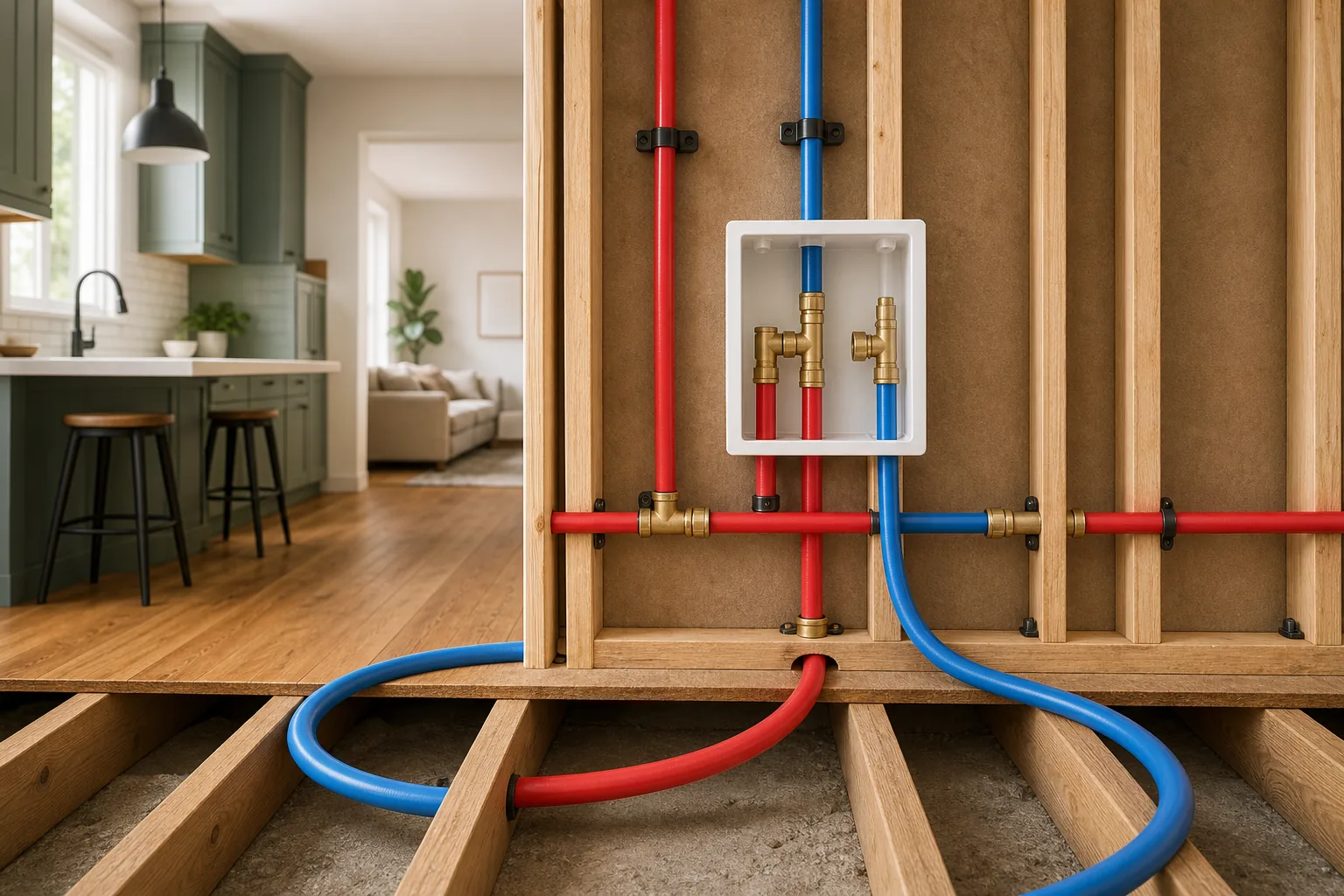
PEX-A uses expansion fittings. The installer places an expansion sleeve over the tubing, expands the tube with a specialized tool, then slides the fitting into place. The tubing contracts around the fitting to form the connection.
That method needs the right tool and the right parts. A professional crew must match the fitting system to the tubing and follow the manufacturer’s instructions. A homeowner should not assume that a fitting will work just because it physically fits inside the pipe.
PEX-A can be a good match for a slab-leak reroute. New lines may run through the ceiling and walls instead of returning below the concrete. The final choice still depends on the home’s structure, access, and local requirements.
Our copper versus PEX comparison gives more detail on cost, lifespan, and installation differences. For a whole-home job, the fitting system should be part of the written scope.
Key Takeaway:PEX-A can simplify long, curved runs, but the installer must use compatible expansion tools, sleeves, and fittings.
5. PEX-B, Usable Crimp-Fitting Repiping
PEX-B is a usable choice for repiping with PEX when the project calls for crimp or clamp fittings and the crew has a clear plan for each connection. It is widely available and can work well in crawlspaces, attics, garages, and standard wall routes.
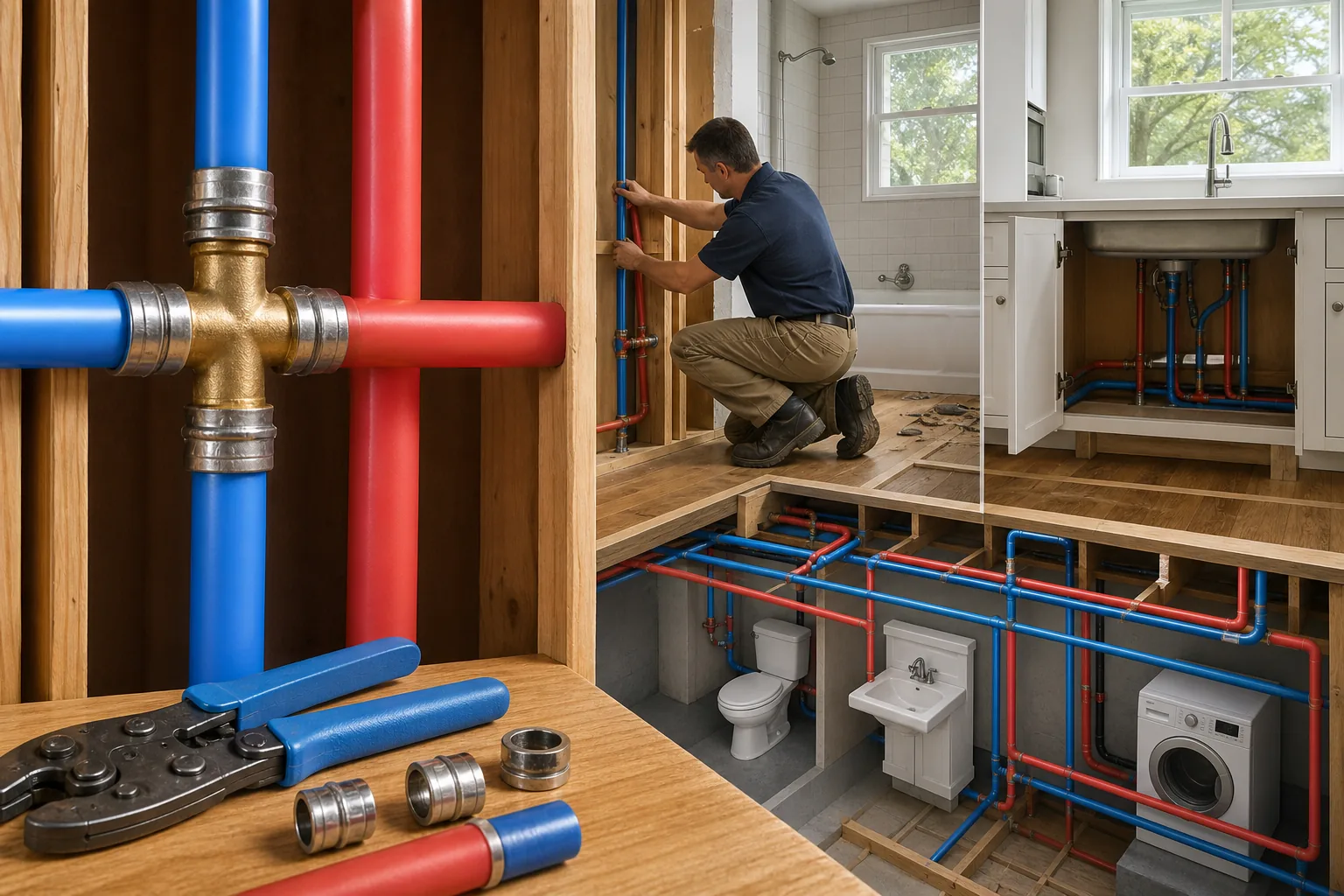
PEX-B fittings generally insert inside the tubing. A crimp ring or clamp holds the connection in place. Because the fitting enters the pipe, the inside opening can be smaller than with an expansion system. That may affect flow when a system has many fittings or undersized lines.
PEX-B can recover from some bends, but a damaged or sharply kinked section should not be hidden behind drywall. The crew should cut out questionable tubing and make a clean connection instead.
Do not mix PEX-A and PEX-B parts by guesswork. The tubing color does not identify the type. The lettering printed along the pipe and the existing connection style are better clues. If a repair joins different systems, the fitting must be rated for both.
PEX-B may suit a straightforward layout where the connection method is familiar and the flow plan is sound. It is not a shortcut around design work.
6. PEX-C, Budget-Conscious PEX Applications
PEX-C is a budget-conscious category for indoor repiping with PEX, especially where the run is accessible and the project does not need the maximum bend control associated with PEX-A.
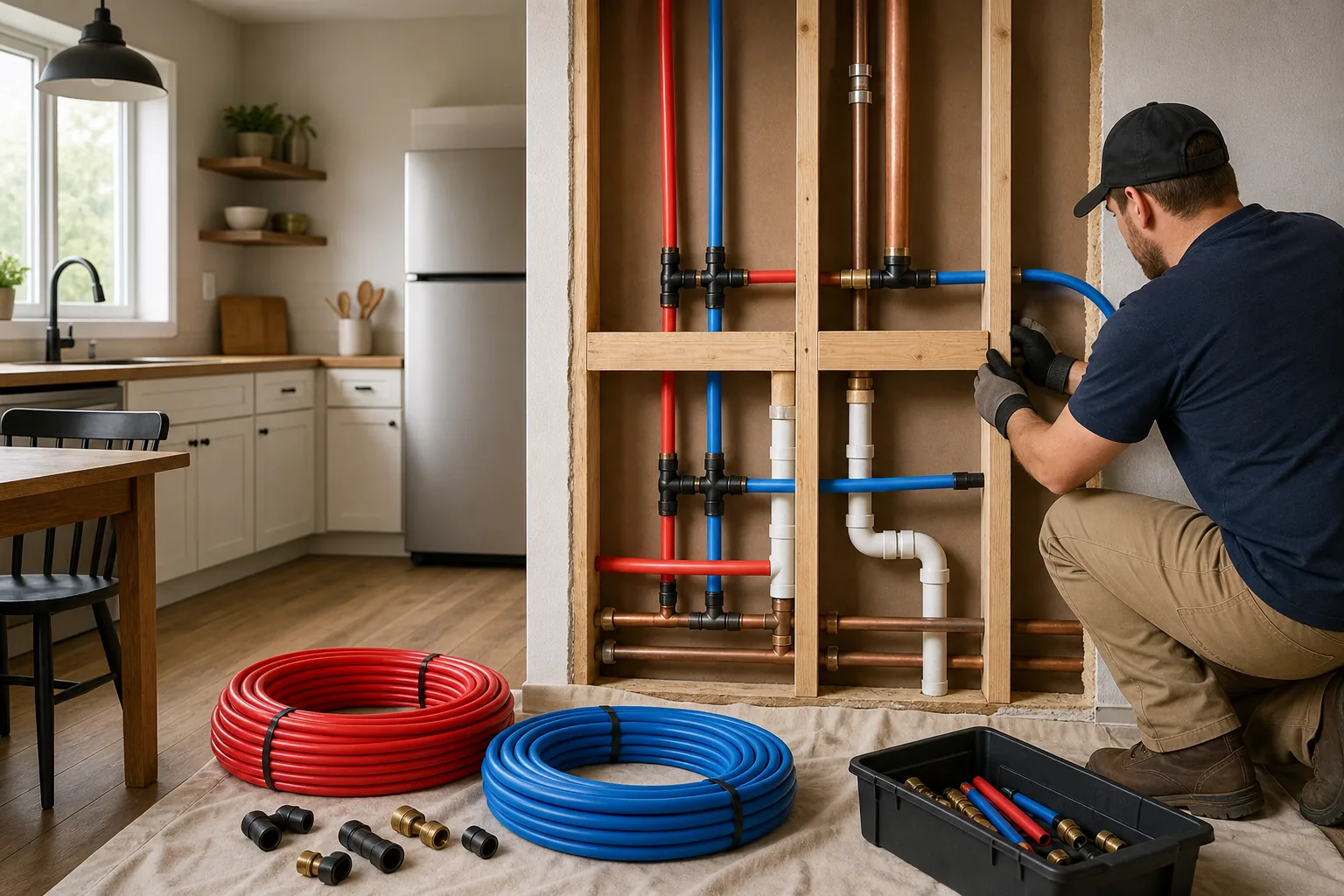
The key decision is not the letter alone. The crew must check the tubing rating, fitting compatibility, support needs, temperature limits, and local code rules. A cheaper tube can become an expensive choice if it needs extra joints or creates a poor route.
PEX-C can work in unheated areas such as garages or attic spaces when it is properly supported and protected. Orange County homes still need careful planning in these areas because heat, sunlight, pests, and physical damage can affect exposed plumbing.
We recommend comparing a complete material schedule rather than asking only for the lowest pipe price. The estimate should show the pipe type, fitting system, access work, pressure test, finish work, and warranty.
Use PEX-C only when the installer can explain why it fits the specific home. A material label alone is not a design plan.
7. Polybutylene Replacement, A Priority for Aging Homes
Polybutylene replacement is a strong candidate for a full repipe when the home has this older gray plastic supply pipe. The material was used in many homes built from 1978 through the mid-1990s and can degrade after contact with chlorinated water.
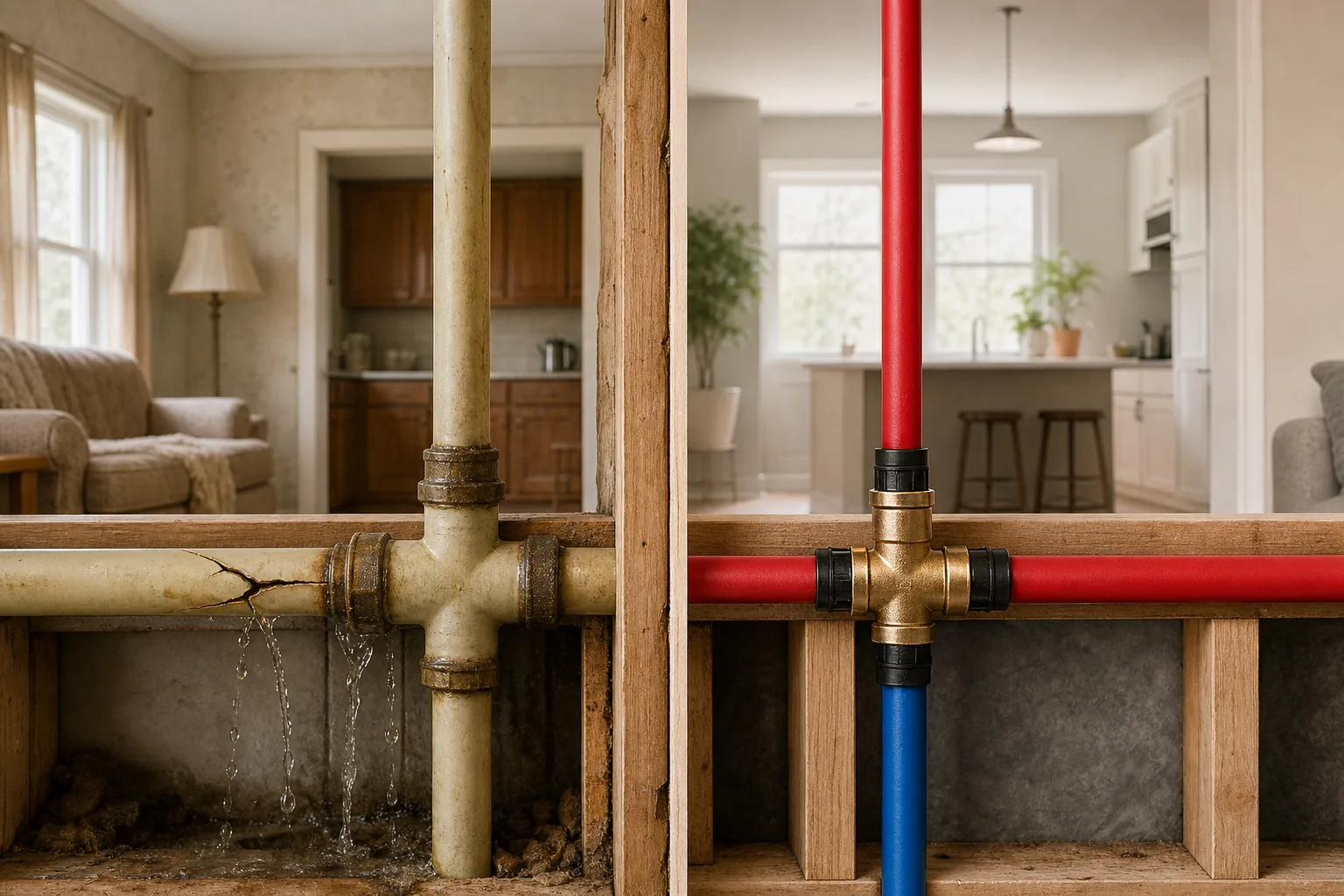
Look for the pipe in utility areas, under sinks, near the water heater, or at visible fixture connections. The pipe can be hidden, so a quick visual check does not prove the whole system is clear. A professional inspection can trace the supply layout and identify transition points.
Replacing only the leaking section may leave the rest of the system in place. That can lead to repeat access work later. A full repipe replaces the supply lines as one planned project and gives the homeowner a clear record of the new material.
PEX is often selected for this work because it resists corrosion and can route through existing framing with fewer joints. The best route may use walls, ceilings, or attic space instead of the old path under a slab.
If you’re weighing a full replacement against repeated repairs, our comparison of six repiping materials can help you organize the tradeoffs.
8. Galvanized Steel Replacement, Restoring Flow in Older Properties
Galvanized steel replacement is often the right starting point for older homes with original supply lines, especially properties built before 1960. These pipes can corrode inside and lose usable diameter as rust and mineral scale build up.
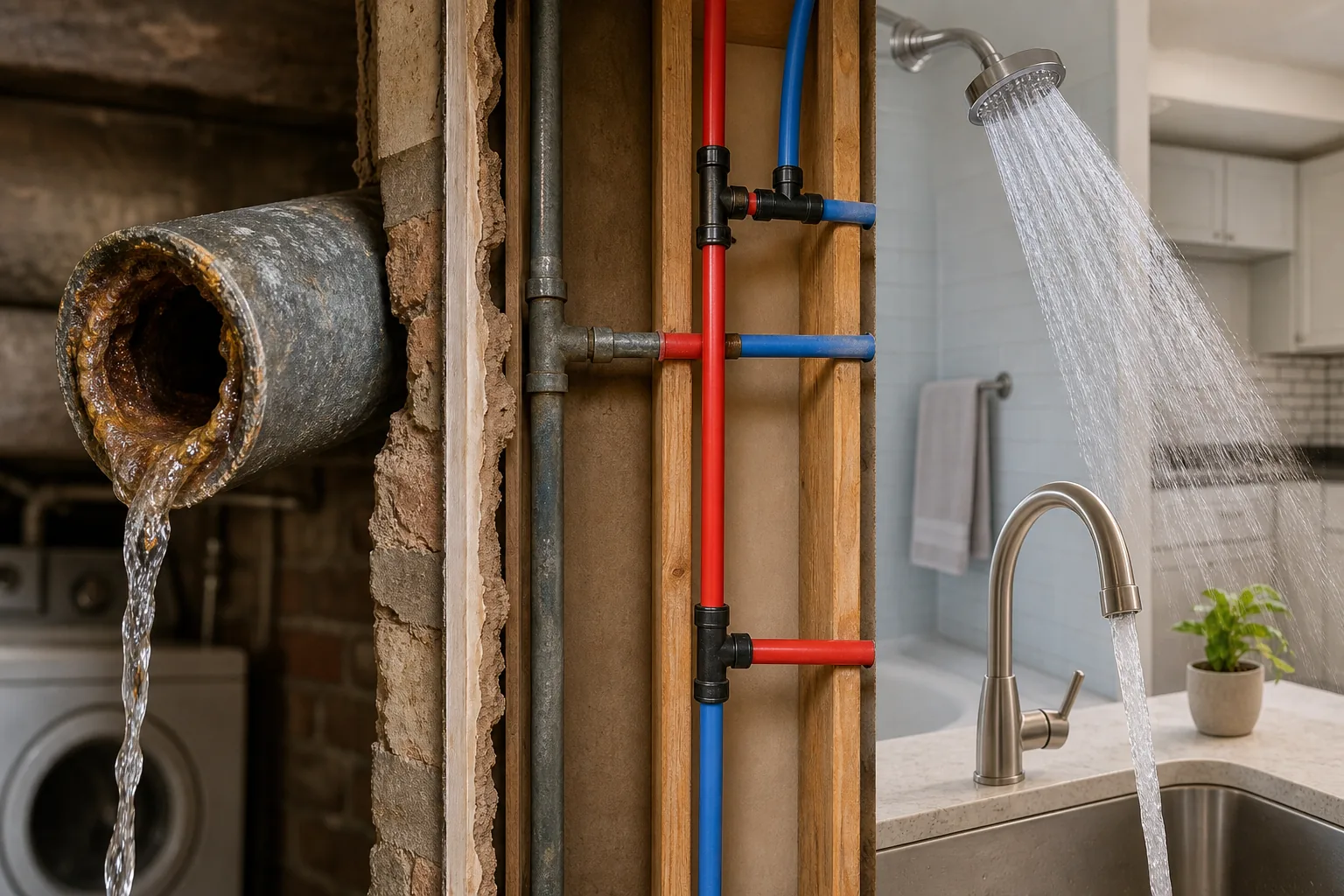
Common signs include low pressure, brown or rusty water, repeated leaks, and poor flow at more than one fixture. A single failed fitting does not always mean the entire system has reached the same condition, so the inspection should cover visible pipe, pressure, fixture performance, and the home’s age.
Galvanized steel has a cited service range of about 20 to 50 years, yet research also notes that it often exceeds that rating. That is the surprising part. Older metal pipe is not automatically worse than modern PEX on lifespan alone.
Even so, a system with restricted flow or several leaks may be past the point where patches make financial sense. PEX usually makes the reroute easier, while copper may suit select exposed or high-temperature sections. Repipe OC can map the existing system and explain where each material fits.
Permits, inspections, access repair, and pressure testing belong in the scope. Ask who handles each item before work begins.
How to choose among these options
Start with the failure, then look at the route. A slab leak may favor an overhead reroute. A sun-exposed outdoor line may favor copper. Polybutylene and badly corroded galvanized systems often call for a wider replacement plan.
Ask for the pipe type:The estimate should name PEX-A, PEX-B, PEX-C, copper, or another approved material.
Ask for the fitting method:Confirm whether the job uses expansion, crimp, clamp, or soldered connections.
Ask about layout:Find out whether the design uses a manifold or a trunk-and-branch system.
Ask about access:Get a written list of wall, ceiling, attic, or slab work.
Ask about protection:Confirm support, insulation where needed, repair plates, and pressure testing.
Ask about warranty:Read the coverage, exclusions, and transfer terms before signing.
For Orange County homeowners, Repipe OC provides a free on-site estimate and a 25-year transferable warranty. That gives you a clear next step without guessing from a pipe-only quote.
Pro Tip:Keep photos of open walls, fixture connections, shutoffs, and the final pressure test. Future owners and service crews will have a much easier time finding the new system.
FAQ
Is PEX good for repiping a house?
PEX is good for many whole-home repiping projects because it resists corrosion, bends through tight spaces, and often needs fewer joints than copper. Its cited lifespan is about 40 to 50-plus years. The right choice still depends on sunlight exposure, heat, access, local code, and the home’s water system design.
How much does repiping with PEX cost?
Repiping with PEX has no single price because labor, access, fixture count, layout, permits, drywall repair, and pipe type affect the estimate. The research range for PEX material is about $0.40 to $2.00 per linear foot. Ask for a free on-site estimate that shows the full project scope.
What is the difference between PEX-A and PEX-B?
PEX-A usually uses expansion fittings and gives the installer more flexibility for long or curved runs. PEX-B commonly uses crimp or clamp fittings and may be easier to source. The two systems need compatible parts. Never choose a connector by size or color alone. Check the pipe markings and fitting rating.
Can PEX fix a slab leak?
PEX can fix the supply problem by rerouting new lines through walls, ceilings, or attic space instead of placing them back under the slab. The old line may be removed where usable or capped and bypassed. A leak detection inspection should first confirm the failed line and the best new route.
How long does a PEX repipe last?
A PEX repipe is commonly estimated at about 40 to 50-plus years. Our guide to how long PEX lasts explains the factors that affect actual service life, including installation quality, heat, sunlight, water conditions, and physical protection. A professional pressure test and clear warranty record help protect the investment. Ask what the warranty covers before work starts.
Conclusion
For most Orange County homes, a professionally planned PEX repipe gives the best balance of cost, flexibility, and long service life. Repipe OC can inspect your system, explain the material and layout choices, and provide a free on-site estimate backed by a 25-year transferable warranty. Start by booking that estimate and asking for the complete scope in writing.


Comments