
Best PEX Plumbing Pros and Cons: Top 5 Options

Updated: Aug 30
Looking to fix leaky pipes, boost water pressure, or cut down on repair bills? Below are the five most common PEX plumbing routes you’ll see in Orange County, and which one fits your home and budget.
1. Repipe OC (Our Top Pick) , Professional PEX Repiping Service
Repipe OC is a full‑service repiping firm that handles everything from slab‑leak detection to a complete pipe swap. They back their work with a 25‑year transferable warranty, free on‑site estimates. Monday–Friday 6:00 AM–6:00 PM, Saturday 8:00 AM–5:00 PM, Sunday 10:00 AM–2:00 PM. We are not a 24-hour emergency line.. That warranty alone beats most competitors, which either hide warranty details or offer vague “lifetime” promises. Cross‑linked polyethylene (PEX) resists corrosion, handles temperature swings, and stays flexible under pressure, making it ideal for older homes with hidden slab leaks.
Our team likes that Repipe OC uses American‑made PEX tubing and the ProPEX expansion system, a standard that many industry pros trust. The company’s technicians are certified, so you get consistent joint quality without soldering or glue. Installation typically finishes in a few days, and the crew plans wall openings to keep water‑outage windows short.
One limitation is that Repipe OC has been operating less than a year, so you won’t find a long list of past projects on their site. Still, the transparent warranty and price‑positioning data from our market survey show they offer the most competitive rates among 16 surveyed contractors.
Key Takeaway:Repipe OC gives you premium PEX, a 25‑year transferable warranty, and the lowest price tag in the Orange County market.
Ready to stop worrying about hidden leaks? Learn how a full repipe boosts water pressure and home value .
2. DIY PEX Installation , Budget‑Friendly Option
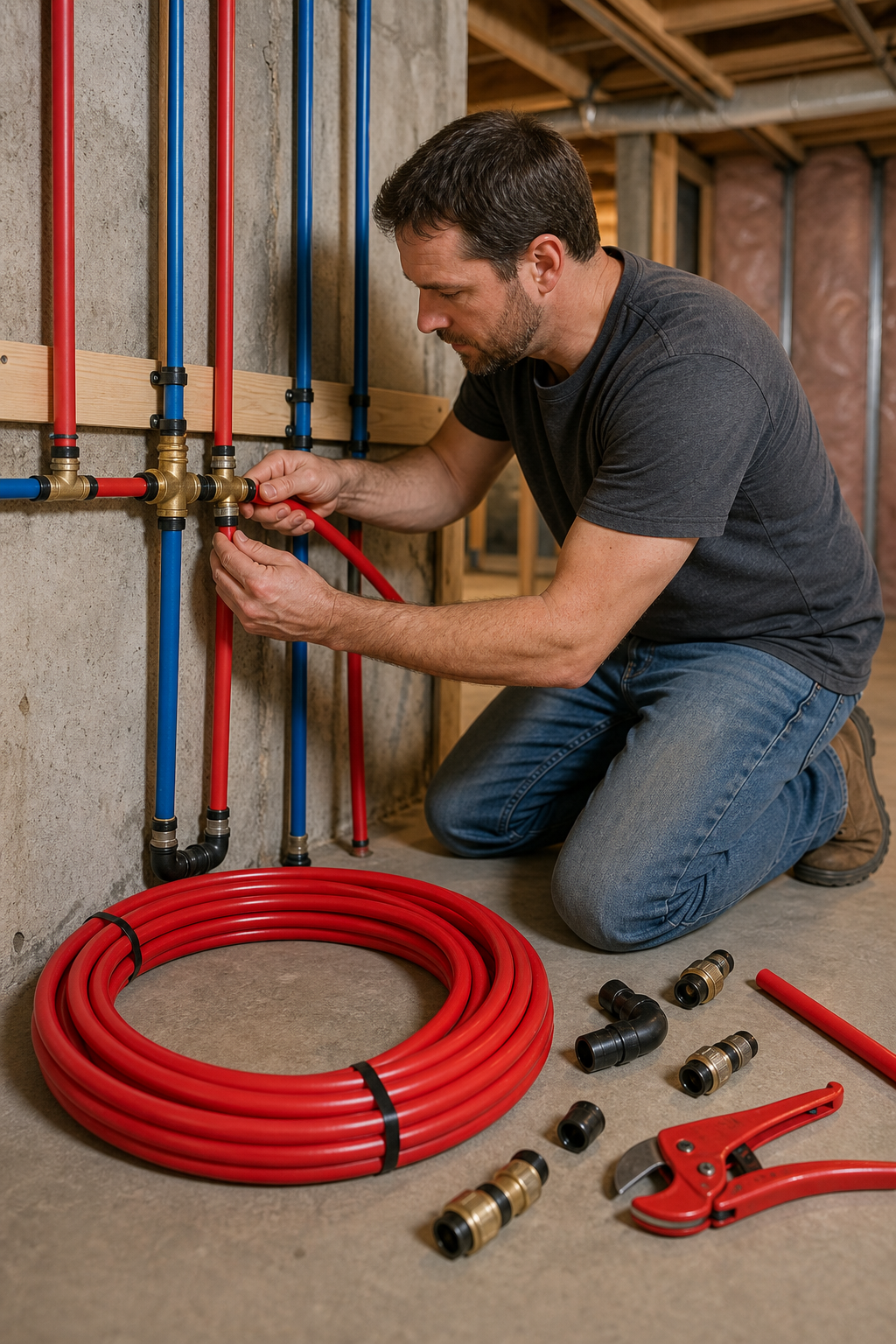
If you’re handy and want to keep costs low, a DIY PEX swap can save you up to 30% on labor. PEX tubes snap together using standard connection methods, so you don’t need a torch or solder. The material is lightweight, so you can carry it up stairs without a crew.
Because the connections are simple, many homeowners finish a small‑zone repipe in a weekend. You’ll still need a proper pressure‑testing step and local‑code inspection, but the learning curve is gentle. Our guide on how a PEX repipe is done walks you through the exact steps.
The biggest downside is the risk of a missed joint or an improperly supported run, which can cause future leaks. If you’re not comfortable working inside walls or dealing with hidden slab leaks, the DIY route may end up costing more in repairs.
3. Copper Pipe Replacement , Traditional Reliability
Copper has been the plumbing workhorse for decades. It resists corrosion, handles high water pressure, and lasts 50‑70 years when water quality is balanced. Wikipedia notes that copper’s natural biostatic properties keep bacterial growth in check.
Homeowners who value a material that can survive extreme temperatures often choose copper. It’s also a selling point for resale, as many buyers view copper as a premium feature. However, copper costs roughly three times more per foot than PEX, and each joint requires soldering, which adds labor time.
When water is highly acidic or hard, copper can corrode faster, leading to pinhole leaks. Regular water‑quality testing and protective coatings can extend its life, but those extra steps raise maintenance overhead.
Pro Tip:Schedule an annual pressure test to catch early copper fatigue before a leak becomes costly.
Our team finds copper repipes most fitting for historic homes where preserving original material matters, or for clients who prefer a metal that won’t degrade under UV exposure.
Check our cost guide for a side‑by‑side look at copper versus PEX pricing.
4. Rigid Polymer Pipe Replacement, Affordable Alternative
Rigid polymer piping can handle hot‑water temperatures up to 200°F, offering a solid middle ground between cheap cold‑water PVC and pricey copper. It’s often used for indoor hot‑and‑cold supply lines in new construction.
The material is cheaper than copper but more expensive than standard PVC, and it joins using a specialized bonding method rather than solder. Because it’s rigid, this piping requires more fittings, which adds a small labor bump.
One caution: Rigid polymer piping can become brittle in freezing climates and may crack if water expands inside. In Orange County’s mild winters this isn’t a major concern, but it’s worth noting for homes with uninsulated basements.
5. PVC Pipe Replacement , Basic Solution
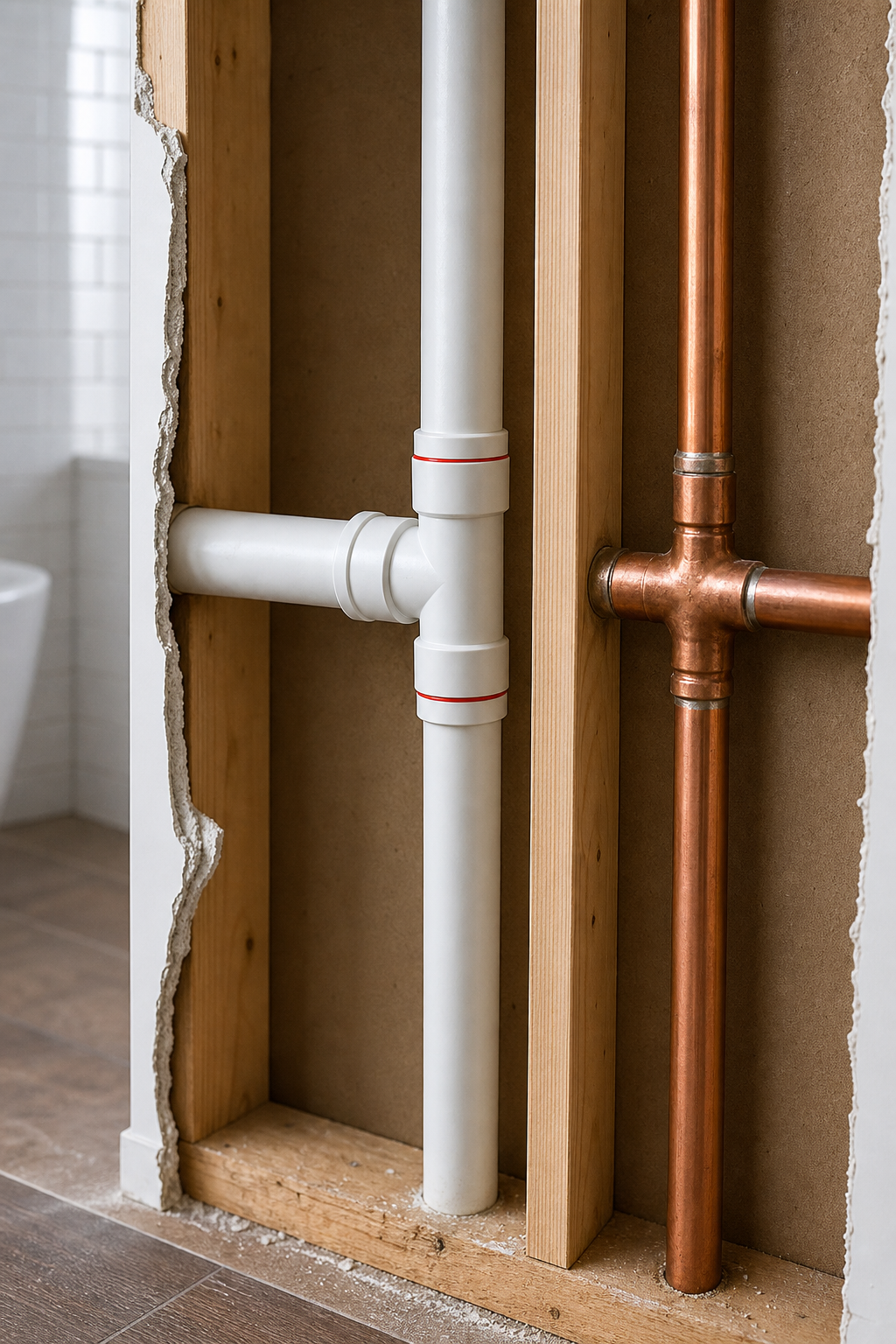
PVC is the go‑to choice for drain, waste, and vent (DWV) lines. It’s cheap, lightweight, and joins with a solvent that fuses the pipe into a permanent bond. PVC can’t be used for hot water, its maximum temperature is 140°F, so it’s limited to cold‑water supply or venting.
Because PVC is so inexpensive, many DIYers start with it for simple repairs. The trade‑off is that you can’t rely on PVC for water lines that carry hot water or high pressure. In an Orange County home, PVC works well for bathroom waste lines but not for the main water distribution.
When PVC fails, it usually does so by cracking under pressure or UV exposure. That makes it a short‑term fix rather than a long‑lasting solution for supply lines.
Comparison Table: Pros & Cons Overview
FAQ
What are the main advantages of PEX over copper?
PEX is flexible, resists corrosion, and installs faster because it uses mechanical or crimp connections. Copper, by contrast, requires soldering and can corrode in acidic water.
Is DIY PEX installation safe for a typical homeowner?
Yes, if you follow local code, pressure‑test the system, and use the proper fittings. Mistakes in joint sealing are the most common issue for DIYers.
How long does a professional PEX repipe last?
With a quality installation and a 25‑year transferable warranty like Repipe OC offers, most PEX systems perform well for 40‑50 years before any major component needs replacement.
Can certain plastic piping be used for outdoor water lines?
No, many plastic piping types lose strength under UV exposure. They’re intended for indoor hot‑and‑cold supply lines only.
Do I need a plumber to install PVC drain lines?
PVC drain lines are simple to glue, so a competent DIYer can handle short runs. For complex layouts or code‑critical venting, hiring a pro ensures the system passes inspection.
Conclusion
For most Orange County homeowners, Repipe OC’s professional PEX repipe gives the best mix of warranty, price, and peace of mind. If you’re comfortable with tools, the DIY PEX route saves money, but be sure to test your work. Ready to upgrade? Schedule a free estimate with Repipe OC today and lock in that 25‑year warranty.
Option | Pros | Cons | Best For |
Repipe OC (Pro) | 25‑yr transferable warranty; published hours support; competitive pricing | New company, limited track record | Homeowners wanting peace of mind & full‑service repipe |
DIY PEX | Low labor cost; flexible material; quick install | Requires DIY skill; risk of missed joints | Budget‑savvy DIYers |
Copper | Durable; high pressure tolerance; resale value boost | High material cost; labor‑intensive soldering | Historic homes; buyers who value metal piping |
Flexible polymer piping | Resistant to corrosion; lower cost than metal; simple joining methods | Temperature limits; may require additional fittings | Renovations needing flexible piping |
PVC | Very low cost; simple solvent bonding | Not for hot water; limited pressure rating | DWV and cold‑water lines |
Comments